Markups and Markdowns
A shop buys a skateboard for $40 and puts it on the shelf for $60. Later it is on sale for $45. Shops plan these prices with percents.
Markup
A shop sells things for more than it paid for them. The extra is the markup, and it is a percent of what the shop paid, its cost.
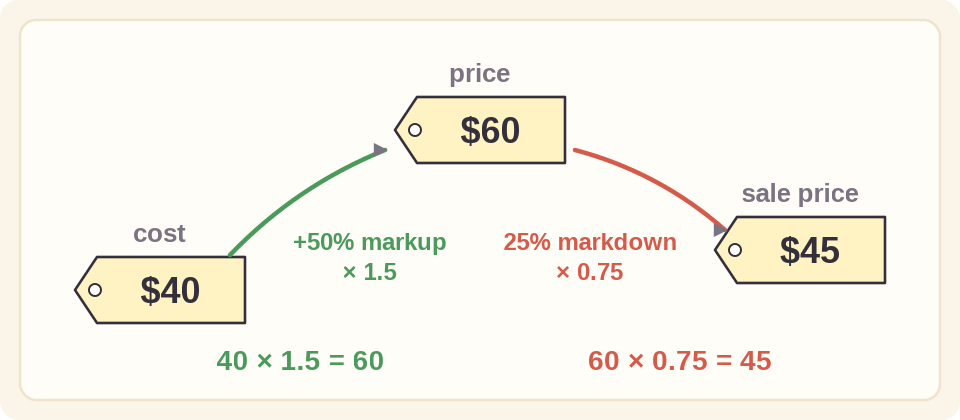
A 50% markup on a $40 skateboard is 0.5 × 40 = 20 dollars, so the price is 40 + 20 = $60.
In one step: the price is 100% + 50% = 150% of the cost, and 1.5 × 40 = 60.
Markdown
A markdown is a discount: a percent taken off the price.
25% off the $60 price is 0.25 × 60 = 15 dollars, so the sale price is 60 − 15 = $45.
In one step: you pay 100% − 25% = 75% of the price, and 0.75 × 60 = 45.
Up then down
The sale price, 45 dollars, is still above the cost of 40. The markup and the markdown were percents of different amounts, so they do not cancel.
What percent markup is a $40 cost sold at $52? The markup is 12 dollars, and 12 ÷ 40 = 0.3 = 30%.
Try it at home
- Find a sale sign or an online sale that gives a percent off.
- Work out the sale price two ways: take off the discount, and multiply by what is left.
- Do both ways agree?
Words in this lesson
- cost - what a shop pays for something.
- markup - the amount added to the cost, often given as a percent of the cost.
- markdown - an amount taken off the price, a discount.
Big idea
A markup is a percent of the cost added on; a markdown is a percent of the price taken off.