Same Facts, Different Words
Try this first
You are buying minced meat for dinner. Two packs cost the same. One label says "75% lean". The other says "25% fat". Which one would you rather take home?
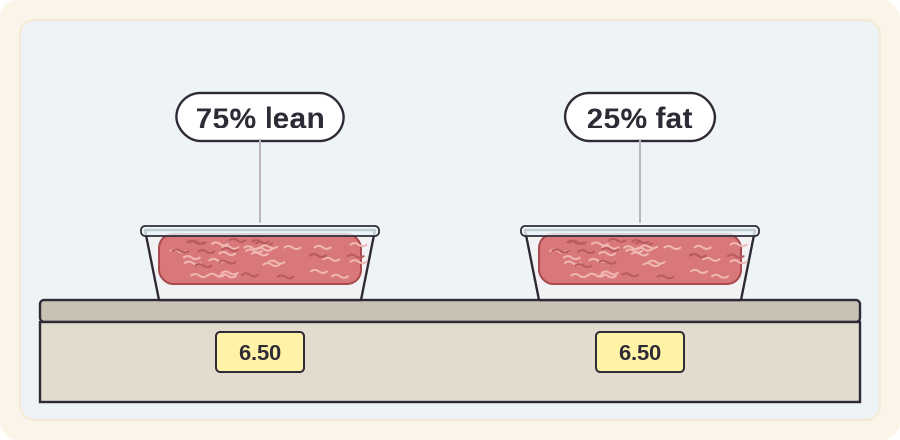
Most people feel drawn to the "lean" one. It sounds healthier, fresher, maybe even tastier. Now look at the two labels again, slowly.
Show the answer
They say exactly the same thing. If a pack is 75% lean meat, the other 25% is fat. Either pack would make the same dinner.
The study
Irwin Levin and Gary Gaeth (1988) asked people in the United States to look at, and then taste, cooked minced beef. Some were told it was "75% lean", others that it was "25% fat". It was the same meat. People who read "lean" rated it as better tasting and less greasy. The difference got smaller once they had tasted it, but it didn't go away.
The way a fact is put is called its frame, like the frame around a picture. The picture stays the same, but a different frame makes it look different. When the frame changes our choices, that is the framing effect.
Gains and losses
A common frame is gain or loss. "9 in 10 students pass this test" and "1 in 10 students fail this test" are the same fact. The first feels like an easy test, and the second like a test that catches people. A loss frame often stings more, because losses hurt more than gains please.

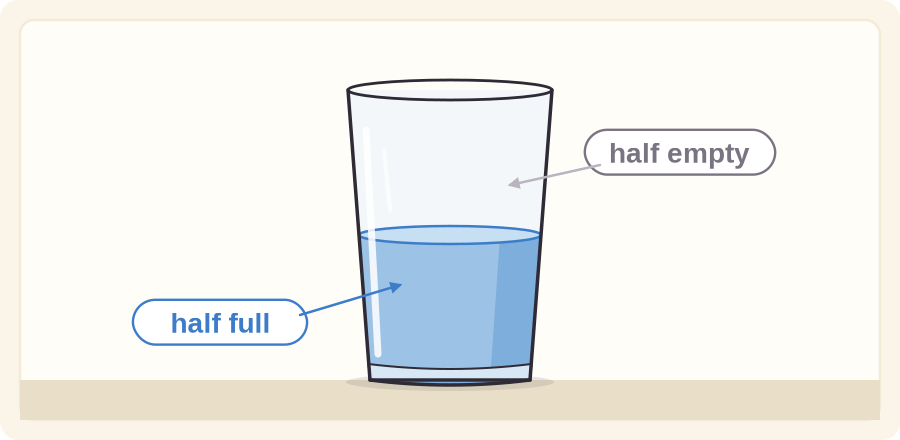
Shops use frames all the time. "Save 20 dollars" and "Pay only 80 dollars" can describe the same price. A glass can be half full or half empty.
Why the mind does it
Fast thinking takes words as they come (see Fast and Slow). "Fat" brings pictures of grease; "lean" brings pictures of health. Doing the sum, 100 minus 75, is a job for slow thinking, and slow thinking often doesn't bother.
There is a sensible side too. In real life, the way someone puts a fact often tells us something. A seller who chose "lean" probably thinks the leanness is the good part. Most of the time, listening to how people say things is useful. It misfires when the frame is chosen to steer us.
What helps
Say it the other way round. When a fact makes you feel strongly, turn it over: "75% lean" becomes "25% fat", "90% pass" becomes "10% fail". If your feeling changes but the fact didn't, the frame was doing the work.
Try it on a friend
- Ask one friend: "In a test, 9 in 10 students pass. How hard is it, from 1 to 10?"
- Ask another friend the same, but say: "1 in 10 students fail."
- Compare the two numbers, and then tell them both versions.
Words to know
- frame - the way a fact is put into words
- framing effect - when putting the same fact in different words changes what people think or choose
Big idea
The same fact in different words can feel like a different fact. Before you choose, say it the other way round and see whether your feeling still holds.