A Question That Changes a Memory
Try this first
Look at the picture below for about five seconds. Then read on, and don't look back at it.
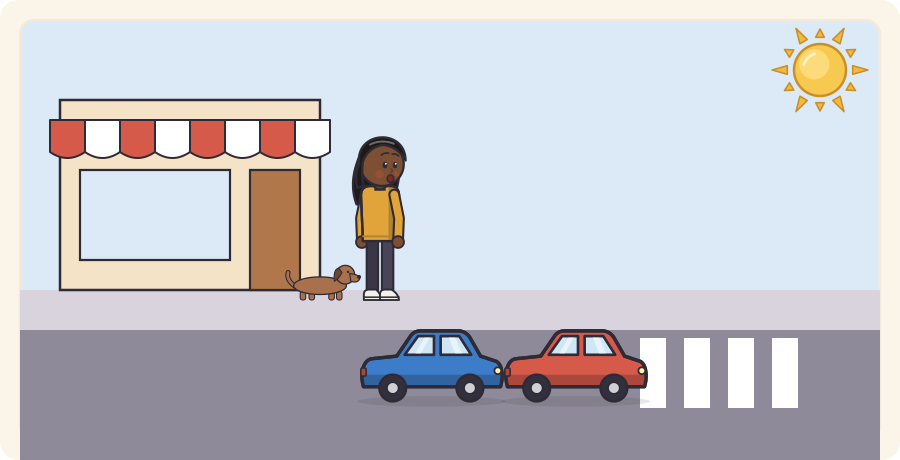
Now answer quickly, without scrolling up. About how fast were the cars going when they smashed into each other? And was there broken glass on the road?
Many people "see" a fast crash and some glass. Where did that come from: the picture, or my question?
One word in a question
In 1974, the psychologists Elizabeth Loftus and John Palmer showed students short films of car crashes. Afterwards, they asked each student the same question with one word changed: "About how fast were the cars going when they smashed into each other?" Others heard hit instead of smashed into.
The students who heard "smashed" guessed a higher speed. They had all watched the same film.
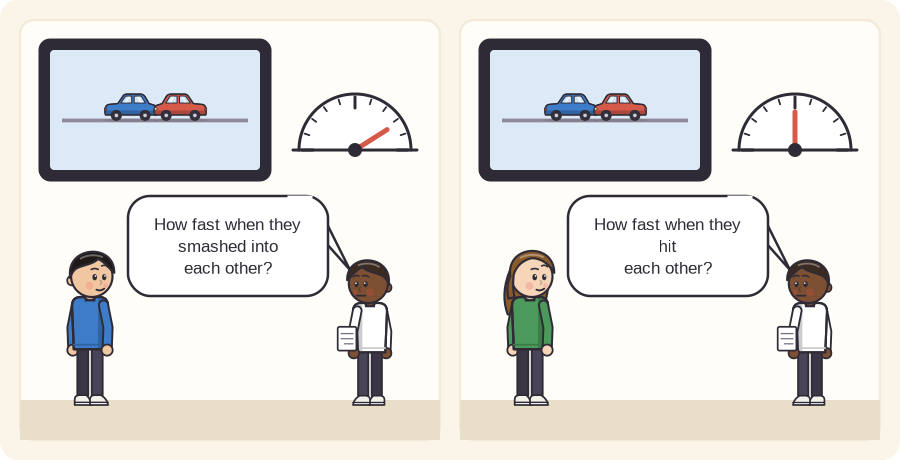
A week later, the students came back and were asked: "Did you see any broken glass?" There was no broken glass in the film. About 1 in 3 of the "smashed" group said yes, against about 1 in 7 of the others. The word had not just changed a guess. It had added something to the memory.
Show the answer
The picture had no broken glass. The cars barely touched, and nothing was said about their speed. "Smashed" came from my question, not from the street. If you saw glass, your mind did what the students' minds did.
Memory gets rebuilt, and the builders listen
Memory is not a video: each time you remember, your mind builds the scene again from pieces, and a wrong piece can feel as sure as a right one. Here is the next step. The pieces don't all come from the event itself. What happens after it, like a question, a friend's story or a photo, can slip in too.
A question that hints at its own answer is called a leading question. When information you get after an event changes your memory of it, that is the misinformation effect.
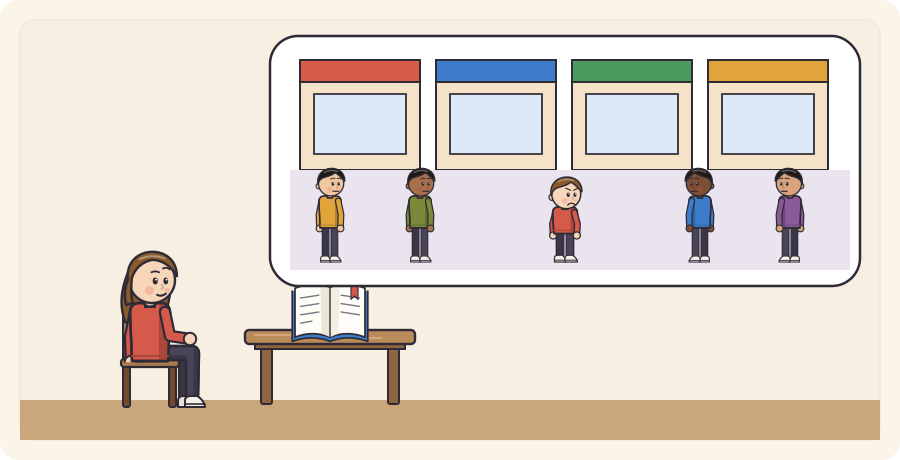
It can go far. In 1995, Elizabeth Loftus and Jacqueline Pickrell gave people short stories from their childhood, collected from their families. One story was made up: getting lost in a shopping centre as a small child. After a few interviews, about a quarter of the people remembered at least part of it.
Where it shows up
Witnesses to an accident talk to each other before they talk to the police. Families tell the same story at dinner for years, and everyone "remembers" it the same way. You chat about a film with a friend, and later you can't tell which scene you saw and which one they told you about.
What helps
- Write it down early, before you talk about it with anyone.
- Ask open questions: "What did you see?" rather than "Was the car going very fast?"
Try it on a friend
- Tell two friends, separately, the same short story: "At a crossing, a car and a bike touched. Nobody was hurt."
- Ask one, "How fast was the car going when it crashed into the bike?" Ask the other, "How fast was the car going when it touched the bike?"
- Compare their guesses, then tell them both what you were testing.
Words to know
- leading question - a question that hints at the answer it expects
- misinformation effect - when something you hear after an event changes your memory of it
Big idea
A memory can be changed after the event, by a question, a story or a word. Write things down early, and ask questions that don't lead.