The Ticket You Already Bought
Try this first
Weeks ago you paid for a concert ticket. Tonight it is pouring with rain, you are tired, and you would really rather stay at home. The ticket can't be sold or given back. Do you go?
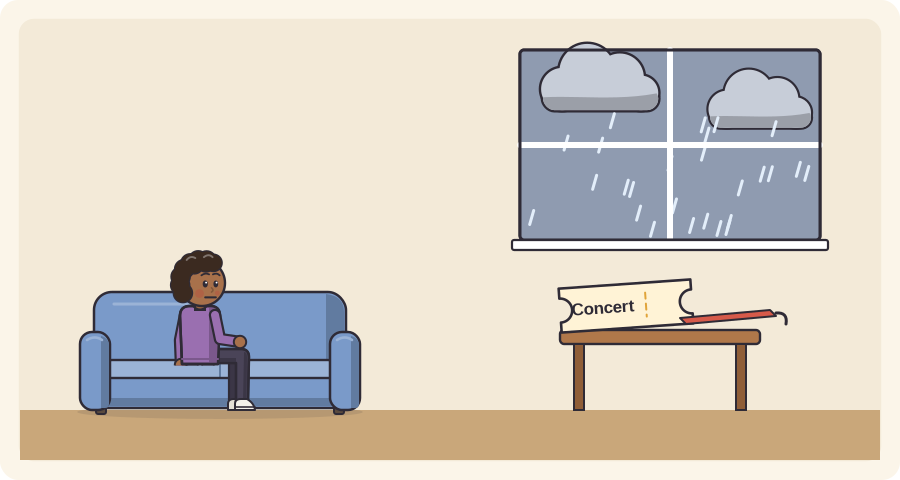
Many people say: "I paid for it, so I have to go. Otherwise the money is wasted." It feels sensible. But does the money you paid weeks ago change which evening will be better from now on?
Show the answer
The money is gone whether you go or not. Staying at home won't bring it back, and going won't either. The only question left is which evening you would enjoy more from now on. If a friend is waiting for you, that is a real reason to go. "I paid" is not one.
Two trips on the same weekend
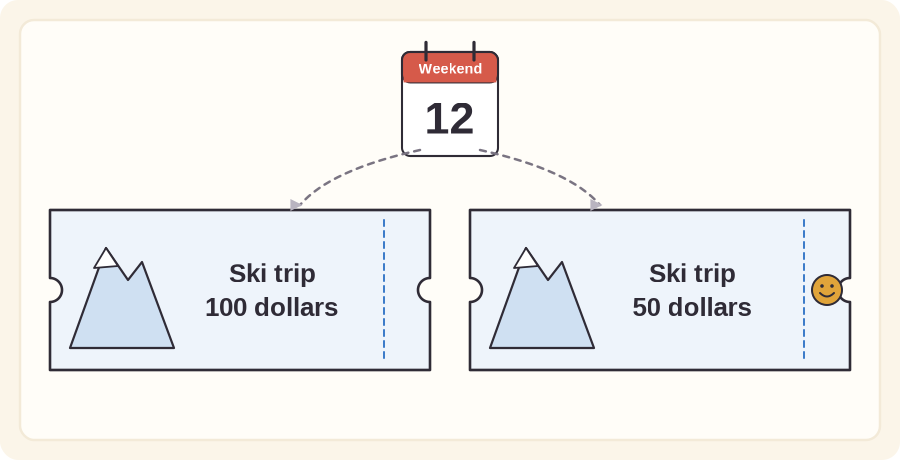
Hal Arkes and Catherine Blumer (1985) asked students to imagine this. You have paid 100 dollars for a ski trip, and later 50 dollars for another one. Then you notice they are on the same weekend. You can't sell either ticket. You think the 50-dollar trip will be more fun. Which one do you go on? Just over half of the students chose the 100-dollar trip, the one they expected to enjoy less.
The same researchers also tried it for real. A theatre sold season tickets, some at full price and some, by chance, at a discount. In the first half of the season, the people who had paid full price went to more plays. Having paid more made them go more, even though the plays were the same for everyone.
A name for it
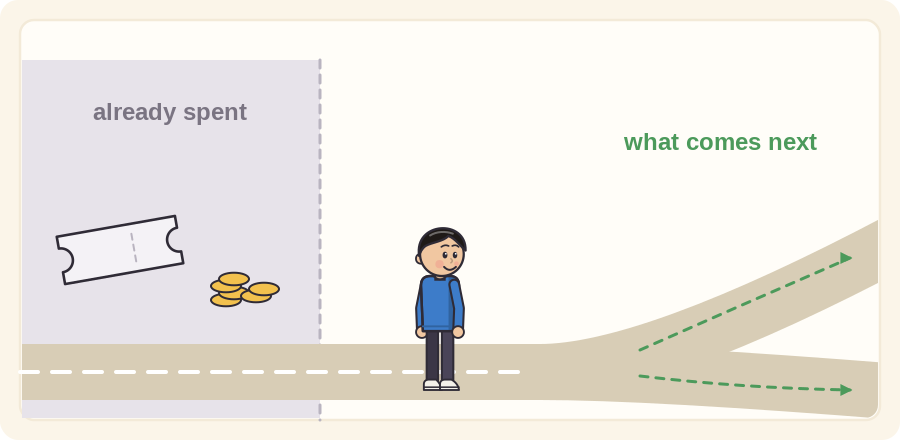
Money, time or effort that has already been spent and can't be got back is called a sunk cost, like a ship that has sunk to the bottom of the sea. Letting it push you into a choice you wouldn't make otherwise is the sunk cost trap. The way out is simple to say: only the future counts.
Why the mind does it
"Don't waste things" is usually a good rule. And walking away from what we paid for feels like accepting a loss, which hurts more than it should (see Losses Hurt More). We also don't like to feel that our first choice was a mistake. So we keep going, to make the spending feel worth it.
Where it shows up
You keep watching a boring film because you have already sat through an hour of it. You finish a meal you don't like because you paid for it. You keep playing a game you stopped enjoying long ago, because you have put hundreds of hours into it.
What helps
Imagine you got it for free. If someone had given you the ticket, would you go out in the rain tonight? Whatever you answer is your real choice. The money you paid doesn't change it.
Try it on a friend
- Ask one friend: "You paid 50 dollars for a concert ticket. It's raining and you'd rather stay in. Do you go?"
- Ask another friend the same question, but say a friend gave them the ticket for free.
- Compare. People who "paid" often say they would go more than people who got it free.
Words to know
- sunk cost - money, time or effort already spent that you can't get back
- sunk cost trap - making a choice because of a sunk cost, not because of what is still to come
Big idea
What you have already spent is gone, whatever you do next. Choose by what lies ahead, and ask: "Would I still do this if it had cost me nothing?"