One Bad Comment
Try this first
You share a drawing you worked hard on. Ten people comment. Nine say kind things, and one says, "Boring. My little brother draws better." That night, as you fall asleep, which comment is going round in your head?
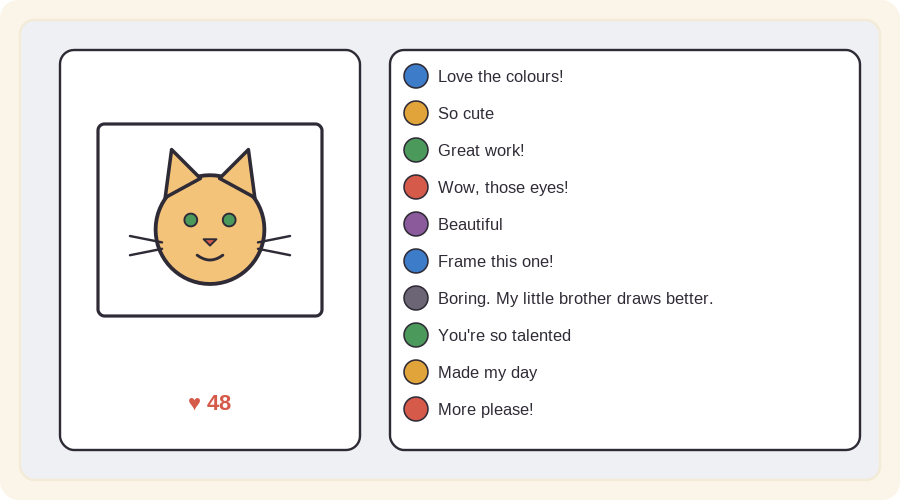
Almost everyone says the rude one. Nine against one, and the one wins. Why does a single bad comment push aside nine good ones?
Bad is stronger than good
In 2001, the psychologist Roy Baumeister and his colleagues looked across many studies, about money, friends, health, school and first impressions. Their review had a short title that says it all: "Bad is stronger than good." Again and again, a bad event, word or feeling affected people more than a good one of the same size.
A few examples from the studies they read:
- Losing some money upsets people more than finding the same amount pleases them (see Losses Hurt More).
- One bad thing someone does changes what we think of them more than one good thing does.
- A bad day affects how people feel the next day more than a good day does.
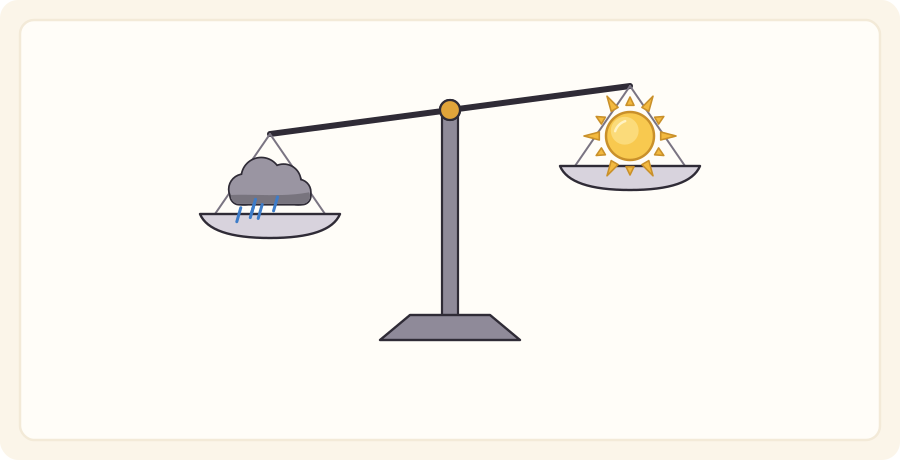
This pull towards the bad is called the negativity bias.
Why the mind does it
Think of a person long ago, walking through tall grass, looking for berries. If she misses a bush of berries, she can find another one tomorrow. If she misses a snake, there may be no tomorrow. A mind that paid extra attention to bad things - and remembered them longer - kept its owner alive.
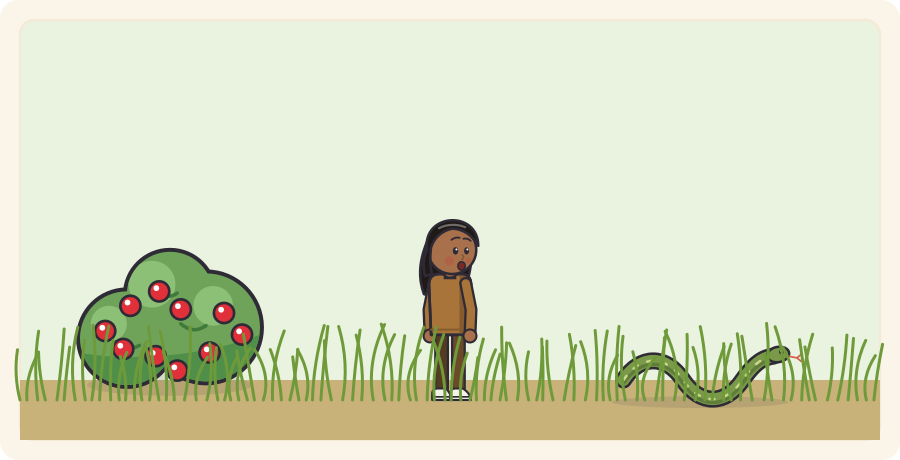
So the negativity bias is often useful. It makes us careful, and it helps us learn from mistakes. It misfires when there is no snake: when one rude comment from a stranger spoils a day full of kind words, or when one bad review hides a hundred good ones.
Where it shows up
A school report with six kind sentences and one "needs to work harder": guess which one gets talked about at dinner. A holiday with one rainy day can be remembered as "the rainy holiday". Bad news often gets more clicks than good news, so we see more of it.
What helps
- Write down good things on purpose. At the end of the day, note three good moments, however small. Good things fade unless you catch them.
- Count, don't feel. When one bad thing feels huge, count: nine kind comments, one rude one. The numbers are often kinder than the feeling.
Try it on a friend
- Ask a friend: "Tell me the best thing and the worst thing that happened to you last week."
- Notice which one comes to them faster, and which one they say more about.
- Then ask them to name two more good things. Most people find them easily, once they look.
Words to know
- negativity bias - our pull to give bad things more weight than good things of the same size
Big idea
A bad thing weighs more with us than a good thing of the same size. It kept our ancestors safe, but today it often makes a good day feel bad. Count the good on purpose.