Losses Hurt More
Try this first
Imagine a friend offers you a deal, just once and just for fun. They toss a coin. Heads, they give you 15 dollars. Tails, you give them 10 dollars. Would you say yes? Decide before you read on.
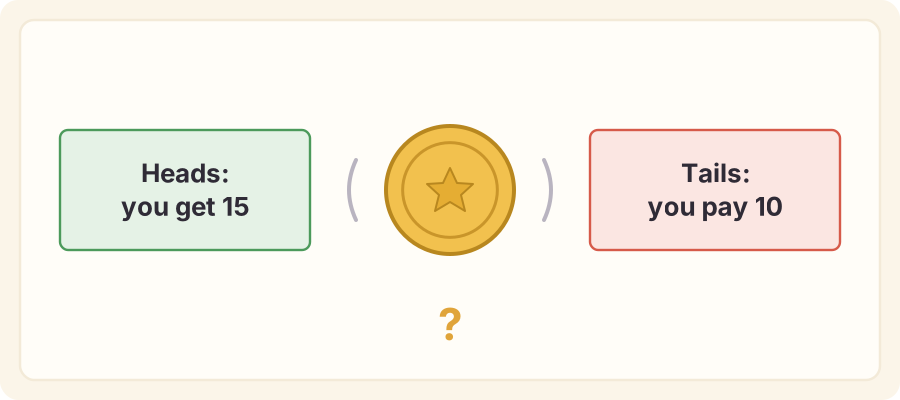
Most people say no, often at once, without doing any sums. Yet you could win more than you could lose, and both are equally likely. So why does "no" feel so right?
A loss weighs about twice as much
Show the answer
There is no wrong answer: it is your money. But look at the sums. Half the time you get 15, half the time you pay 10. If you could play many times, you would end up about two and a half dollars ahead for each toss, on average. Most people still refuse. Asked how much heads would have to pay before they said yes, many people name about 20: twice the 10 they might lose.
Daniel Kahneman and Amos Tversky (1979) asked people many questions like this one. Their finding: a loss feels about twice as strong as a gain of the same size. Losing 10 dollars hurts more than winning 10 dollars pleases. This is called loss aversion ("aversion" means a strong wish to stay away from something).
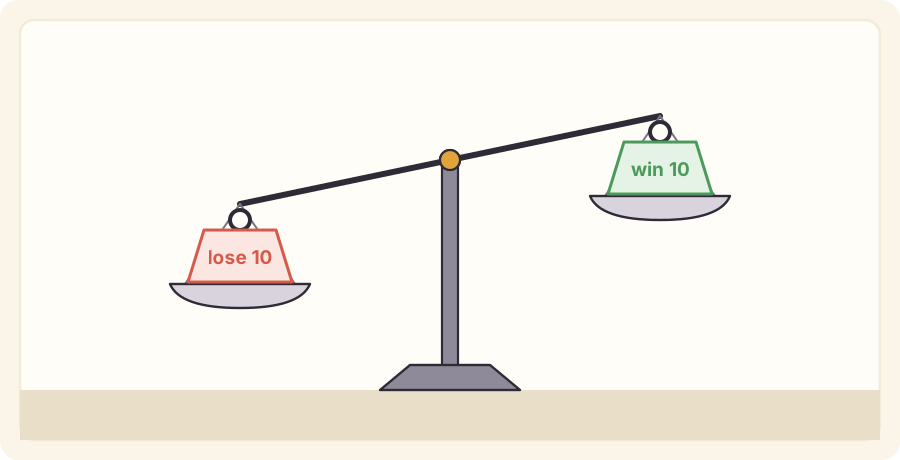
The coin toss is only a thought experiment. Real games of chance, like lotteries, are set up so that players lose on average. With those, saying no is simply wise.
The mug you already own
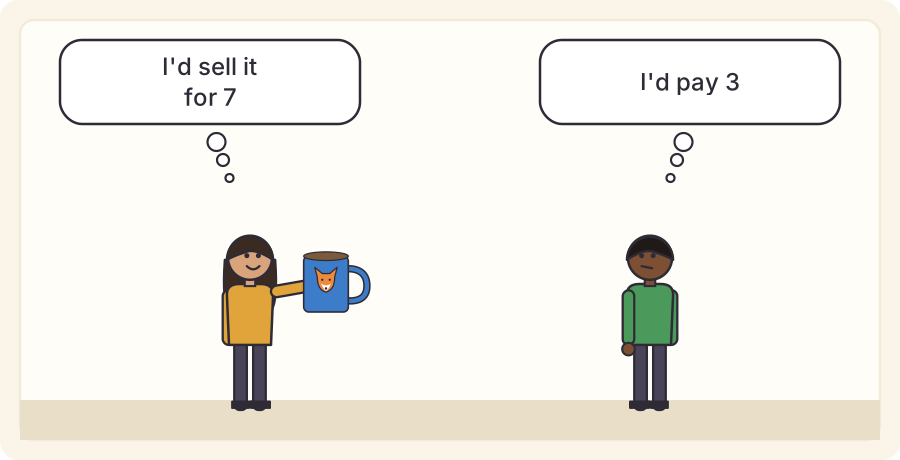
Loss aversion works on things too, not just money. Daniel Kahneman, Jack Knetsch and Richard Thaler (1990) gave a coffee mug to half the students in a class. The owners could sell their mug, and the others could buy one. The owners asked about 7 dollars. The buyers offered about 3. The mug had been theirs for minutes, but giving it up already felt like a loss. Researchers call this the endowment effect: we value a thing more just because it is ours.
Why the mind does it
Loss aversion is a mental shortcut that often serves us well. One common explanation: for most of history, losing your food or your shelter could be a disaster, while a little extra was only nice. Guarding what you have makes you careful, and care is often wise. The shortcut misfires when it makes us turn down good chances, or hold on to things we no longer need.
Careful
Researchers still argue about how big loss aversion is and when it shows up. With small, everyday amounts, some studies find it weak or missing. "About twice" is a rough average, not a law.
Where it shows up
"Don't lose your points!" often works better than "Earn points!". A sale that "ends tonight" makes not buying feel like losing something. And cupboards stay full of things nobody uses, because throwing them away feels like a loss.
What helps
- Turn it around. Ask: "If I didn't have this, would I pay this much for it?"
- Look at many choices together. One small loss stings, but across many small choices, the good deals add up.
Try it on a friend
- Ask a friend the coin question from the top of this lesson, only as a question. Don't play it for real.
- Then ask: "How much would heads have to pay before you'd say yes?" Many people name a number close to twice the loss.
Words to know
- loss aversion - losing something feels worse than gaining the same thing feels good
- endowment effect - valuing a thing more just because it is yours
Big idea
A loss weighs more than a gain of the same size, so we turn down fair chances and hold on to what we own. Ask what you would choose if you were starting with nothing.