Throwing the Dice Harder
Try this first
Be honest: have you ever done one of these? Pressed the lift button again because the lift was slow. Thrown the dice harder in a board game when you needed a big number. Worn the same "lucky" socks to every match.
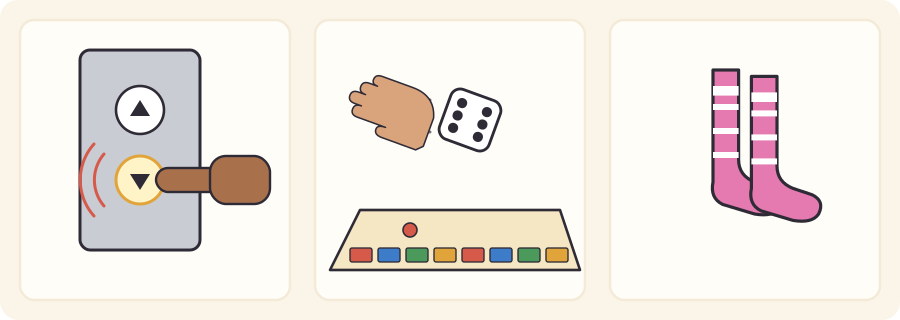
Most of us say yes to at least one. Pressing again doesn't make the lift come sooner. How hard you throw doesn't choose the number. So why does it feel as if it helps?
Choosing your own ticket
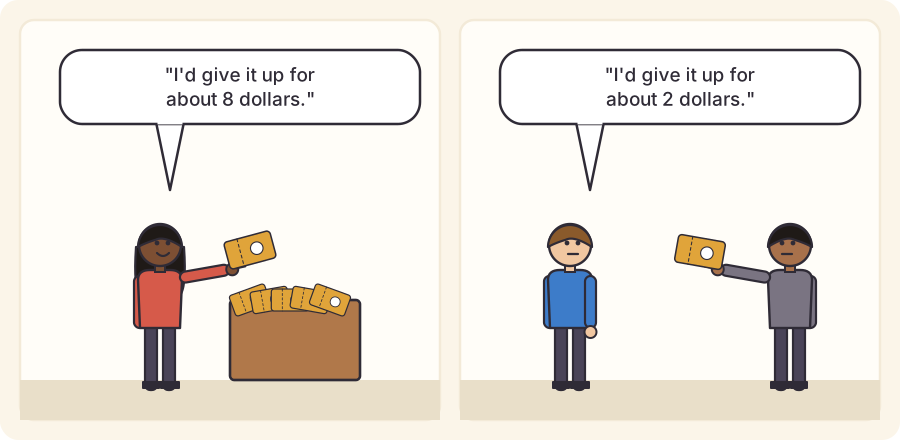
Ellen Langer (1975) ran a small lottery among office workers in the United States. Each ticket cost one dollar. Some workers chose their own ticket from a box. Others were simply handed one. Every ticket had exactly the same chance of winning.
Later, each person was asked how much money they would want to give their ticket up. Those who had been handed a ticket asked for about 2 dollars. Those who had chosen their own asked for about 8, over four times as much. Choosing felt like control, and control felt like a better chance.
Soft for low, hard for high
James Henslin (1967) spent time with taxi drivers in the United States who played dice together. He noticed that they threw the dice softly when they wanted a low number, and hard when they wanted a high one. They also blew on the dice and called out to them. None of it changed what came up.
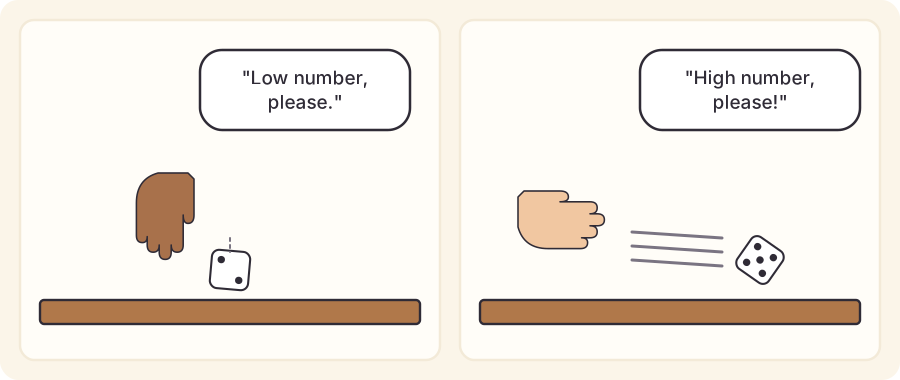
Feeling that you can steer something that is really chance is called the illusion of control.
Careful
Later studies found this effect smaller in some settings, and not everyone shows it. But the little rituals above are familiar almost everywhere.
Why the mind does it
Most of the time, what we do really does change what happens: pushing harder moves a heavy box, practising makes you better. So the mind expects effort and choice to matter everywhere. In games of skill they do. When chance and skill look alike, as when you throw a ball and when you throw a dice, the mind mixes them up. Feeling in control is also comforting, so the habit is hard to drop.
Where it shows up
A lucky pen for exams. Picking "my" numbers. Pressing the button at a crossing again and again. Most of these are harmless. The trouble starts when the feeling of control makes us risk more than we should, or when we spend our effort on rituals instead of on the part we can change.
What helps
Ask: what part of this do I actually control? Before an exam, you can't choose the questions, but you can revise and sleep well. Put your effort there.
Try it on a friend
- Next time you play a board game with dice, ask a friend to throw for a high number, and then for a low one.
- Watch how they throw. Many people throw harder for the high number.
- Talk about it together afterwards, kindly: most of us do it.
Words to know
- illusion of control - the feeling that we can steer something that is really down to chance
Big idea
When an outcome is chance, how we throw, pick or press doesn't change it. Find the part you really control, and spend your effort there.