Even Experts Are Anchored
Try this first
Is the tallest tree in the world taller or shorter than 400 metres? Now write down your best guess of its height. Then one more question: did the number 400 change your guess? Yes or no?
Most people answer "no" to the last question. They knew 400 was only part of a question. And yet, when people are asked this kind of question with a high number or with a low one, their guesses come out far apart.
Show the answer
The tallest tree known is a redwood in California, about 116 metres tall. If your guess was well above that, the 400 probably pulled it up, even if it didn't feel that way.
You may know anchoring: the first number you hear pulls your own guess towards it, even when it means nothing. This lesson asks two harder questions. Does knowing a lot about a subject protect you? And do you notice when it happens?
The house and the asking price
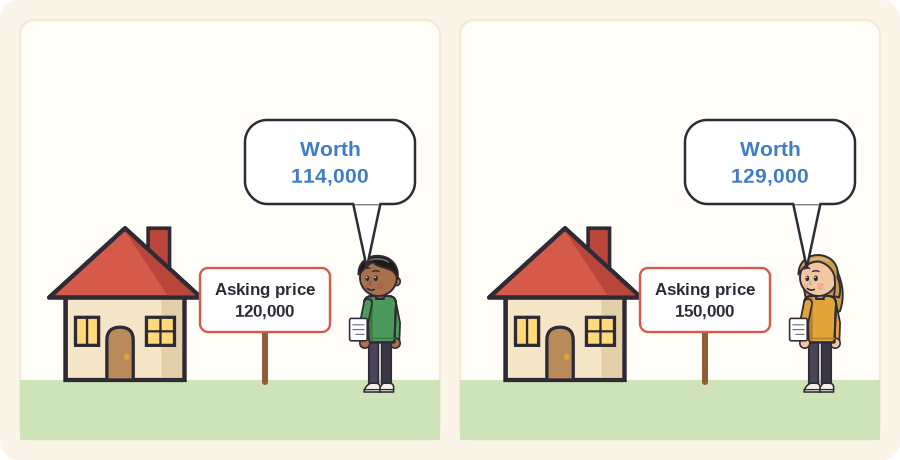
Gregory Northcraft and Margaret Neale (1987) worked with estate agents in Arizona, in the United States: people whose job is to know what houses are worth. The agents visited the same house for sale and got the same pack of information about it. Only one thing changed: the asking price. Some agents saw about 120,000 dollars, others about 150,000.
Then each agent said what the house was really worth. Those who had seen the high asking price valued the house about 15,000 dollars higher. When asked what they had based their value on, few of them mentioned the asking price at all.
Dice in the courtroom
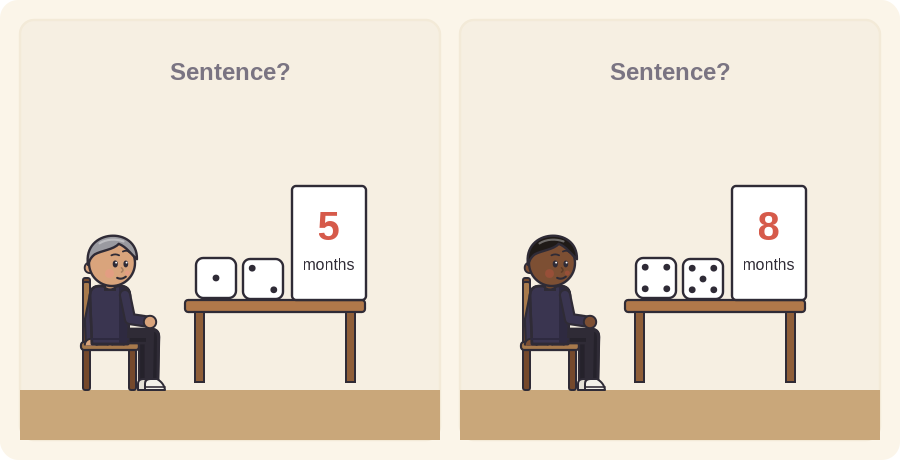
Birte Englich, Thomas Mussweiler and Fritz Strack (2006) went further. Experienced judges in Germany read about a made-up case of shoplifting. Before deciding the sentence, each judge rolled a pair of dice. The dice were secretly loaded to land on a total of 3 or 9. After rolling 9, judges gave about 8 months on average. After rolling 3, about 5 months. Years of experience didn't protect them.
Why knowing doesn't save you
Here is how the pull works. Your mind starts at the anchor and moves away from it, step by step, until the answer feels possible. Then it stops. But the first answer that feels possible is at the edge nearest the anchor, so you stop too soon. This is called adjusting from an anchor.
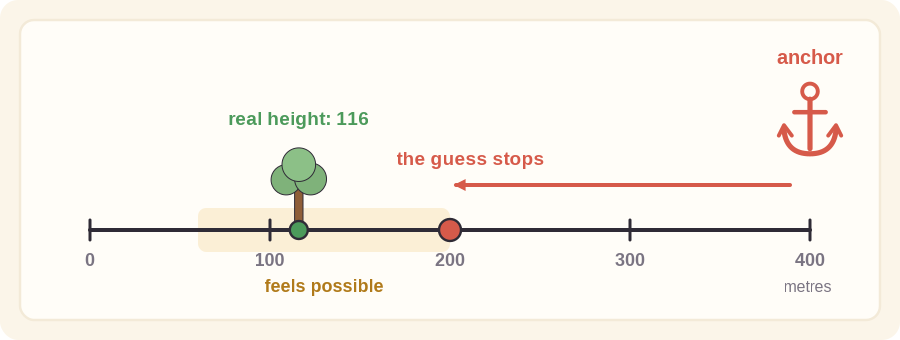
An expert does the same thing, only from a better starting guess. And because the pull comes with no feeling, nobody notices it. That is why the agents could honestly say the asking price hadn't mattered.
What helps
- Make your own number first, before you see anyone else's.
- Ask why the anchor could be far off. Think of reasons it is too high and reasons it is too low. The lesson Ask How You Could Be Wrong shows this helps even experts.
Try it on a friend
- Ask one friend: "Is the tallest tree taller or shorter than 400 metres? How tall is it?"
- Ask another friend the same, but with 40 metres.
- Ask each one: "Did the number change your guess?" Compare the guesses, and the answers.
Words to know
- anchoring - when a number you heard pulls your own guess towards it
- adjusting from an anchor - starting at the number you heard and moving away from it, usually stopping too soon
Big idea
Experience doesn't switch anchoring off, and the pull can't be felt. Make your own number first, and ask why the anchor could be wrong.