The Driver Who Cut In
Try this first
You are riding in a car. Suddenly a red car cuts in right in front of you, so close that your driver has to brake hard. In one or two words, what kind of person is driving the red car?
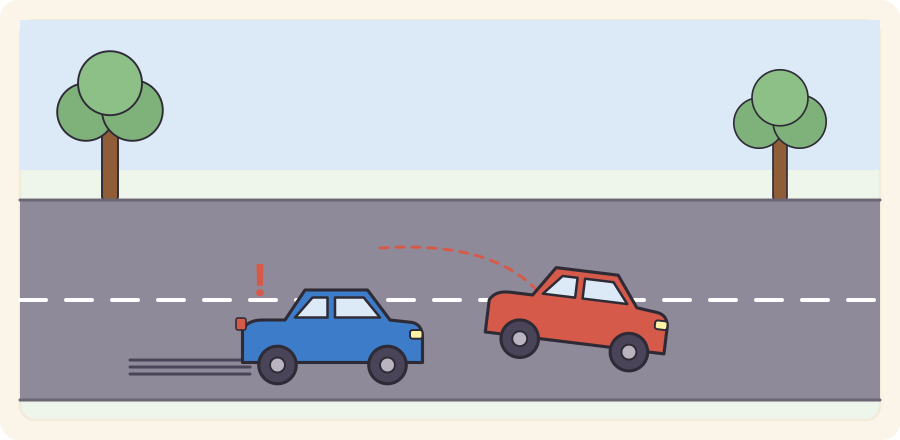
Most people answer in words about the driver: "rude", "careless", "a bad driver", "selfish". Very few say "maybe they were in a hurry for a good reason". And yet, the last time you cut in or rushed, you knew exactly why: you were late, or you didn't see the other car. Why do we explain other people so differently?
The essay that wasn't the writer's choice
In 1967 two psychologists in the United States, Edward Jones and Victor Harris, asked students to read a short essay on a debate topic. Some readers were told the writer had chosen which side to argue. Others were told the writer had been told which side to take, by a teacher, and had no choice.
Then every reader guessed what the writer really believed. The first group, of course, thought the essay showed the writer's own view. But the second group thought so too, only a little less. They knew the writer had no choice, and they still read the essay as a window into the writer's mind.
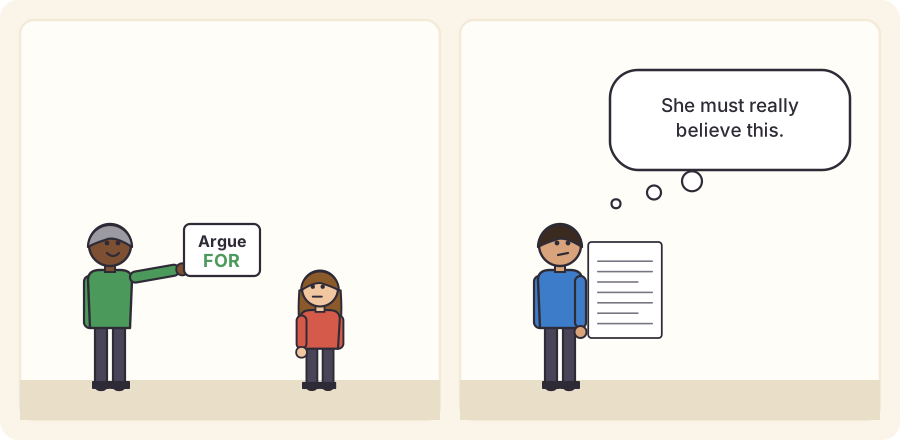
Ten years later Lee Ross (1977) gave this mistake a name: the fundamental attribution error. To "attribute" something is to say what caused it. The error is explaining what other people do by their character, and forgetting the situation that pushed them.
Why the mind does it
When you watch someone, the person is in plain view, and the situation mostly isn't. You see the red car. You don't see the phone call that said a child is waiting alone outside a school that is closing.
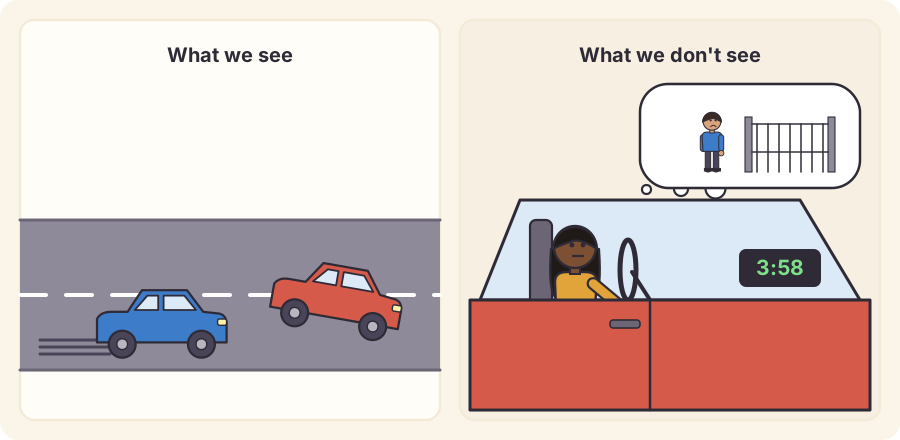
Judging character is also a fast, useful shortcut. People's habits do tell us something, and we need quick guesses about who to trust. The shortcut misfires when one moment is all we have seen.
Careful
Older books also say we always explain our own actions by the situation. Later studies found that part much weaker than people thought (Bertram Malle, 2006). The part this lesson teaches, underrating the situation when we judge others, has been found again and again.
You will meet it everywhere: the waiter who forgot your drink, the classmate who never answered your message, the new colleague who looked bored in a meeting.
What helps
Before you decide what kind of person someone is, ask one question: "What situation would make me do that?" If you can think of one, you may have found theirs.
Try it on a friend
- Ask a friend: "A shop assistant was short with a customer today. Why, do you think?"
- Then ask: "The last time you were short with someone, why was it?"
- Compare the two answers. The first is often about the person, the second about the day.
Words to know
- attribute - to say what caused something
- fundamental attribution error - explaining what other people do by their character, and forgetting their situation
Big idea
We see the person and miss the situation. Before you judge someone by one moment, ask what situation would make you do the same.