Surely Everyone Agrees
Try this first
A researcher asks you to walk around your school or workplace for half an hour wearing a big sign that says "Eat at Joe's". Would you do it, yes or no? Now guess: if ten other people were asked, how many would say the same as you?
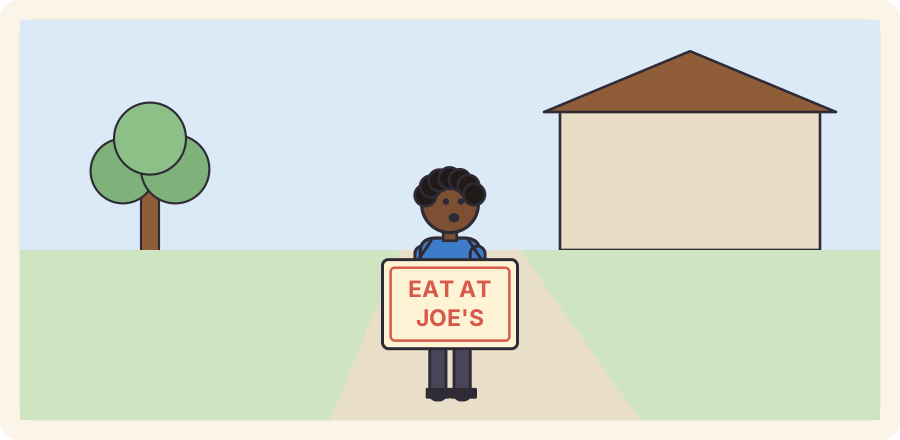
Whatever you chose, you probably guessed that most of the others would choose the same. That feels like common sense. The trouble is that people who chose the other answer feel just as sure.
The study with the sign
Lee Ross, David Greene and Pamela House (1977) asked students at a university in the United States to do exactly this. Some agreed to wear the sign, and some refused. Then each student guessed what other students would do.
Show the answer
Students who agreed to wear the sign guessed that about 6 in 10 others would agree too. Students who refused guessed that about 2 in 3 others would refuse. Both groups thought they were in the majority. Both can't be right.
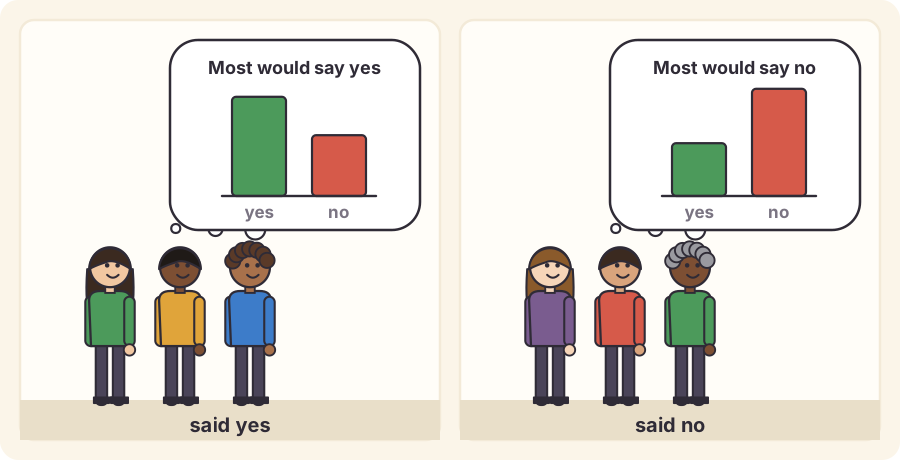
The students also judged the people who chose differently. Those who chose the other answer, they thought, must be a bit unusual: too shy, or too eager to show off. (You met that kind of judging in The Driver Who Cut In.)
We think our own choices, tastes and opinions are more common than they are. Psychologists call this the false consensus effect. A "consensus" is when most people agree, and "false" because the agreement is partly in our heads.
Why the mind does it
Three things push us there. Our own choice feels like the obvious answer to the situation, so we expect others to see it the same way. We spend most of our time with friends who share our tastes, so the people we know really do agree with us more than strangers would. And our own view is the one we know best, so it comes to mind first.
It often works well enough: other people are like us in many ways. It misfires when we plan for others using only ourselves as the guide.
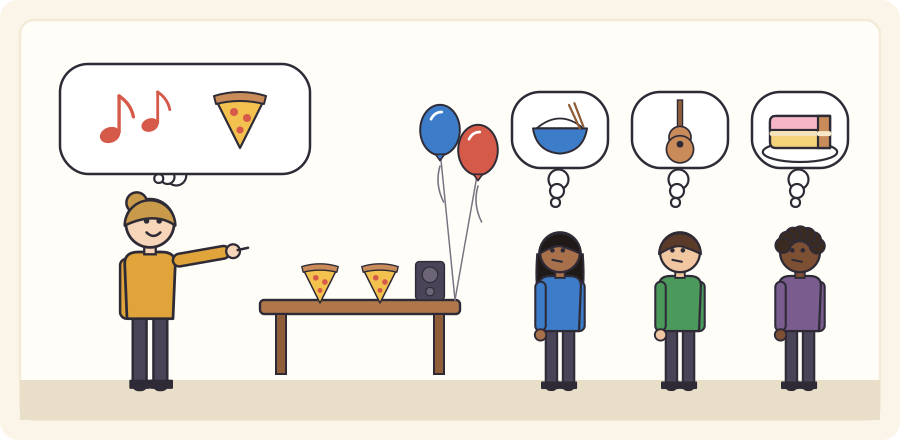
You see it in everyday life: "everyone hates this song", "nobody likes olives", the friend who orders their favourite food for the whole table.
What helps
Ask, don't assume. Before you decide what "everyone" thinks, ask a few people, and count the answers instead of trusting the feeling. If you can't ask, remember that people who disagree with you probably feel just as sure that they are normal.
Try it on a friend
- Ask three or four people a harmless either-or question: "Ketchup on rice, yes or no?" or "Early morning or late night?"
- After each answer, ask: "Out of ten people, how many would agree with you?"
- Compare the guesses of the yes people with the guesses of the no people.
Words to know
- consensus - when most people agree
- false consensus effect - thinking your own choices and opinions are more common than they really are
Big idea
Our own view feels like everyone's. Ask, and count, before you decide what most people think.