Sour Grapes
Try this first
People spent an hour on a very boring task, turning pegs on a board. Then each was paid to tell the next person that the task was fun. Some got one dollar, others got twenty dollars. Later, which group said the task had been more enjoyable?
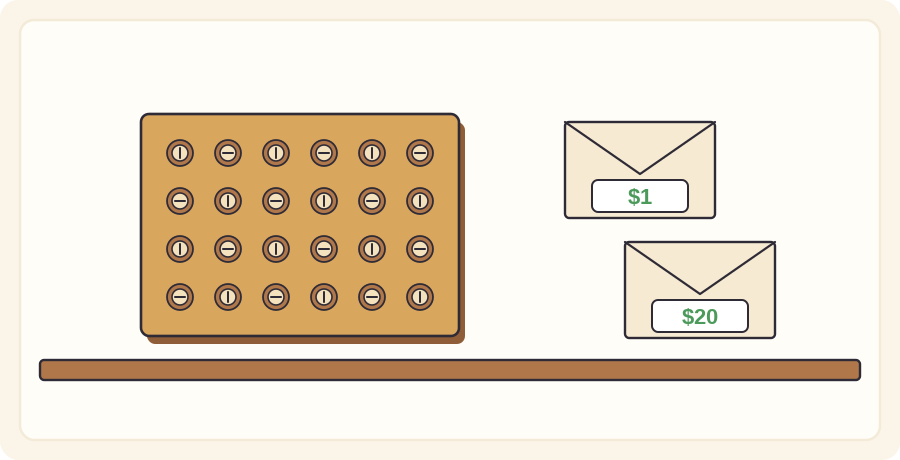
Most people guess the twenty-dollar group: they were paid more, so surely they felt better about it. Hold on to your guess. First, a fox.
The fox and the grapes
In one of Aesop's old stories, a hungry fox sees grapes hanging high on a vine. He jumps and jumps, but he can't reach them. At last he walks away, saying, "They were sour anyway."
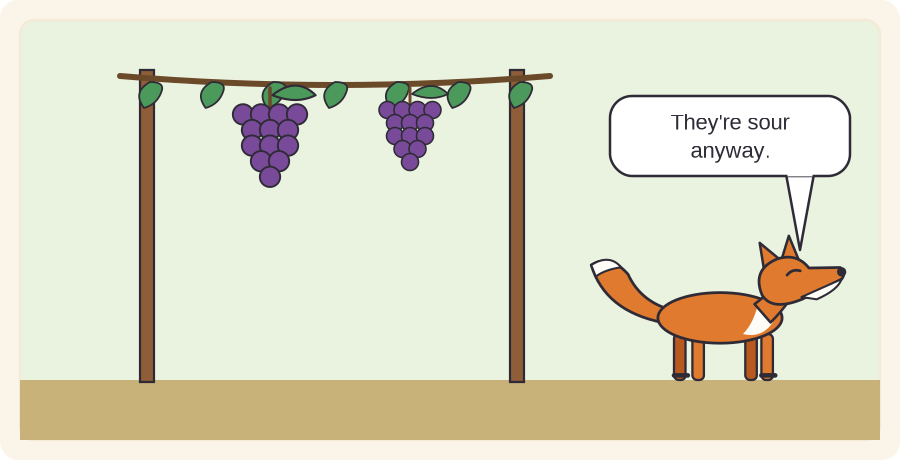
The fox had two thoughts that didn't fit together: "I want those grapes" and "I can't get them". Holding both was unpleasant. So he changed one of them: now he doesn't want them.
In 1957, the psychologist Leon Festinger gave this a name. Holding two thoughts that clash, or doing something that clashes with what you believe, feels uncomfortable. We call that feeling cognitive dissonance ("dissonance" means notes that sound wrong together). To make it stop, we often change one of the thoughts, without noticing we did.
A boring hour
In 1959, Festinger and James Carlsmith ran the experiment from the start of this lesson, at a university in the United States.
Show the answer
The one-dollar group said the task had been more enjoyable. The twenty-dollar group still called it boring.
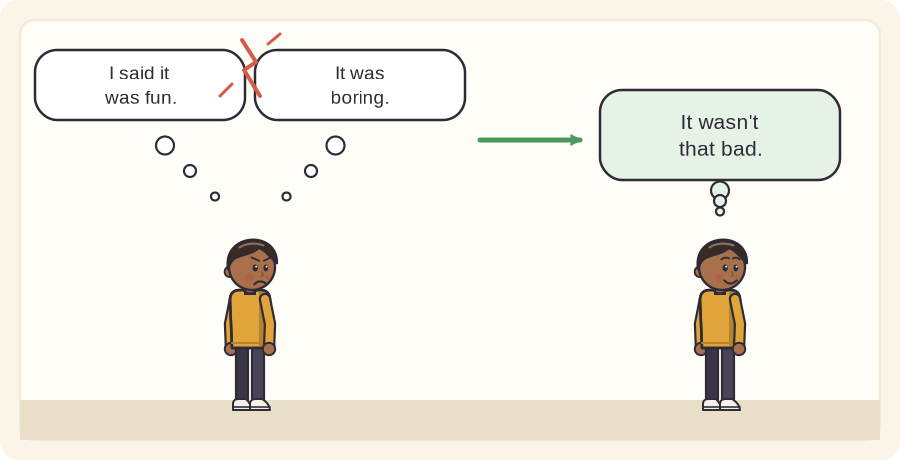
Why? Twenty dollars was plenty of reason to say something untrue, so those people had no clash: "I said it was fun because I was paid well." The one-dollar group had a clash: "I told someone it was fun, for almost nothing, and it was dull." The easiest thought to change was the last one: "Maybe it wasn't that dull."
Careful
In 2024, David Vaidis and many other psychologists repeated this kind of study in many countries at once, and did not find the effect. Psychologists still argue about how strong dissonance is. But the uncomfortable feeling of two clashing thoughts is something everyone knows.
Where it shows up
After buying something expensive, people often notice only its good points, and skip reviews that might spoil it. After choosing one school or job, the other one starts to look worse than it did the week before. A team that loses says the match didn't matter.
What helps
When a thought makes you feel uneasy, notice what it clashes with. Then ask: "If I hadn't already chosen this, what would I think of it?" It's fine to say "I made a mistake" - that ends the clash too, and you learn something.
Try it on a friend
- Ask a friend about something they bought recently: "What's good about it, and what's not so good?"
- Ask about something they nearly bought but didn't, with the same question.
- Compare. Does the one they own get more good points?
Words to know
- cognitive dissonance - the uncomfortable feeling of holding two thoughts that clash, which pushes us to change one of them
Big idea
When two thoughts clash, we feel uneasy and quietly change one, like the fox deciding the grapes were sour. Notice the unease, and ask what you would think if you hadn't already chosen.