Estimating Decimal Sums
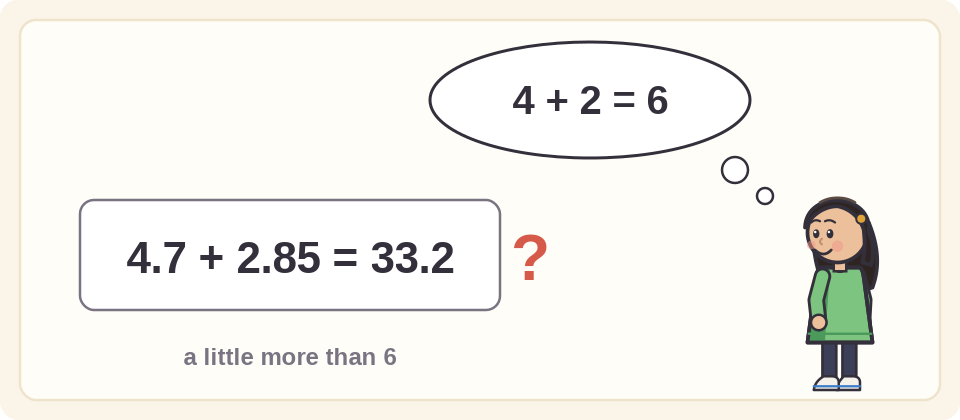
Grace works out 4.7 + 2.85 and gets 33.2. Before she writes it down, can she tell it is wrong without adding again?
Drop the decimal digits
A fast check: drop the digits after the point.
4.7 + 2.85 becomes 4 + 2 = 6.
The real answer is a bit more than 6. It can't be 33.2!
Grace forgot to line up the points. The right answer is 7.55.
Round for a closer guess
Dropping digits always guesses a little low.
Rounding to the nearest whole number is often closer: 4.7 is about 5 and 2.85 about 3. 5 + 3 = 8.
So 7.55 is a sensible answer.
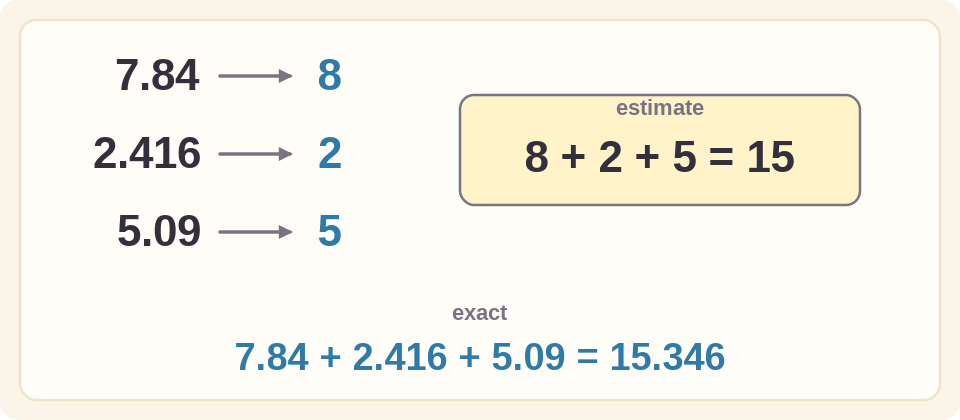
The same works for more numbers: 7.84 + 2.416 + 5.09 is about 8 + 2 + 5 = 15. The exact sum is 15.346.
Try it at home
- Ask someone to write a sum of two decimals and its answer, right or wrong.
- Estimate by dropping the digits after the point, or by rounding.
- Say if the answer is sensible before you work it out.
Words in this lesson
- sensible - close to what you expected, so it could be right.
Big idea
Before you add decimals, estimate with whole numbers; an answer far from the estimate is wrong.