Subtracting Fractions with Different Denominators
A jug was full of milk. Sofia poured out of a jug. How much milk is left?
Same pieces first
Fourths and thirds are different pieces, so first find a common denominator.
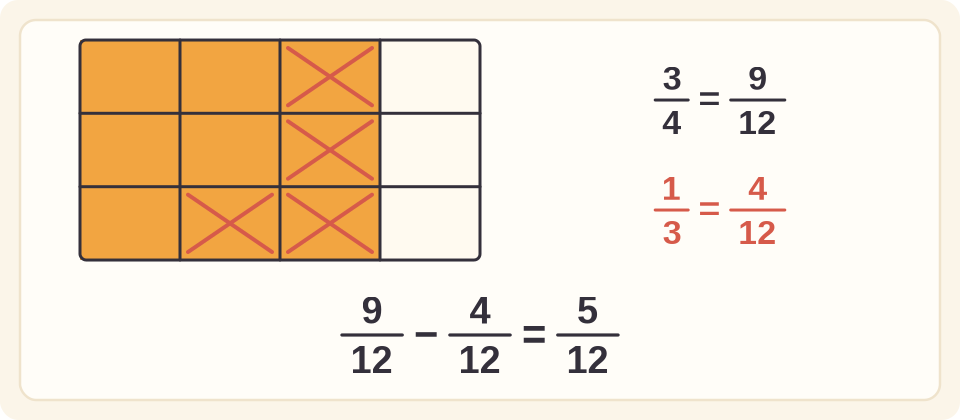
4 × 3 = 12. So = and = .
Take 4 twelfths away from 9 twelfths: - = .
of a jug is left.
On a number line
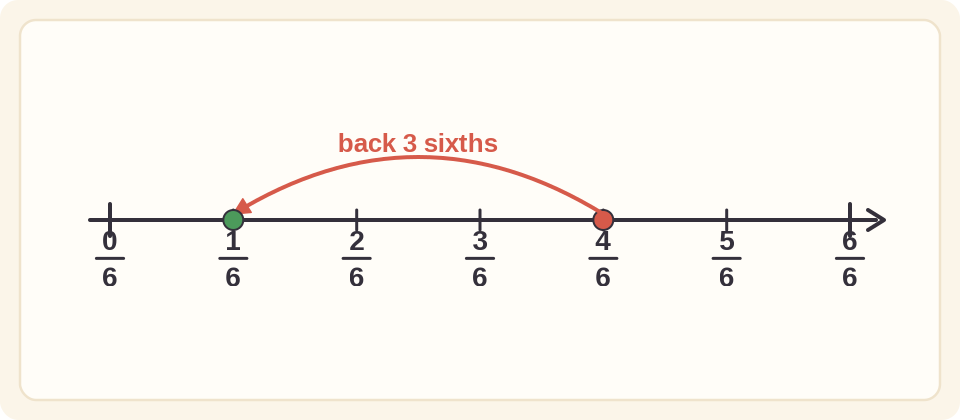
- : both thirds and halves can become sixths.
= and = .
Start at and jump back 3 sixths. You land on .
Try it at home
- Fill a glass 3/4 full of water.
- Pour out about a third of a glass into another glass.
- Is about 5/12 of a glass left? A little less than half: check by eye.
Words in this lesson
- difference - what is left when you take one number away from another.
Big idea
To subtract fractions with different denominators, change them to a common denominator, then subtract the tops.