Why Moving Matters
Think about yesterday. Did you walk to a bus stop, carry shopping up the stairs, play with a child or sweep a floor? Many people would still say "I didn't do any exercise". But their body was working all day. So what counts as moving, and why does it matter so much for health?
Myth or fact? Only sport or the gym counts as real exercise.
What counts
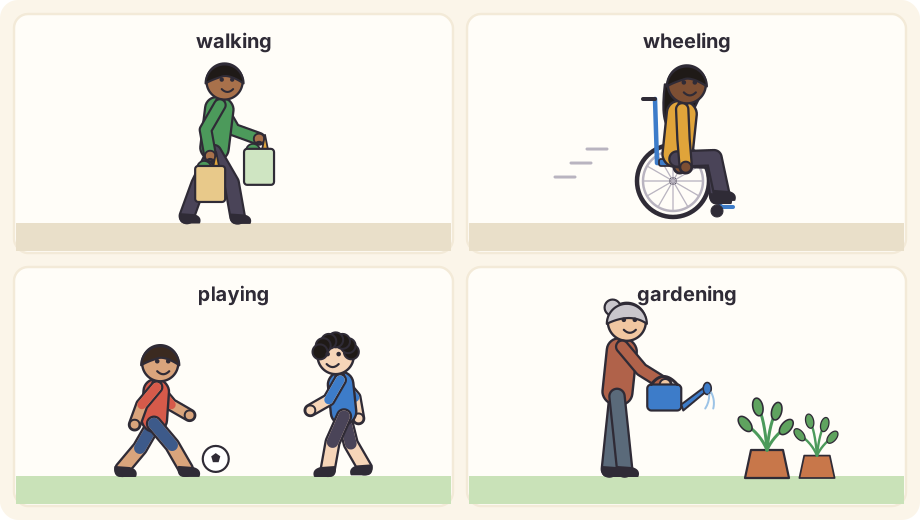
Physical activity is any movement of the body that uses your muscles and uses energy. The World Health Organization (WHO) counts all of it: walking, cycling, climbing stairs, playing, dancing, gardening, carrying things, cleaning the house, and sport too.1
Show the answer
Myth. WHO says "all physical activity counts". A brisk walk to work, a game of football in the street and an hour in the garden all move the body, and all of them do it good. A gym is one way to move, not the only one.1
Some activity makes your heart beat faster and makes you breathe harder for a while: brisk walking, cycling, swimming, running. This is aerobic activity. Aerobic means "with oxygen": the muscles keep going for a long time using oxygen from the air you breathe. Other activity makes your muscles work hard against a weight, like lifting or climbing. Both kinds count.
What moving does for you
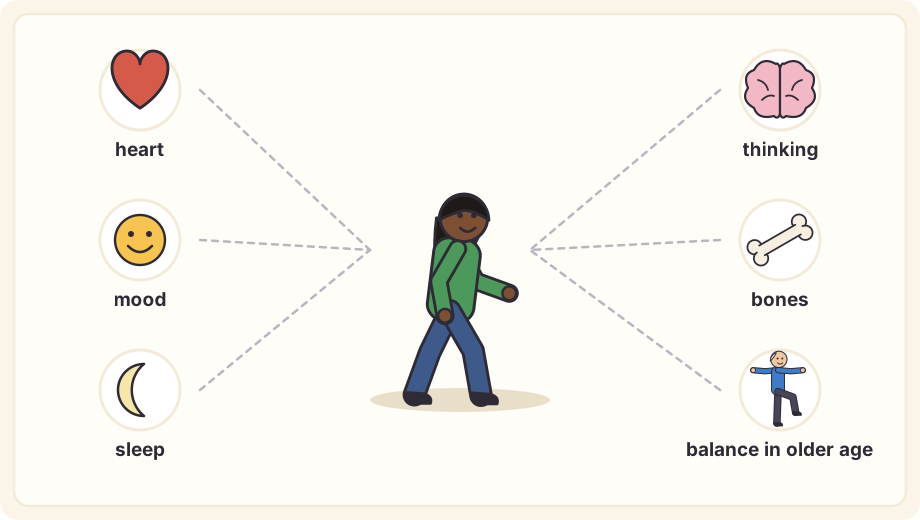
WHO lists what regular physical activity does.1 People who are active have a lower risk of dying early. They have less heart disease, high blood pressure, type 2 diabetes (too much sugar in the blood) and some cancers. Moving helps the mind as well: it reduces the signs of depression and anxiety (feeling very low or very worried for a long time), and it is linked to better thinking and better sleep. In children and teenagers it builds fitness and stronger bones. In older people it lowers the risk of falls.
Many people don't move enough
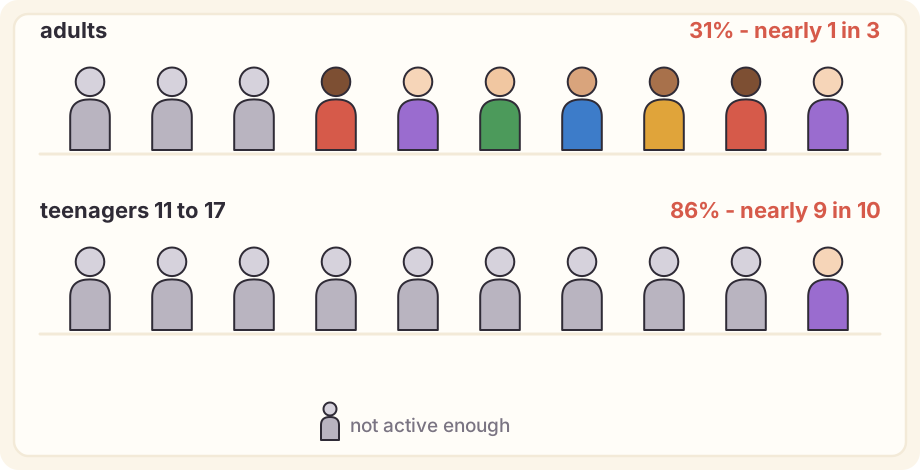
WHO says that 31% of adults in the world, about 1.8 billion people, are not active enough. That is nearly 1 in 3. For young people aged 11 to 17 the number is much higher: 86%, nearly 9 in 10, don't do the amount recommended for their age.1
Any amount is better than none
The best news in WHO's advice is also the shortest: "any amount of physical activity is better than none".1 You don't have to start with an hour of running. If you do very little now, start with small amounts and slowly do more, more often.2 Taking the stairs, walking part of the way, or dancing in the kitchen all count. How much is enough, and how hard, is the question of the next lesson, How Much to Move.
What you can do
- Notice the moving you already do in a day: walking, stairs, carrying, chores.
- Add one small piece: the stairs instead of the lift, or getting off the bus one stop early.
- Find a kind of movement you enjoy, alone or with friends, so that you want to keep doing it.
Words to know
- physical activity - any movement of the body that uses your muscles and uses energy
- aerobic activity - activity that makes your heart beat faster and you breathe harder for a while, like brisk walking or cycling
Big idea
Every kind of movement counts, and any amount of physical activity is better than none.
Sources
-
World Health Organization, Physical activity (fact sheet, 2026). ↩ ↩2 ↩3 ↩4 ↩5
-
Fiona Bull and others, World Health Organization 2020 guidelines on physical activity and sedentary behaviour (British Journal of Sports Medicine, 2020). ↩