Smoke and Vapour
Friends at a café pass a qalyan (a water pipe, also called a hookah or shisha) around the table. It smells of apple and mint. "The water cleans the smoke," someone says. At a party, someone offers a vape: "It's just fruit vapour." What is really in them?
Myth or fact? The water in a qalyan cleans the smoke, so it is much safer than cigarettes.
Nicotine and addiction
Tobacco contains nicotine, a drug that acts on the brain. The World Health Organization (WHO) says it is highly addictive.1 Addiction means the body and brain come to need something, so it is very hard to stop, even when you want to.
Most people who smoke started young: in the United States, nearly 9 in 10 adults who smoke every day first tried it by the age of 18.2
What tobacco smoke does
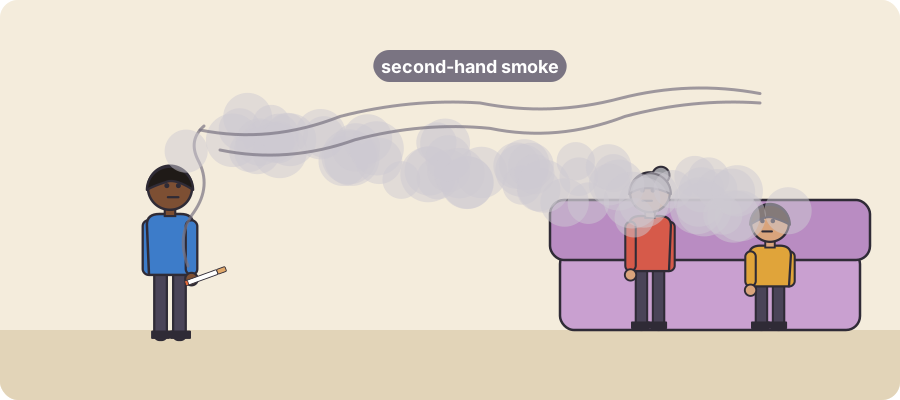
WHO says tobacco kills more than 7 million people every year. Over 1.6 million of them never smoked: they breathed in other people's smoke.1 That smoke is called second-hand smoke, and WHO says no amount of it is safe. Around 1.2 billion people in the world use tobacco, and WHO says every form of it is harmful.
The qalyan
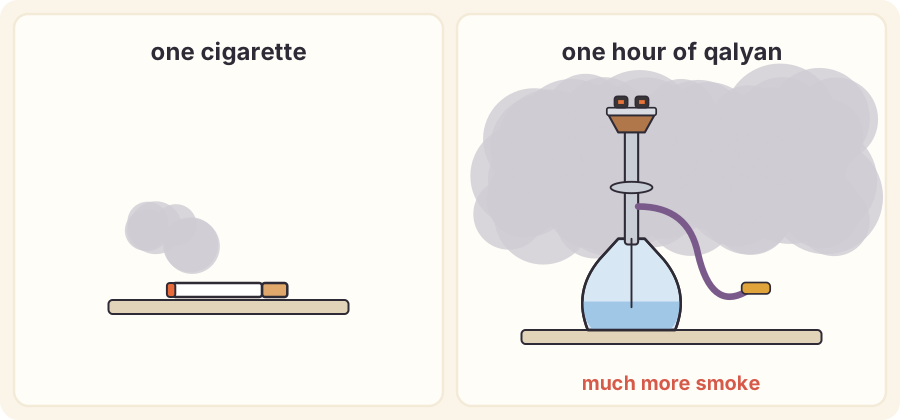
A qalyan session is long. The US Centers for Disease Control and Prevention (CDC) says that in a typical one-hour session, a person can breathe in about 100 to 200 times as much smoke as from one cigarette.3 That is much more smoke, though not exactly that many times the harm. The charcoal that heats the tobacco adds a lot of carbon monoxide, a poisonous gas. Fruit flavours don't make it safe, and everyone around the table breathes the smoke too.
Show the answer
Myth. The CDC says the water does not filter out the harmful chemicals. The smoke still carries nicotine, the same addictive drug as in cigarettes, along with tar and metals.3
Vapes
Careful
Health agencies don't all say the same about vapes. Most vapes contain nicotine.4 The NHS, the UK's health service, says vaping is less harmful than smoking and can help adults who smoke to quit, but it is not risk-free, and nobody yet knows its long-term effects.5 WHO says e-cigarettes are harmful and not safe.1 The CDC warns that nicotine can harm the parts of a teenager's brain that control attention, learning, mood and self-control; much of that evidence comes from studies in animals.4 Every one of them agrees on this: if you don't smoke, don't start vaping, and under-18s should not vape.
Quitting helps at any age
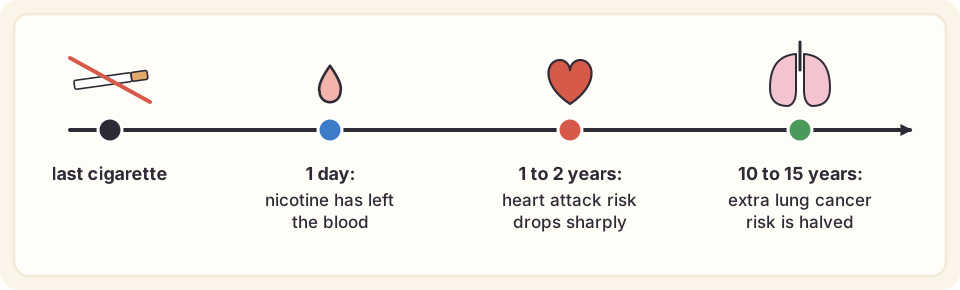
Stopping helps however old you are and however long you have smoked. The CDC says that within 1 to 2 years of stopping, the risk of a heart attack drops sharply, and after 10 to 15 years the extra risk of lung cancer is halved.6 Because of the addiction, many people need more than one try, and that is normal. WHO says support from a counsellor and medicines can more than double the chance of stopping.1
What you can do
- If you don't smoke, vape or use a qalyan, don't start. Saying "no, thanks" is enough.
- Keep homes and cars free of smoke, especially where there are children.
- If you want to stop, ask a doctor, nurse, pharmacist or a quit service for help. If one try doesn't work, try again.
Words to know
- nicotine - the drug in tobacco, and in most vapes, that makes them addictive
- addiction - when the body and brain come to need something, so it is very hard to stop
- second-hand smoke - smoke breathed in by people near someone who is smoking
Big idea
Cigarettes, the qalyan and most vapes all deliver addictive nicotine, the water in a qalyan doesn't clean the smoke, and stopping helps at any age.
Sources
-
World Health Organization, Tobacco (fact sheet, 2026). ↩ ↩2 ↩3 ↩4
-
Centers for Disease Control and Prevention, Youth and Tobacco Use. ↩
-
Centers for Disease Control and Prevention, E-Cigarette Use Among Youth. ↩ ↩2
-
NHS, Vaping to quit smoking. ↩
-
Centers for Disease Control and Prevention, Benefits of Quitting Smoking. ↩