Lemons at Sea
A friend says a warm drink cured her sore throat. An advert says a new syrup "stops coughs fast". Both sound sure. But how could anyone find out whether a treatment really works? Nearly 300 years ago, a doctor on a ship tried one of the first answers.
Sick sailors
In the 1700s, sailors on long voyages often got scurvy. It made them very tired and weak, with swollen gums and pain in their legs, and many died. We now know it comes from having too little vitamin C, which is in fresh fruit and vegetables, for a long time.1 Doctors then had many ideas about how to cure it, and no way to tell which idea was right.
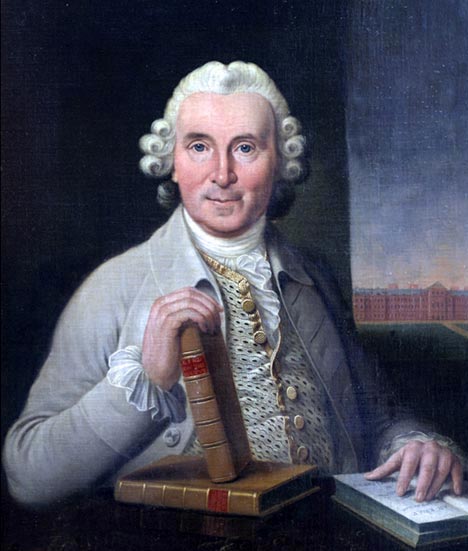
James Lind, painted by George Chalmers in 1783. Public domain, via Wikimedia Commons.

Six treatments, side by side
On 20 May 1747, on the ship HMS Salisbury, the doctor James Lind took 12 sailors with scurvy. Their illness was as alike as he could find, they stayed in the same part of the ship and they ate the same food. He put them in six pairs. Each pair got one extra treatment every day: cider; a few drops of a weak acid; vinegar; seawater; two oranges and a lemon; or a spicy paste.2
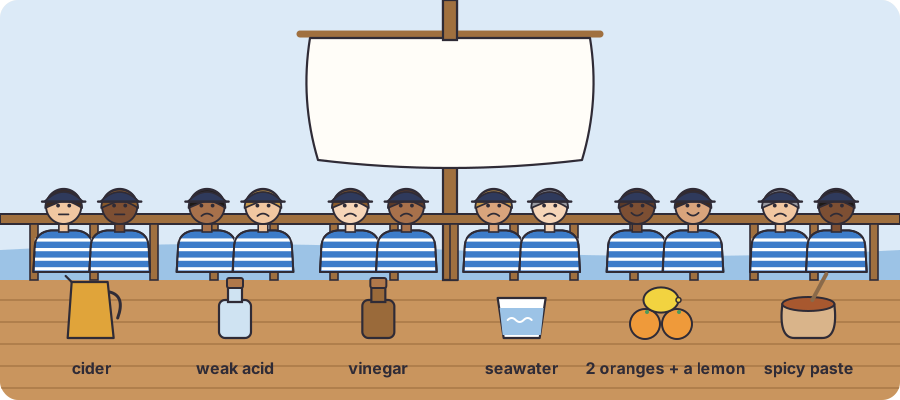
The pair who ate the oranges and lemon got better fastest. After about six days, when the fruit ran out, one of them was fit to work again. The cider pair came second.2
Why does this count as a test? The food, the place and the time were the same for everyone. Only the extra treatment was different, so it was the likely reason for the difference. Comparing groups that are alike in every way except the treatment is a fair test of a treatment (see fair test).
Not the end of the story
Lind's test had real limits. There were only two sailors on each treatment. Lind chose the pairs himself, and everyone knew who got what. He didn't fully understand his own result either: later he suggested a fruit juice boiled down to keep on long voyages, and the heat destroyed much of what made it work.3 Only in 1795, almost 50 years later, did the British Navy start giving lemon juice to its sailors on a large scale.3 So Lind's test was an early fair comparison, not a modern trial. But it pointed the way.
Clinical trials today
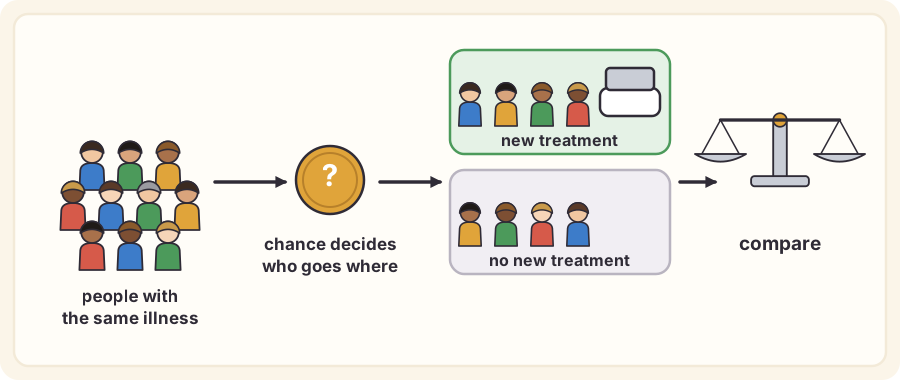
A clinical trial is a fair test of a treatment in people. Today's trials follow Lind's idea and fix his limits. They include many more people. Chance, not the doctor, decides who goes in which group (random assignment), so the groups are alike even in ways nobody thought of. One group gets the new treatment. The other, the control group, gets the usual treatment or a look-alike with nothing in it. Then the two groups are compared.
Try it this week
Find one claim that a treatment works, in an advert, a post or a conversation. Ask: compared with what? Was there a group of similar people who didn't get it?
Words to know
- scurvy - an illness that comes from too little vitamin C for a long time, common on long sea voyages in the past
- fair test of a treatment - comparing groups that are alike in every way except the treatment
- clinical trial - a fair test of a treatment in people, with groups chosen by chance and then compared
Big idea
To know whether a treatment works, compare groups that are alike in every way except the treatment - the idea of Lind's lemons, and of every clinical trial since.
Sources
-
James Lind, A Treatise of the Scurvy (1753); see the James Lind Library, Lind J (1753). ↩ ↩2
-
Ulrich Tröhler, James Lind and scurvy: 1747 to 1795 (James Lind Library, 2003). ↩ ↩2