The World of Microbes
A bowl of yoghurt, a week-long cold, grey fluff on old bread: all three are the work of living things far too small to see. What are they, and are they all out to make us ill?
Myth or fact? Germs are everywhere, so most microbes are dangerous.
Life too small to see
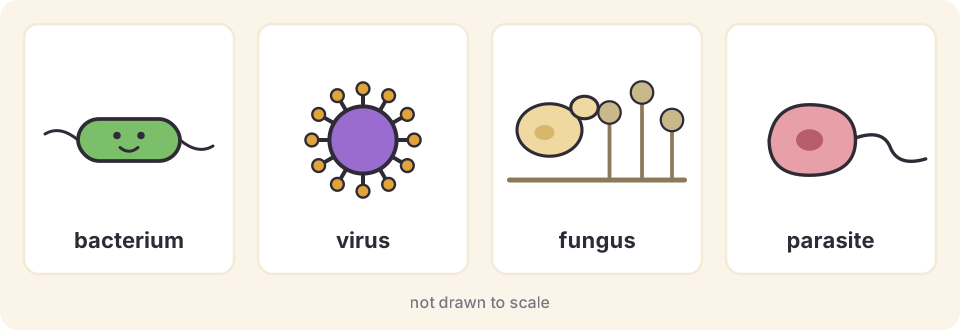
A microbe is a living thing too small to see without a microscope. Many are made of just one cell, the tiny building block that all living things are made of. There are four main kinds:
- Bacteria - each one is a single cell. They live almost everywhere, including on your skin and in your gut.
- Viruses - much smaller and simpler than bacteria. A virus can only make copies of itself inside a living cell, such as a cell of your body.1 (Scientists still argue about whether a virus counts as "alive".)
- Fungi - moulds, yeasts and mushrooms. Yeast is the fungus that makes bread dough rise. Another fungus causes athlete's foot, an itchy rash between the toes.2
- Parasites - living things that live on or inside another living thing and feed on it. The one that causes malaria is a single cell, passed on by mosquito bites.3
How small?
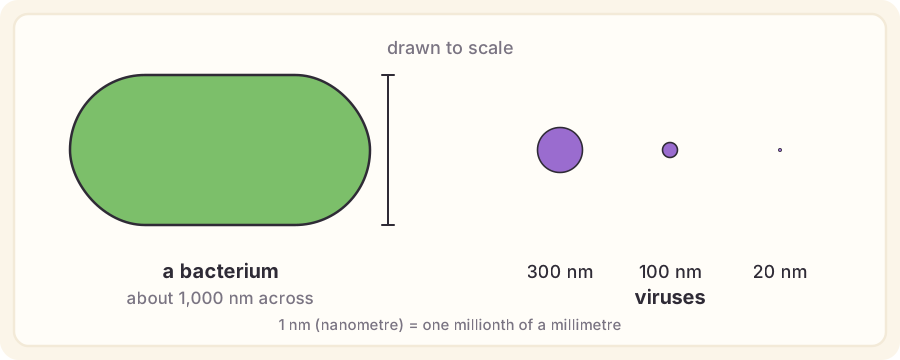
A typical bacterium is about a thousandth of a millimetre across: a thousand of them in a line would cover one millimetre. In nanometres (millionths of a millimetre), that is about 1,000. Most viruses are about 20 to 300 nanometres.1
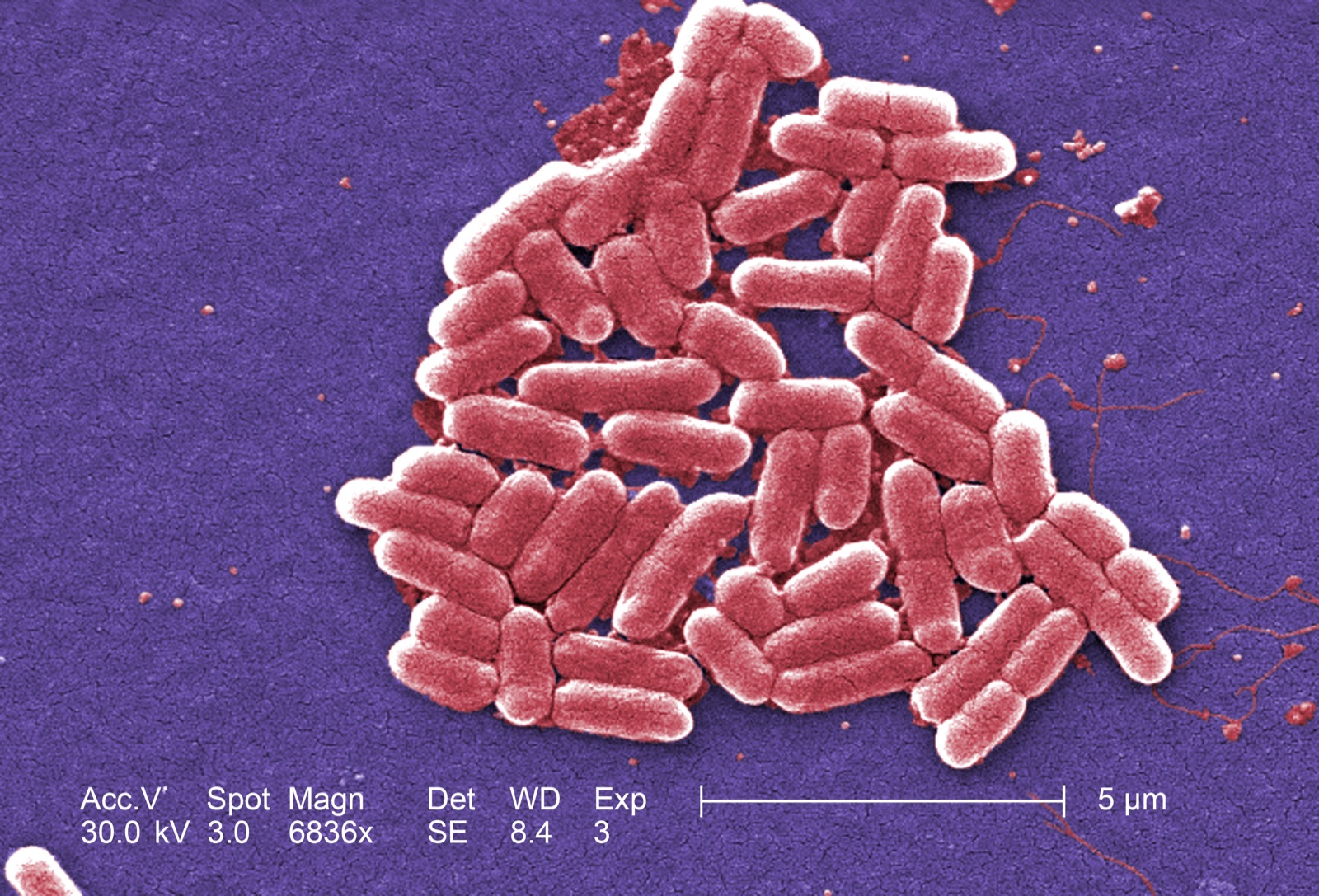
Photo: E. coli O157, a kind of E. coli that causes food poisoning. CDC / Janice Haney Carr, public domain (CDC Public Health Image Library, 10068).4
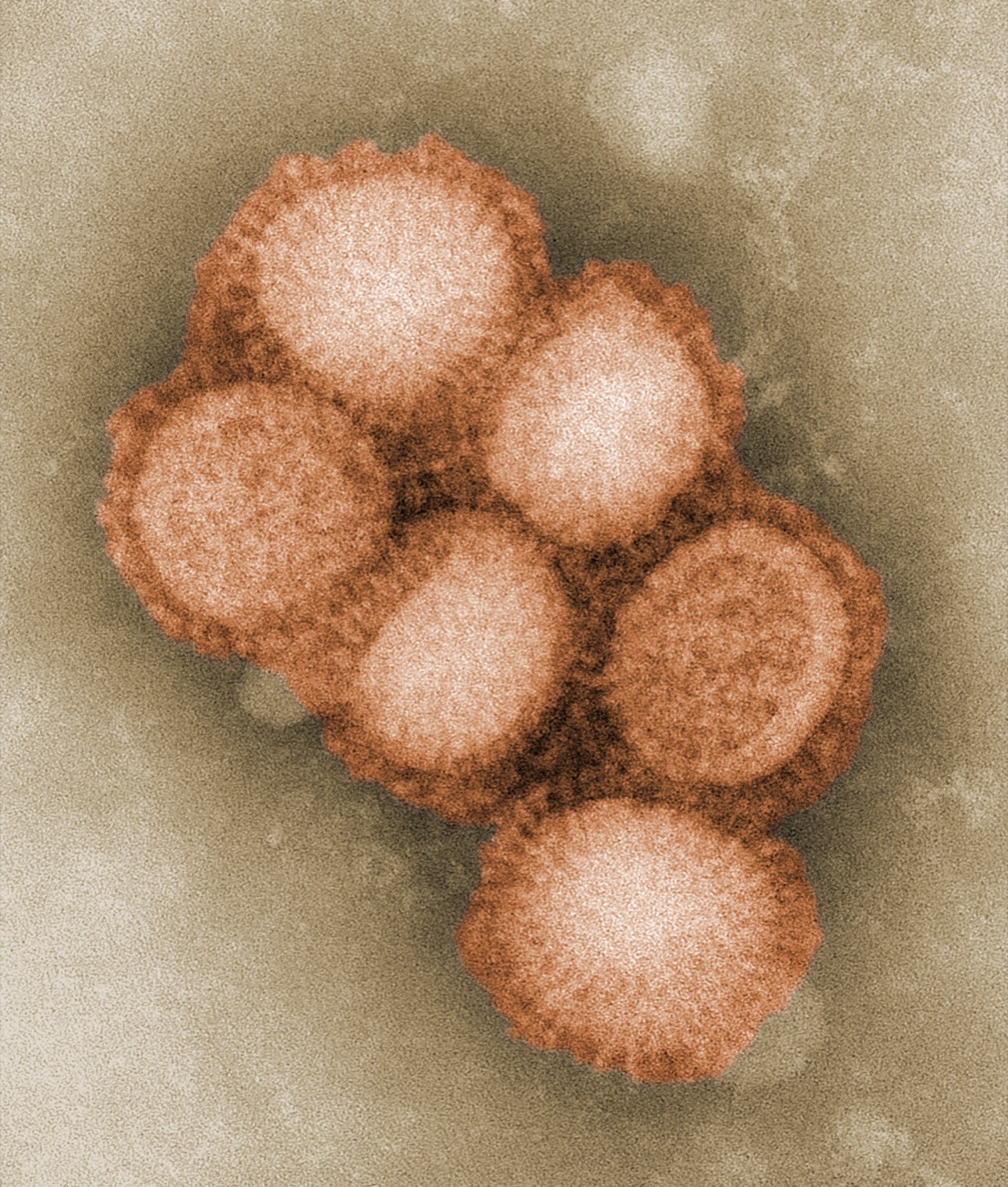
Photo: flu viruses. CDC / C. S. Goldsmith and A. Balish, public domain (CDC Public Health Image Library, 11214).
Mostly harmless, often helpful
Most microbes do us no harm, and many help: bacteria turn milk into yoghurt, and yeast makes bread rise. Take E. coli: most kinds are harmless and part of a healthy gut, though a few kinds, like the one in the photo, can make people sick.5
Only a small number of microbes cause illness. These are the ones we call germs (doctors call them pathogens).
Show the answer
Myth. Microbes are everywhere, but most are harmless and many are useful. Only a small number are germs, which is why washing your hands at the right times makes sense, but trying to kill every microbe around you does not.
About as many as your own cells
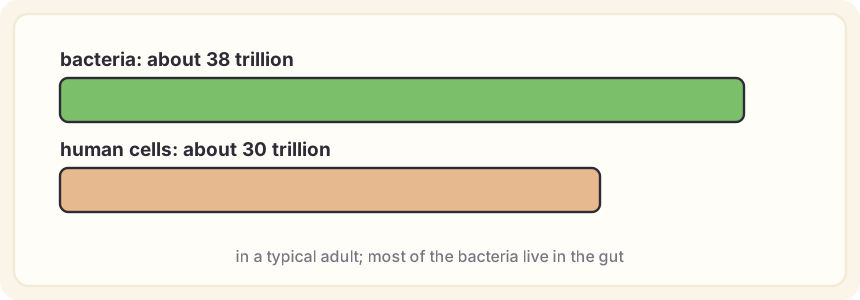
How many bacteria live in and on you? A careful estimate in 2016 found about 38 trillion bacteria in a typical adult, and about 30 trillion of the body's own cells: roughly as many of each. Most of the bacteria live in the gut.6 You may have read that bacteria outnumber your cells 10 to 1. That was an old rough guess, and it is wrong.
Try it this week
Look for microbes at work in your kitchen: yoghurt, bread dough rising, mould on old fruit. You can't see them, only what they do.
Words to know
- microbe - a living thing too small to see without a microscope
- bacteria - microbes made of a single cell; one is a bacterium
- virus - a tiny germ that can only make copies of itself inside a living cell
- fungus - a mould, yeast or mushroom (more than one: fungi)
- parasite - a living thing that lives on or in another one and feeds on it
- germ - a microbe that can make people ill (a pathogen)
Big idea
We live among trillions of microbes, and most are harmless or helpful; only a few are germs that make us ill.
Sources
-
Frank Fenner and others, Structure and Composition of Viruses (chapter of Veterinary Virology, 1987). ↩ ↩2
-
NHS, Athlete's foot. ↩
-
CDC Public Health Image Library, ID 10068 (photo with its 5 micrometre scale bar, 2006). ↩
-
Centers for Disease Control and Prevention (CDC), About E. coli Infection. ↩
-
Ron Sender, Shai Fuchs and Ron Milo, Revised Estimates for the Number of Human and Bacteria Cells in the Body (PLOS Biology, 2016). ↩