People Who Keep Us Well
Think of the last time someone asked "How are you?" and really waited for your answer. Or a neighbour who brought soup when you were ill, or a friend who sent a funny message on a hard day. These moments feel good. But can the people around us actually change our health?
What social connection means
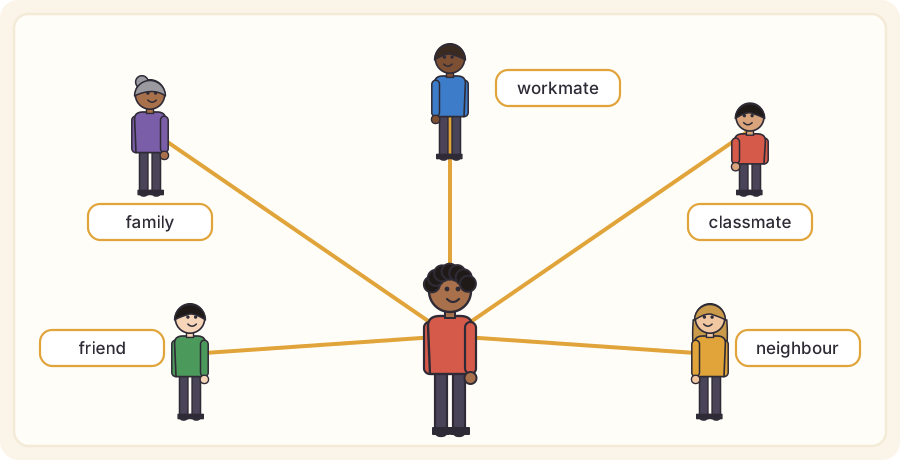
Social connection is the way we relate to and spend time with other people: family, friends, neighbours, classmates, workmates. Loneliness is the painful feeling that comes when the connections you have are fewer, or less close, than the ones you want. Being alone is not the same: you can be alone and feel fine, and you can feel lonely in a crowd.1
What the studies found
In 2010, researchers put together 148 studies of about 300,000 people who had been followed for years. People with stronger ties to others were about 50% more likely to still be alive at the end of the studies than people with weaker ties. The researchers found the size of this link comparable to some well-known risks to health.2
All of these studies watched people; none could test it. Nobody can make people lonely for an experiment. So this is a strong link, not proof that friendships alone make people live longer: people with many friends may differ in other ways too, such as their health or their money. (Telling a link from a cause is the idea of cause or coincidence.)
Loneliness around the world
In 2025 a WHO commission (the World Health Organization's group of experts on social connection) reported that about 1 in 6 people in the world are affected by loneliness. It is linked to an estimated 871,000 deaths a year, about 100 every hour.1
Loneliness is not only a problem of old age. It is most common among teenagers and young adults: 17 to 21% of people aged 13 to 29 said they felt lonely, with the highest rates in teenagers. It is also about twice as common in low-income countries (about 24%) as in high-income ones (about 11%).1
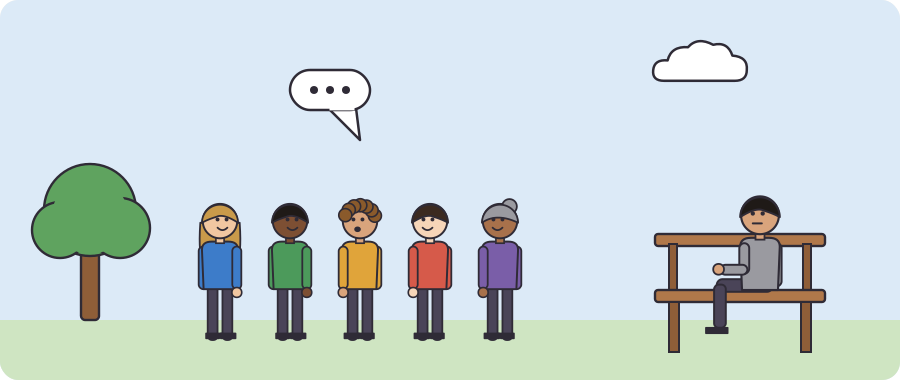
Loneliness has many causes, such as poor health, low income, living alone, and places with few spaces for people to meet.1 Feeling lonely is common and is not a failing. It can change.
What you can do
The WHO commission says each person can make a difference through simple, everyday steps.1 Helping other people is also on the NHS's list of ways to feel better under stress.3
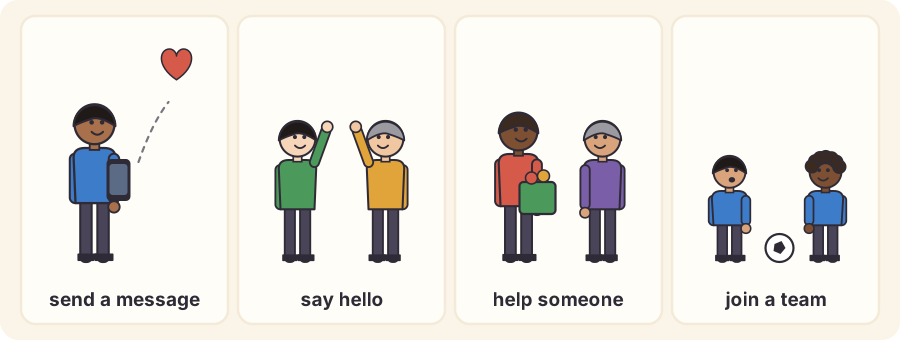
- Reach out. Send a message or call someone you haven't talked to for a while, especially a friend who may be having a hard time.
- Be really there. Put your phone away when you are talking with someone, and greet your neighbours.
- Join or help. Join a club, a class, a sports team or a local group, or volunteer to help others.
Words to know
- social connection - the ways we relate to and spend time with other people
- loneliness - the painful feeling of having fewer or less close connections than you want
Big idea
People with stronger ties to others tend to live longer and healthier lives, and those ties are built from small, everyday moments of contact.
Sources
-
World Health Organization, Social connection linked to improved health and reduced risk of early death (news release, 2025). ↩ ↩2 ↩3 ↩4 ↩5
-
Julianne Holt-Lunstad, Timothy B. Smith and J. Bradley Layton, Social relationships and mortality risk: a meta-analytic review (PLOS Medicine, 2010). ↩
-
NHS, 10 stress busters. ↩