Sitting Too Long
Count the sitting in an ordinary day. Breakfast, the bus or car, a desk at school or work, lunch, the trip home, dinner, then a film or a phone on the sofa. Add it up and many hours can go by without standing. Does all that sitting matter if you also go for a run?
What sedentary means
Time spent sedentary is time awake when you sit, recline or lie down and use very little energy.1 Watching TV, reading, driving and sitting at a desk all count. Sleep does not: it is a different thing, and the body needs it.
Studies that followed people for years found that more sedentary time is linked to poorer health. In adults it is linked to a higher risk of dying early and of dying from heart disease or cancer. In children and teenagers it is linked to poorer heart health, more body fat and shorter sleep.1 These studies watched people rather than testing them, so they show links, not proof of cause. The World Health Organization (WHO) also says there is not yet enough evidence to name a safe number of hours.2
Can activity make up for sitting?
In 2016 a team led by Ulf Ekelund put together 16 studies of more than one million people.3 People who sat for more than 8 hours a day had a higher risk of dying early, if they were not very active. But people who sat just as long and were also active for about 60 to 75 minutes a day, for example brisk walking or cycling, had no extra risk from all that sitting.4
The researchers' conclusion: not being active is a greater health risk than sitting for long. Watching a lot of TV was a little different: being very active made its extra risk smaller, but did not take all of it away.3
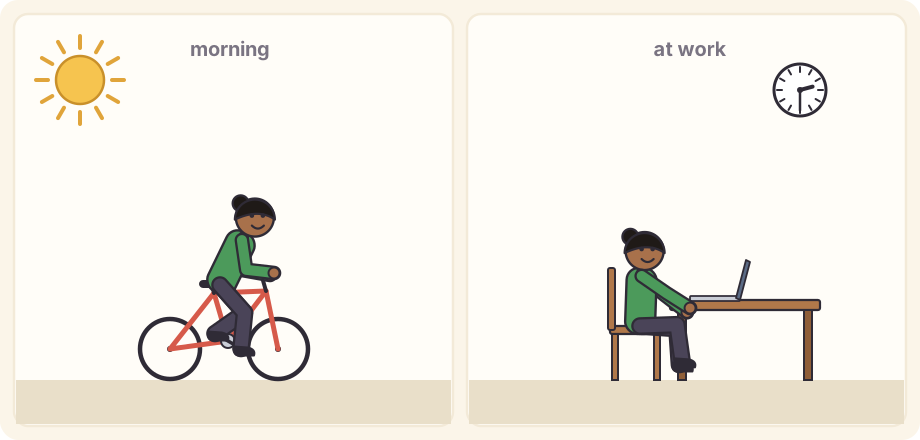
An hour or more a day is a lot, and only about 1 in 4 people in those studies did that much.4 So the advice has two parts: be active, and sit less.
Break it up
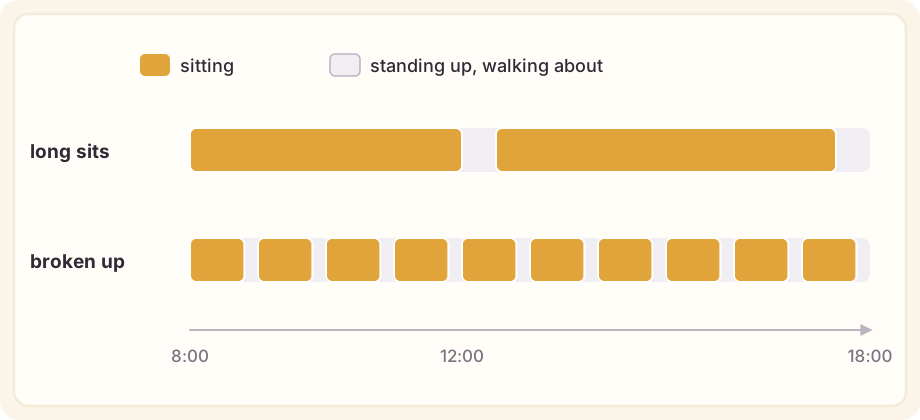
WHO's advice is to replace sitting with activity of any kind. Even light activity, like standing up and walking about, brings health benefits.2 Getting up every so often breaks a long sit into shorter ones, and the minutes of moving add up.
What you can do
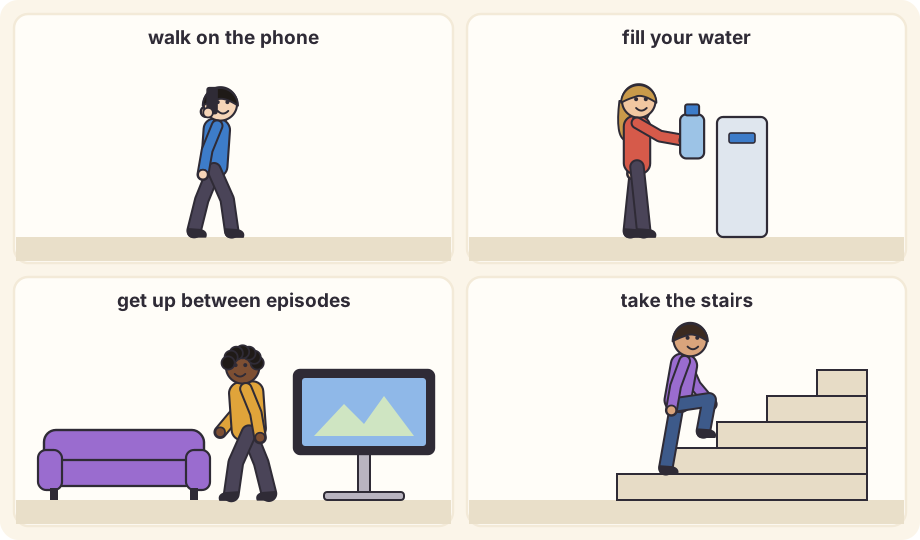
- Get up and move for a minute or two every so often, for example when a lesson, a task or an episode ends.
- Make some sitting into moving: walk while you talk on the phone, walk to talk to a friend instead of sending a message.
- Try to fit in about an hour of moderate activity on days when you have to sit for many hours.
Words to know
- sedentary - sitting, reclining or lying down while awake and using very little energy
Big idea
Long hours of sitting are linked to poorer health, but not being active is the bigger risk, so move enough each day and get up often.
Sources
-
World Health Organization, Physical activity (fact sheet, 2026). ↩ ↩2
-
Fiona Bull and others, World Health Organization 2020 guidelines on physical activity and sedentary behaviour (British Journal of Sports Medicine, 2020). ↩ ↩2
-
Ulf Ekelund and others, Does physical activity attenuate, or even eliminate, the detrimental association of sitting time with mortality? (The Lancet, 2016). ↩ ↩2
-
University of Cambridge, An hour of moderate exercise a day enough to counter health risks from prolonged sitting (news, 2016). ↩ ↩2