It Happened After, So It Was the Cause?
Every morning on a farm, the rooster crows, and soon after, the Sun comes up. It happens every single day. A child who has watched it for years might think, "The rooster's crowing makes the Sun come up." The pattern is real. So what is wrong with the conclusion?
After is not the same as because
The child's reasoning goes:
Every morning the rooster crows.
Every morning, soon after, the Sun comes up.
So the rooster's crowing makes the Sun come up.
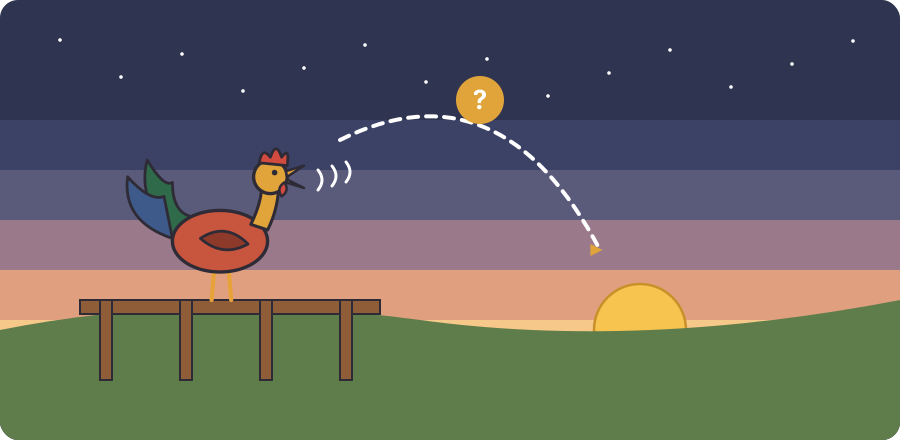
The first two reasons are true. But they only show that one thing comes after another. They don't show that the first thing causes the second - makes it happen. A cause is something that makes another thing happen.
There is an easy test: what happens without the first thing? If the rooster is ill one morning and doesn't crow, the Sun still comes up. So the crowing isn't the cause. (Scientists have found that roosters crow before dawn because a clock inside their body tells them morning is coming. The morning causes the crowing, not the other way round.)
Lucky socks
People make this mistake about themselves all the time. Sam wore his blue socks and his team won. He wore them again, and they won again. Now he calls them his "lucky socks".
Two wins after wearing the socks is a tiny number of examples - the hasty generalisation from the Too Few Examples lesson. And there is no way for socks to change a match. The wins and the socks just happened together by chance. When two things happen together by chance, it is called a coincidence.
A third thing causing both
Here is a trickier case. On days when a beach shop sells lots of ice cream, lots of people at the beach get sunburnt. The two go up and down together, day after day. Does eating ice cream cause sunburn?
No. Both have the same cause: hot, sunny weather. On a sunny day, more people buy ice cream and more people get sunburnt. The ice cream and the sunburn have nothing to do with each other.
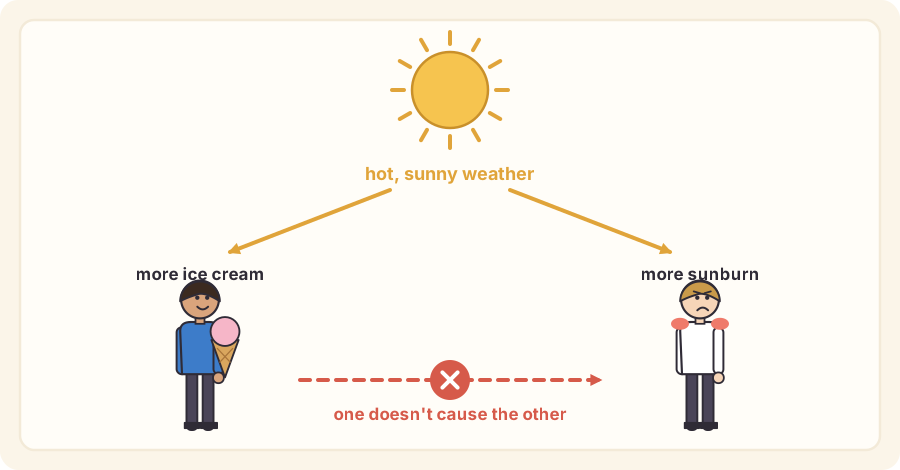
So when two things happen together, there are always several possibilities:
- the first causes the second;
- the second causes the first;
- a third thing causes both;
- it is a coincidence.
Seeing them together doesn't tell you which. To find out, you need more: what happens when one is missing, or when the third thing is missing - for example, cool days when the shop sells ice cream anyway.
Try it at home
- Write down one thing you or someone you know thinks is "lucky" (a pen, a seat, a routine).
- Use the test: what happens without it? Count the times honestly, good and bad.
- Find one pair of things that happen together, and think of a third thing that could cause both.
Words to know
- cause - something that makes another thing happen
- coincidence - two things happening together by chance, with neither causing the other
Big idea
One thing coming after another, or two things happening together, doesn't show that one causes the other. It could be a coincidence, or a third thing causing both - so ask what happens when the first thing is missing.