The Horse That Could Count
In Berlin, around 1904, crowds came to see a horse called Hans - "Clever Hans". His owner, a retired teacher called Wilhelm von Osten, would ask: "What is three plus two?" and Hans would tap his hoof five times. Hans could add, tell the time and spell words, tapping out the answers. A group of experts watched him and found no trick. Von Osten wasn't cheating; he honestly believed Hans could think. Could a horse really do sums?
The test
A young scientist, Oskar Pfungst, tested Hans carefully. He found that Hans got the answers right when the person asking knew the answer. When the person asking didn't know it - for example, when one person whispered a number and another a different one - Hans got it wrong. He also failed when he couldn't see the person asking.
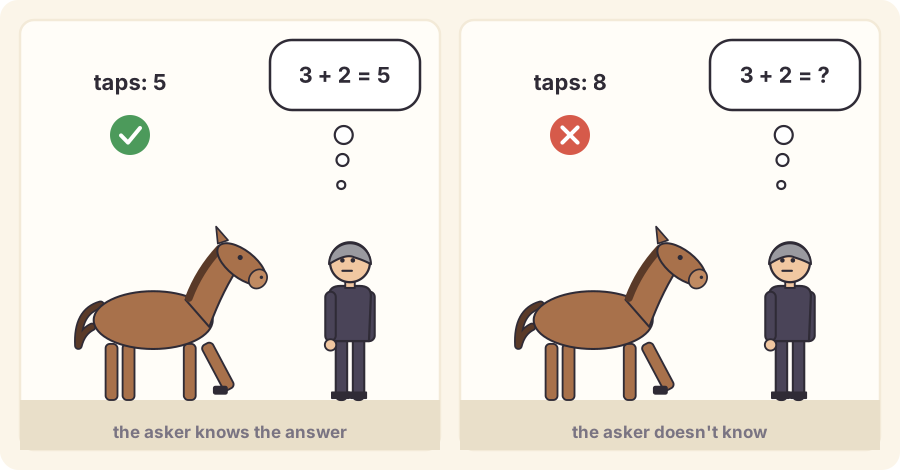
Hans was clever, but not at sums. He was clever at watching people. As he tapped, the person asking waited, slightly tense. When he reached the right number, they relaxed or moved their head a tiny bit, without knowing they did it. Hans saw it, and stopped.
Knowing changes things
Nobody was cheating. That is what makes the story important: just knowing the answer changed the result. The same thing happens to people. If you know which drink is the expensive one, it often tastes better to you. If a tester knows which plants got the new plant food, they may measure those a little more kindly, without meaning to. (If you have read Knowledge Level 1, this is seeing what you expect.)
Hide the labels
The fix is to stop people from knowing. In a blind test, the people being tested - and, when it matters, the people measuring - don't know which is which.
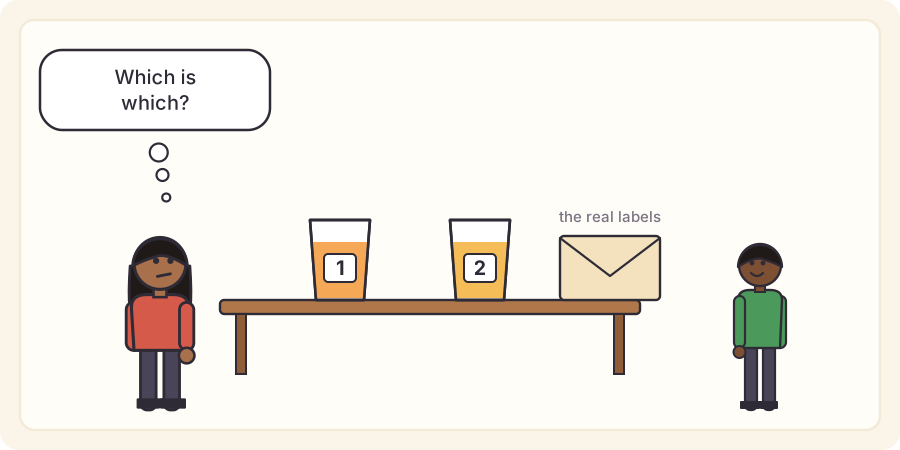
The taster gets cup 1 and cup 2 and doesn't know which brand is which. The plants are given numbers, and the person measuring them doesn't know which numbers got the food. Now what they expect can't change the result.
Try it at home
- Ask someone to pour two kinds of the same drink - two juices or two waters - into cups marked 1 and 2, without telling you which is which.
- Taste both and write down which you prefer and which you think is which.
- Then check. Try it again with the labels showing: did knowing change what you chose?
Words to know
- blind test - a test where the people involved don't know which is which, so what they expect can't change the result
Big idea
Knowing what a result should be can change it, even when nobody is cheating - Clever Hans could "count" only when the person asking knew the answer. A blind test hides which is which, so expectations can't get in.