An Excuse for Everything
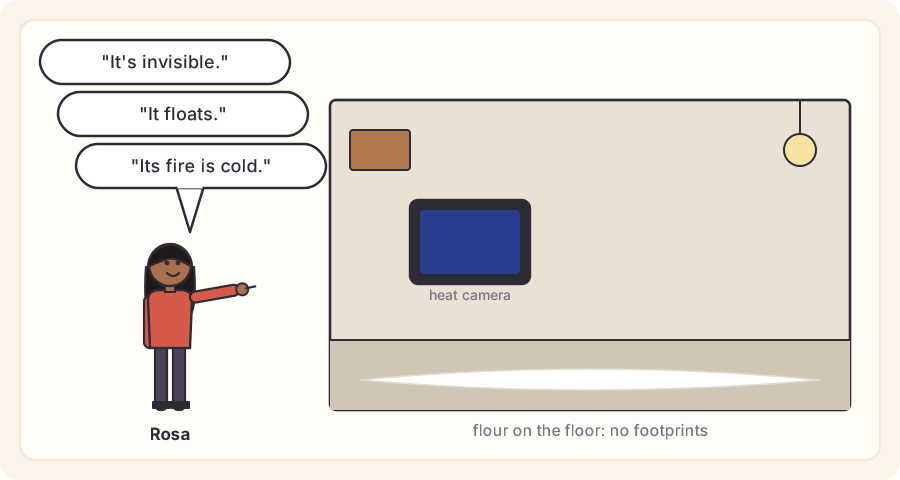
"There is a dragon in my garage," says your friend Rosa. Amazing! You go to look, but the garage is empty. "Oh, I forgot to say: it's invisible." You spread flour on the floor to see its footprints. "It floats in the air." You bring a camera that sees heat, to see its fire. "Its fire is cold." You throw paint over it. "The paint doesn't stick to it." This story was told by the astronomer Carl Sagan in 1995. What has gone wrong with Rosa's dragon?
Rescuing an idea
Each time a test could have shown the dragon, Rosa added something new about it: invisible, floating, cold fire, no paint. Each new thing was made up just then, just to save the idea from the test, with no other reason to believe it. An addition like that is an excuse: it rescues the idea, but it can't itself be checked.
An idea that says nothing
Now ask: what is the difference between "an invisible, floating dragon with cold fire that paint doesn't stick to" and no dragon at all? There is none. Nothing you could do would turn out differently.
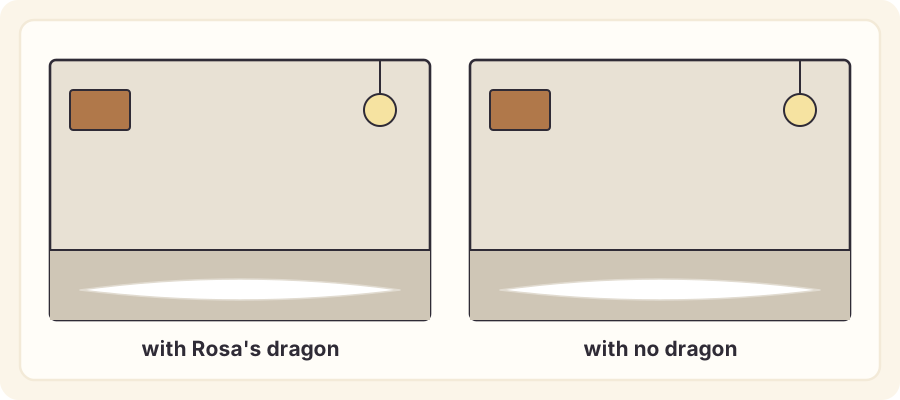
In the Could It Be Proved Wrong? lesson we saw that a claim that can't fail tells you nothing. Rosa's dragon started as a falsifiable claim. The excuses made it one that can't fail - and so one that says nothing.
Excuse or new idea?
Changing an idea after a test isn't always cheating. Suppose Zara's plant didn't bend back towards the window. She might say: "Maybe most of the light in my room comes from the door." That is fine, because it can be checked: she can close the door and test again. A change that makes a new prediction is a new hypothesis. A change made up only to escape a test, which predicts nothing new, is an excuse.
So when an idea fails a test and someone rescues it, ask: can the rescue itself be tested?
Try it at home
- Think of a time someone (maybe you) explained away a failure: "my lucky pen didn't work because I forgot to hold it the right way".
- Write down the rescue. Could it be tested? How?
- If it couldn't, what would the idea look like with no rescues at all?
Words to know
- excuse (in science) - something added to an idea only to save it from a failed test, which can't itself be checked
- rescue - saving an idea from a test it failed
Big idea
An idea that is saved from every failed test by a new excuse ends up saying nothing. A fair change to an idea makes a new prediction you can test; an excuse only escapes the test.