What Comes to Mind
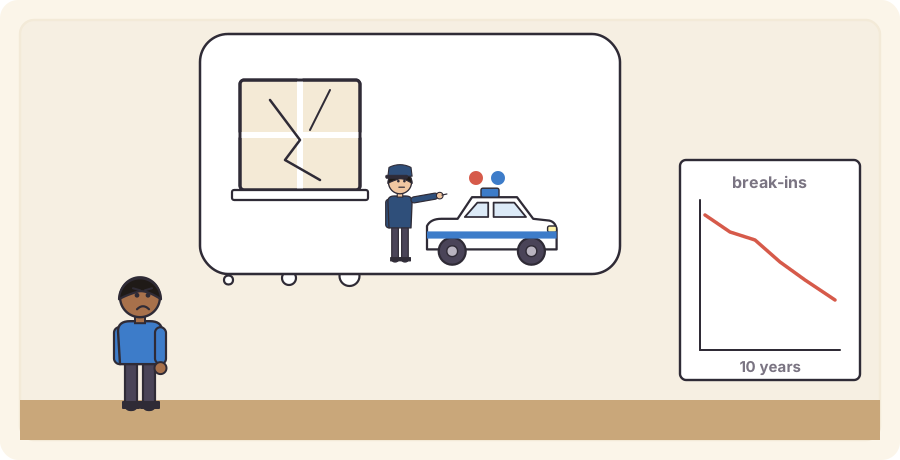
A house on Omid's street was broken into last month. Everybody talked about it for weeks: the broken window, the police car, the stolen laptop. Now Omid is sure that his town has a lot of break-ins, and he is afraid to leave his window open. His uncle, who looks after the town's records, tells him that break-ins in the town are rarer than they were ten years ago. Why does Omid feel so sure of the opposite?
How easy it is to remember
When we ask ourselves "how often does this happen?", we rarely count. Instead, we ask a quicker question without noticing: how easily can I think of an example? If examples come to mind at once, it feels common. If we have to search, it feels rare. Omid can't stop thinking of one break-in, so break-ins feel common.
The psychologists Amos Tversky and Daniel Kahneman named this in 1973. They called it availability: we judge how common something is by how available its examples are in our memory.
What makes things come to mind
Often the quick question gives a good answer: things we see a lot really are often common. But some things come to mind easily for other reasons:
- They were vivid - frightening, surprising, with pictures.
- They were recent - last month, not last year.
- They were talked about - in the news, or by everybody on the street.
- They happened to us or someone we know.
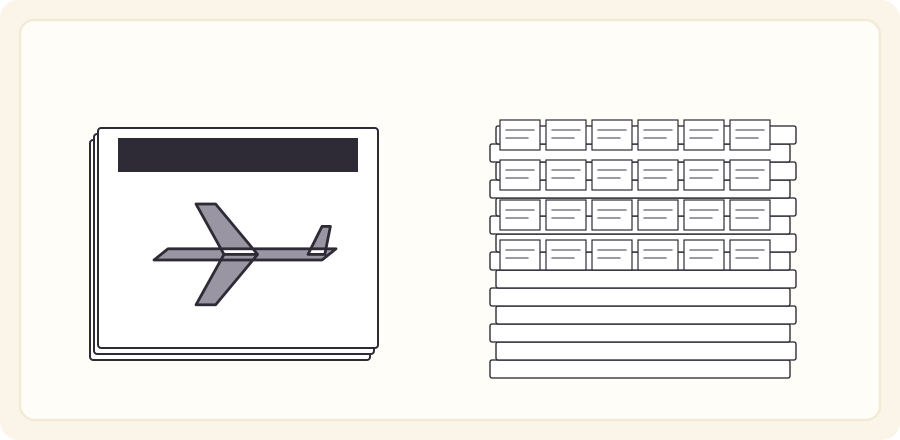
None of these makes something common. A plane crash is vivid and is reported all over the world, so many people feel that flying is very dangerous. Yet, for each kilometre travelled, far more people are hurt on roads than in planes. Car accidents happen every day, but most never reach the news.
Try the letter test
Tversky and Kahneman asked people: in English, are there more words that start with the letter K, or more words that have K as their third letter? Most people said "start with K". Words like kitchen and king come to mind at once, because we look words up by their first letter. Words like ask, like and make are harder to find in memory. In fact, there are more words with K third.
Checking what comes to mind
When something feels common, ask: is it common, or just easy to remember? Then look for the count, not the story - records, numbers, many cases instead of one.
Try it at home
- Without looking anything up, guess which hurts more people in your country each year: sharks or falls at home. Then look it up.
- Think of something you are afraid of. Is it common, or just vivid?
- Write down five words starting with "r" and five with "r" as the third letter. Which was harder? Why?
Words to know
- availability - judging how common something is by how easily examples come to mind
- vivid - strong and full of detail, so it sticks in memory
Big idea
We judge how common something is by how easily we can think of an example. But vivid, recent and talked-about things come to mind first. Ask for the count, not the story.