The Dog That Didn't Bark
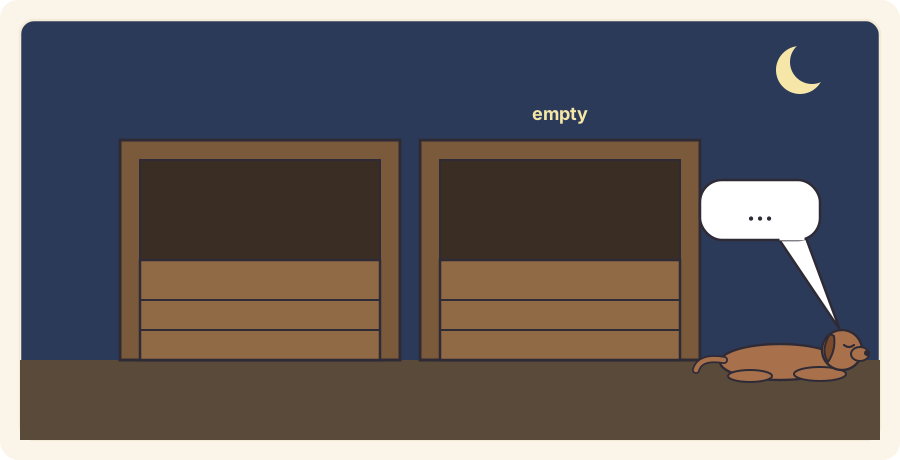
In a famous story by Arthur Conan Doyle, from 1892, a racehorse is stolen from its stable in the night. The police ask the detective Sherlock Holmes what he has noticed. Holmes points to "the curious incident of the dog in the night-time". "The dog did nothing in the night-time," says the policeman. "That was the curious incident," says Holmes. How can a dog doing nothing be a clue?
Nothing as a clue
There was a guard dog in the stable. If a stranger had come in at night, the dog would have barked and woken the stable boys. Nobody heard it bark. So the person who took the horse wasn't a stranger to the dog. It was someone the dog knew well - and that is how Holmes solved the case.
Holmes used a missing sign: something that would have been there if one explanation were true, and wasn't there. In Knowledge Level 1, evidence was anything that makes a claim more likely to be true, or less. A missing sign can do that too.
When "I see nothing" counts
People sometimes say "absence of evidence is not evidence of absence" - not finding something doesn't show that it isn't there. That is half right. Whether a missing sign counts depends on one question: would I have seen the sign if the claim were true?
- Is there an elephant in your fridge? You open it and see none. That settles it. If there were an elephant, you could hardly miss it.
- Are there germs on your hands? You look and see none. That settles nothing. Germs are far too small to see, so you would see nothing either way.

The same holds for how hard you looked. If you searched your whole bag and found no keys, that is good evidence your keys aren't in it. If you glanced into it in the dark, it isn't.
Using it well
So, when you notice that something is missing, ask:
- If the claim were true, would this sign be there?
- Did I look properly, where and when I would have found it?
If both answers are yes, the missing sign is real evidence. If not, "I didn't see it" tells you very little.
Try it at home
- Your friend says there's a cat in the garden. You look out of the window and see no cat. Is that good evidence? What would make it better?
- Think of something that could be true but leave no sign you'd notice.
- Think of something whose missing sign would settle it at once.
Words to know
- missing sign - something that would be there if a claim were true, but isn't
- absence of evidence - not finding a sign of something; it counts as evidence only if you would have found the sign
Big idea
Nothing happening can be a clue. A missing sign is good evidence when you would surely have seen the sign if the claim were true, and you looked properly. Otherwise, "I didn't see it" tells you very little.