I Knew It All Along
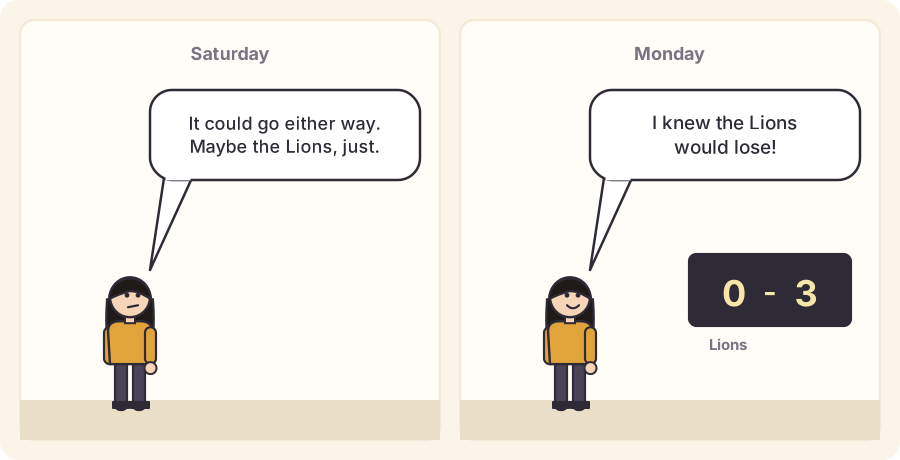
Before the big match on Saturday, Lina's friends argue about who will win. Lina says, "It could go either way. Maybe the Lions, just." The Lions lose 3-0. On Monday, Lina tells everyone, "I knew the Lions would lose. You could see it coming." She isn't lying - she really feels she knew. But on Saturday she said the Lions might win. What happened to her memory?
Looking back changes what you remember
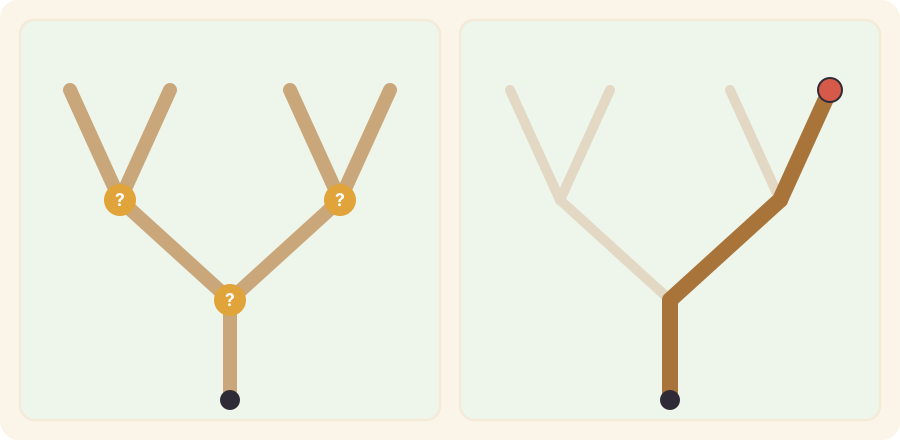
Once we know how something turned out, it begins to look obvious. All the signs that pointed to it stand out, and the signs that pointed the other way fade. Then we remember that we expected it all along. This is called hindsight bias, or the "I knew it all along" feeling. (Hindsight means seeing something after it has happened.)
In 1975 the psychologists Baruch Fischhoff and Ruth Beyth tested it. They asked people to say how likely some events were before they happened. Afterwards, they asked them to remember what they had said. People remembered being much surer of what really happened than they had been. They had rewritten their own memory without noticing.
Why it matters
Hindsight seems harmless, but it fools us in three ways.
- We think we are better at guessing than we are, because we only remember the times we "knew".
- We judge other people unfairly. After something goes wrong, people say "they should have seen it coming". But before it happened, it may not have been clear at all.
- We learn the wrong lesson. If everything looks obvious afterwards, we never learn how unsure we really were, or what we missed.
Keeping yourself honest
The best cure is simple: write your predictions down before you know the answer, with how sure you are. "Lions win - I'm about 6 out of 10 sure." Then, afterwards, read what you wrote, not what you remember.
When you judge someone after something went wrong, ask a different question: not "was the result obvious now?", but "what could they have known then?"
Try it at home
- Before the next match, game or school result you care about, write down what you think will happen and how sure you are.
- After it happens, write down what you remember predicting - before you look.
- Compare the two. Did your memory move towards what happened?
Words to know
- hindsight - looking back at something after it has happened
- hindsight bias - feeling, after you know the result, that you knew it all along
- prediction - saying what you think will happen before it does
Big idea
After we know how something turned out, it seems as if we always knew. Hindsight quietly rewrites what we remember. Write predictions down, and judge decisions by what could be known at the time.