How Much Does It Point?
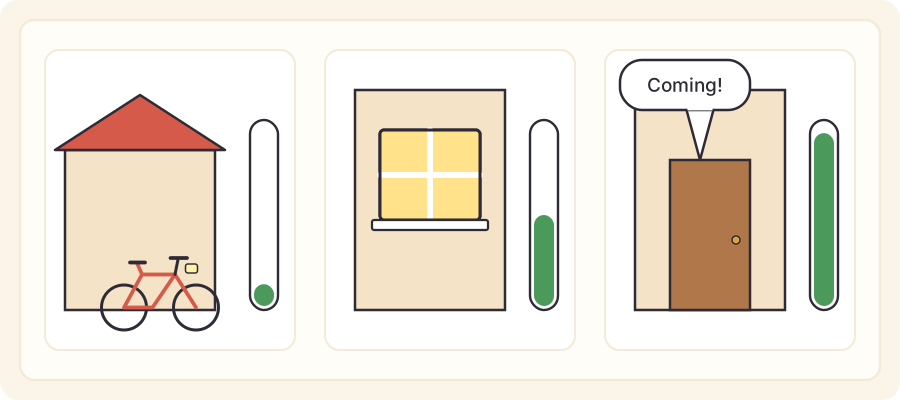
Leo wants to know whether his friend Maya is at home, so he walks past her house. He notices three things. Her bike is outside. The light in her bedroom is on. And when he knocks, he hears her voice: "Coming!" Each of the three fits the idea that Maya is home. But do they all count the same?
The question to ask
In Knowledge Level 1 we said that evidence is strong when nothing else could easily explain it, and weak when many things could. Here is a sharper way to ask the same thing:
How much more would I expect to see this if the claim were true than if it were false?
Ask it about each of Leo's three clues.
- The bike. Maya leaves her bike outside when she is home. But she also leaves it there when she walks to the shop, which she often does. Leo would see the bike whether she is home or not - so the bike points to "home" only a little.
- The light. If she is home in the evening, her light is usually on. If she is out, it is usually off, though sometimes she forgets it. So the light points to "home" quite a lot.
- Her voice. If she is home, Leo will hear her. If she isn't, he almost certainly won't. Her voice points to "home" very strongly.
Fits, but points nowhere
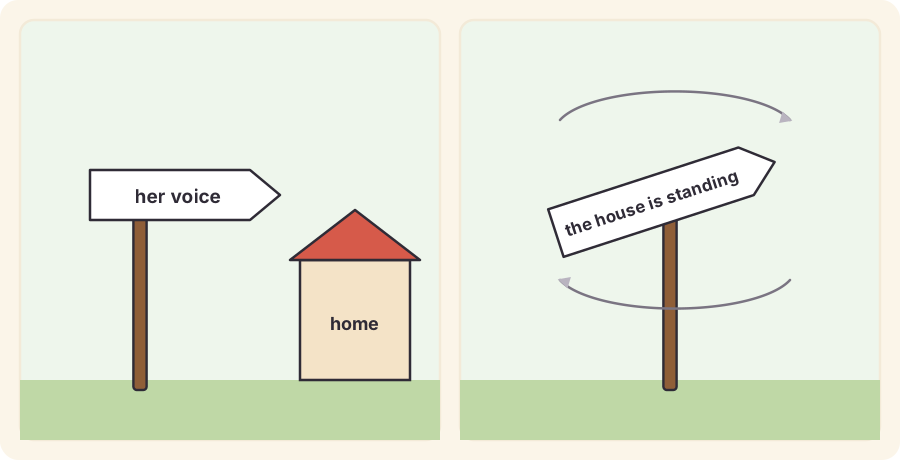
This question catches a common mistake. People often think a piece of evidence counts just because it fits their idea. But many things fit an idea and point nowhere, because you would see them either way.
Suppose Leo's sister says: "Maya must be home - her house is still standing!" The house fits "Maya is home". But it would be standing whether Maya is home or not. It points nowhere. In the same way, a fortune teller who says "you have had some difficult times" has said something that fits - but it fits everyone.
Adding up
The strength of evidence is about how much more you'd expect it if the claim were true. A clue you'd see twice as often if it were true moves you a little. A clue you'd see a hundred times as often moves you a lot. And as in Level 1, several independent clues pointing the same way add up: the bike and the light together point more than either alone.
Try it at home
- Pick a claim, like "it rained last night". Find three clues for it.
- For each clue ask: would I see this even if the claim were false? How much more often if it were true?
- Put the clues in order, from weakest to strongest.
Words to know
- pointing power - how much more you'd expect a piece of evidence if a claim were true than if it were false
- fits but points nowhere - evidence you would see whether the claim is true or not
Big idea
Don't ask only "does this fit?". Ask "how much more would I expect this if the claim were true than if it were false?" Evidence you'd see either way points nowhere, however well it fits.