When a Reason Is Taken Away
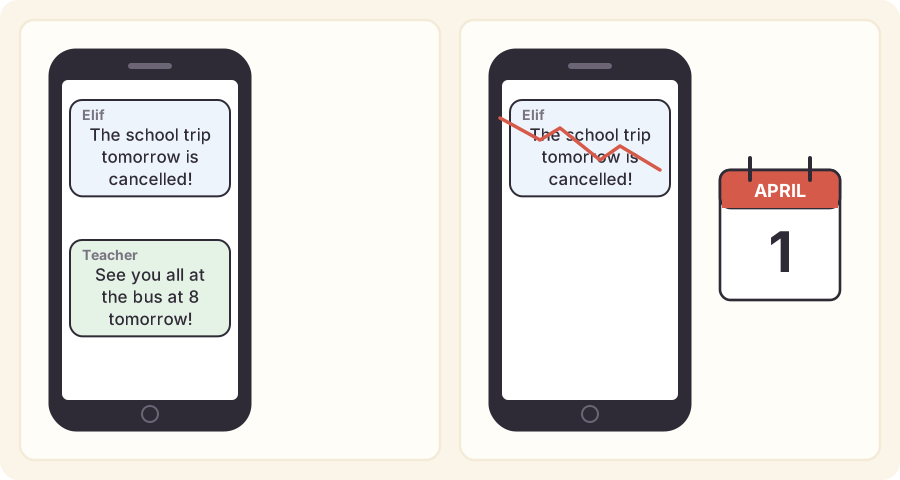
Yusuf gets a message from his classmate Elif: "The school trip tomorrow is cancelled!" Elif is usually right about school news, so Yusuf believes her. He puts away his packed lunch. Then one of two things happens. In the first story, the teacher sends an email: "See you all at the bus at 8 tomorrow!" In the second story, Yusuf looks at the calendar and sees that today is 1 April - the day people play tricks on each other. Either way, Yusuf stops believing the trip is cancelled. But the two stories work in different ways. How?
Two ways to lose a reason
In both stories Yusuf had a good reason - a message from someone usually right. And in both, a new fact took that reason away. Philosophers call a fact like this a defeater: something that defeats a reason you had. (The American philosopher John Pollock studied them closely in the 1970s.) There are two kinds.
- Evidence against. The teacher's email says the opposite of Elif's message. It doesn't say anything about Elif. It just points the other way, and it points harder, so it wins.
- A reason that stops counting. The calendar says nothing at all about the trip. It doesn't show the trip is on. It shows that Elif's message might be a joke - so it stops being a good reason. Yusuf is now back to not knowing.
Why the difference matters
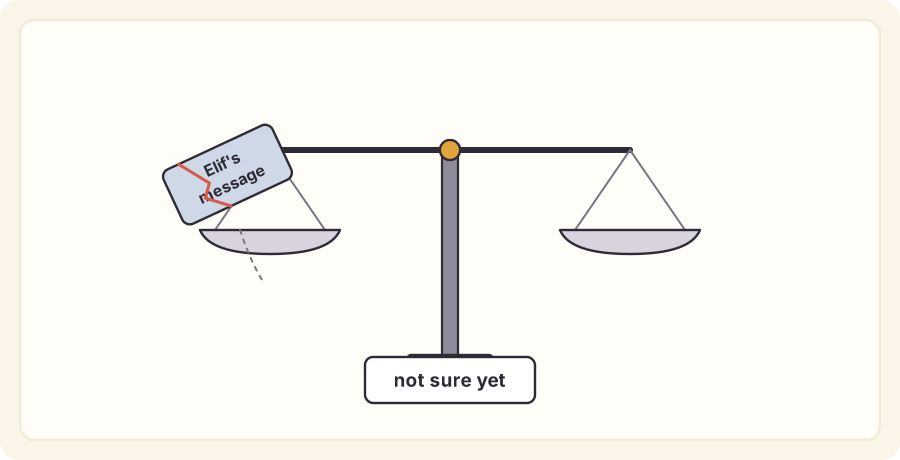
After the teacher's email, Yusuf should believe the trip is on. After the calendar, he shouldn't believe that - he has no reason either way. The right thing to do is to suspend judgement and find out, perhaps by asking the teacher.
People often mix these up. When a reason for a belief turns out to be bad, they jump to believing the opposite. "The man who told me it would rain is a liar - so it won't rain." But a bad reason for "rain" isn't a good reason for "no rain". It only leaves you where you started.
A reason can come back
Defeaters can be defeated too. In the second story, suppose Yusuf then remembers that Elif never plays 1 April tricks - she hates them, and says so every year. Now the calendar stops mattering, and Elif's message is a good reason again. Each new fact can take a reason away, or give it back. Thinking well means keeping track of which facts are doing what.
Try it at home
- Think of a belief you had for a good reason, which a new fact took away.
- Was the new fact evidence against the belief, or did it show that your reason stopped counting?
- After it, what should you have believed - the opposite, or "I'm not sure yet"?
Words to know
- defeater - a new fact that takes away a reason you had for a belief
- evidence against - a fact that points to the belief being false
- a reason that stops counting - a fact that shows your reason doesn't support the belief here, without showing the belief is false
Big idea
A new fact can take away a reason in two ways - by pointing the other way, or by showing the reason doesn't count. Only the first gives you a reason to believe the opposite; the second just leaves you not knowing.