When Experts Disagree
Ali's old car is making a grinding noise. He takes it to a mechanic, Mrs Lund, who listens and says: "It's your brakes. New brakes will cost a lot, but I can fit them today." For a second opinion, he goes to another mechanic, Mr Daud, who says: "No, it's a wheel bearing. That's cheaper." Ali knows nothing about cars. Both are experts. He can't check the noise himself. How can he decide whom to believe?
Experts, and where they stop
In Knowledge Level 1 we said that an expert's word is a good reason to believe - inside their field - and that when most experts agree, that is strong evidence. Two harder cases are left.
The first is an expert outside their field. A famous racing driver who tells you which engine oil to buy is speaking near her field; the same driver telling you how to treat a cough is not. Being an expert in one thing gives no extra weight to what you say about another.
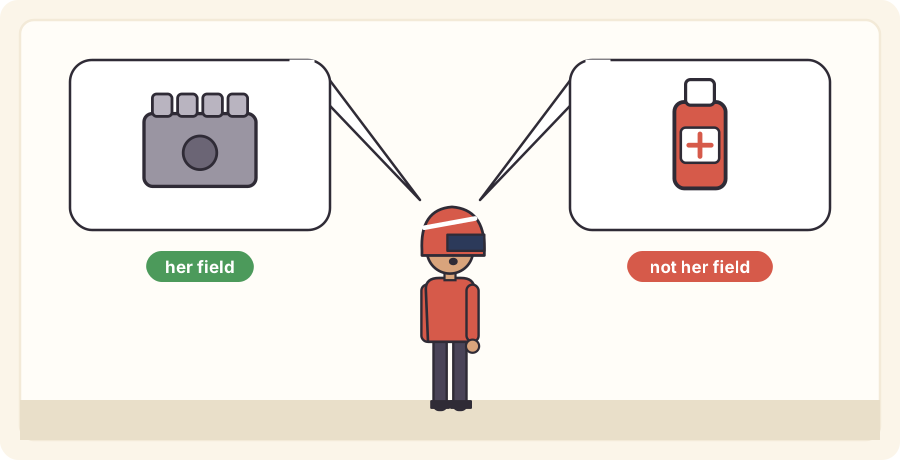
The second is when experts disagree, like Ali's mechanics. Ali can't judge the noise. But he can still judge some things about the experts - without being one.
What a non-expert can check
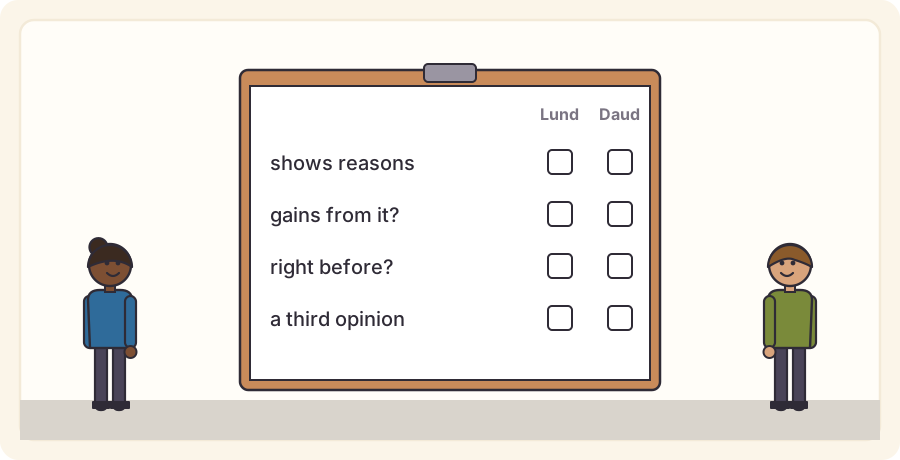
- Reasons you can follow. Ask each one to show you. Mr Daud lifts the car and lets Ali feel the wheel wobble. Mrs Lund points at the brake pads, and they look thick and new. An expert who can show you a reason gives you more than one who only says "trust me".
- Who gains. Mrs Lund would earn more from the expensive job. That doesn't mean she is wrong - but it is a reason to ask for more than her word.
- Track record. Has either been right before, for Ali or for people he trusts?
- What other experts say. A third mechanic, who doesn't know the other two, is an independent source. If she agrees with one of them, that counts for a lot.
When experts really are split
Sometimes the experts in a field honestly disagree, because the question is still open. Then the right answer for a non-expert is not to pick a side, but to believe less firmly: "The experts aren't sure yet, so I'm not either." Knowing that a question is still open is a piece of knowledge too.
Try it at home
- Think of a time two people who knew more than you told you different things.
- Which of the four checks could you have used?
- Find someone famous for one thing who often speaks about another. Is their word a good reason there?
Words to know
- field - the area an expert knows well
- second opinion - asking another expert, who doesn't know what the first one said
- gains from it - would be better off if you believed them
Big idea
You can judge experts without being one. Check whether they are in their field, whether they can show you reasons, whether they gain, how they did before, and what independent experts say. When experts are split, believe less firmly.