When Friends Disagree
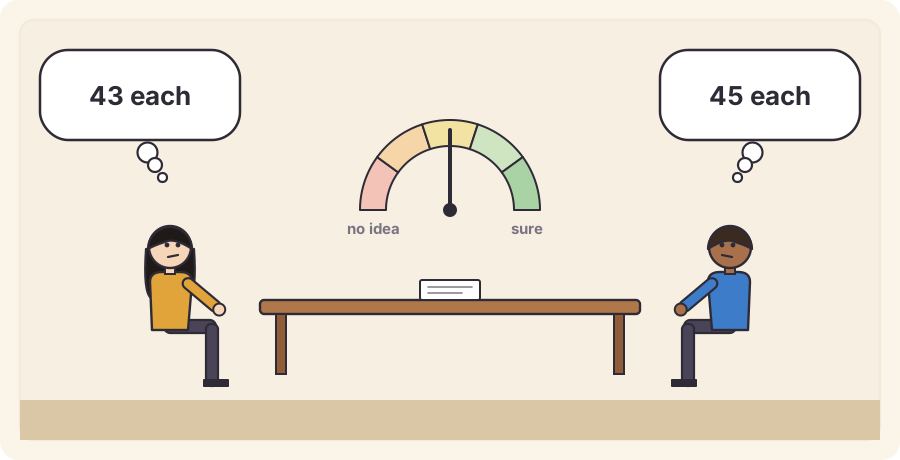
Mira and Jon have dinner with two friends, and the bill comes. They agree to split it equally and add a tip. Each of them works out the sum in their head. Mira says, "That's 43 each." Jon says, "No, 45 each." Both are good at sums. Both are paying attention. Both have seen the same bill. What should Mira think now - and what should Jon?
Disagreeing as equals
Mira and Jon are equals in this question: they have the same information and are just as good at this kind of thing. Philosophers call people like this peers. The American philosopher David Christensen used this example of the restaurant bill in 2007.
The question is what a disagreement between peers should do to your belief. Mira could think: "I worked it out, so 43 is right, and Jon must have slipped." But Jon could think exactly the same about her. Nothing she knows makes her own sum more trustworthy than his. So most people feel the right answer is clear:
Both should become less sure, and check.
The other person is evidence
This is a new kind of evidence. Jon's answer isn't about the bill. It is about Mira's thinking. A peer coming to a different answer is a sign that one of you made a mistake - and you can't tell from the inside which one. So Mira's confidence in 43 should drop, until they work it out again on paper.
Some philosophers think this goes for all disagreements between peers: give the other person's view as much weight as your own (they call it "equal weight"). Others think you may sometimes stick to your view - for example, if you have a special reason to think that this time the other person slipped.
When you may stick to your answer
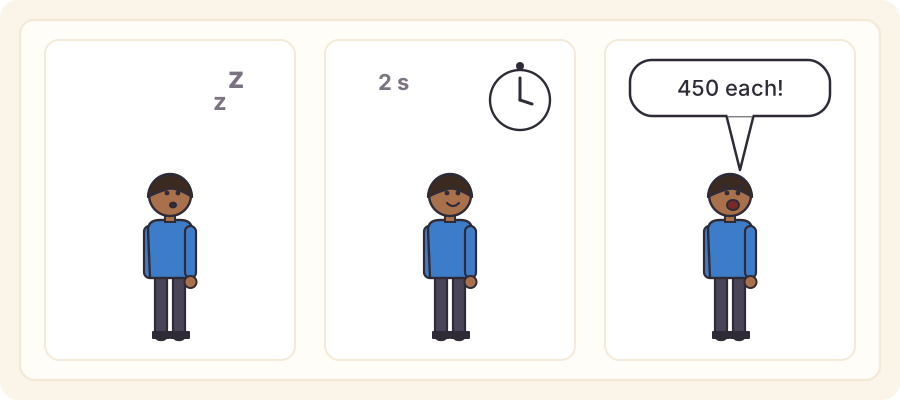
Suppose Jon has had a long, tiring day and is yawning. Or Mira checked her answer twice and he did it in two seconds. Or Jon says each of them owes 450 - an answer so far off that he must have misread the bill. In each case Mira has a reason, from outside the disagreement itself, to trust her answer more than his. Then she can stay fairly sure. What she can't do is say: "I'm right because my answer is 43."
Disagreement is useful
A peer who disagrees with you is a gift. They show you that you might be wrong, and they often know where to look. That's why groups who check each other's work make fewer mistakes than people working alone - as long as each one is willing to say, "Let's check."
Try it at home
- Think of the last time a friend or relative disagreed with you about a fact.
- Were they your equal in that question - same information, same skill?
- Did you have a reason, apart from your own answer, to trust yourself more? What did you do, and what should you have done?
Words to know
- peers - people who are equals in a question: the same information, the same skill
- disagreeing as equals - when a peer reaches a different answer from yours
- equal weight - the view that you should count a peer's answer as much as your own
Big idea
When an equal reaches a different answer, it is a sign that one of you is wrong - and you can't tell which from the inside. Become less sure and check, unless you have a reason from outside the disagreement to trust yourself more.