Strong and Weak Evidence
Lina looks out of the window in the morning and sees that the grass is wet. "It rained in the night," she says. Her father looks out too. The grass is wet, but so is the car, and the street, and there are puddles on the pavement and a wet newspaper on the doorstep. "Yes," he says, "it rained." They saw the same wet grass. Who had better evidence?
What else could explain it?
Wet grass is evidence that it rained. But it isn't strong evidence, because many other things could make the grass wet. In the morning, grass is often wet with dew - drops of water that form on cold grass at night, rain or no rain. And a neighbour might have watered the garden.
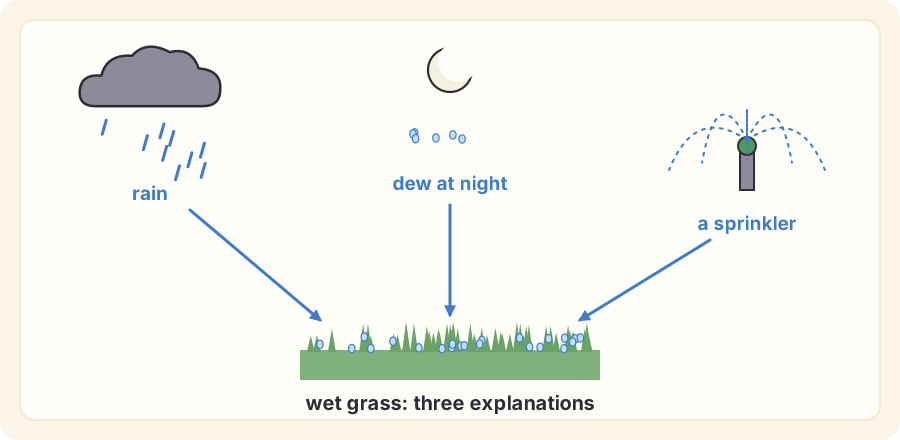
This is the most useful question to ask about any piece of evidence: what else could explain it?
- If many other things could easily explain it, it is weak evidence.
- If nothing else could easily explain it, it is strong evidence.
Pieces that add up
Lina's father had more. The car, the street, the puddles and the newspaper were all wet too. Dew doesn't make puddles, and a sprinkler doesn't wet the whole street. Each piece is weak on its own, but together they point one way. Only one explanation fits them all: rain.
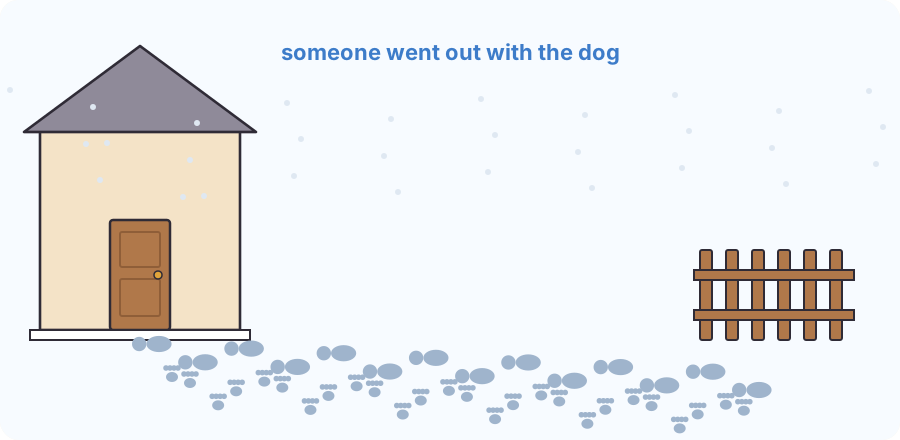
Footprints in fresh snow are another example. Boot prints from the front door to the gate are strong evidence that someone walked out: it is hard to think what else could make them. If paw prints run beside them, there is strong evidence the dog went too. And the snow says when: if it stopped snowing at seven, the prints were made after seven.
Strong evidence can still mislead
Strong evidence is strong, not perfect. Someone could have walked out backwards to fool you. But strange explanations like that are unlikely, and that is what "strong" means: it makes the claim very likely, not certain. The next lesson asks how sure that lets you be.
Try it at home
- Look for a clue around you - a wet umbrella by the door, a warm teapot, an open window.
- Write down every explanation you can think of for it.
- Is it strong or weak evidence? What other clue would make it stronger?
Words to know
- strong evidence - evidence that nothing else could easily explain
- weak evidence - evidence that many other things could explain
Big idea
To judge a piece of evidence, ask what else could explain it. Evidence is weak when many things could, and strong when nothing else easily could. Several weak pieces that all point the same way can add up to strong evidence.