How Sure Should You Be?
The weather forecast says: "80% chance of rain this afternoon." Elif takes an umbrella. At four o'clock the sky is blue and the umbrella is dry. Was the forecast wrong? Was Elif silly to take the umbrella?
More or less sure
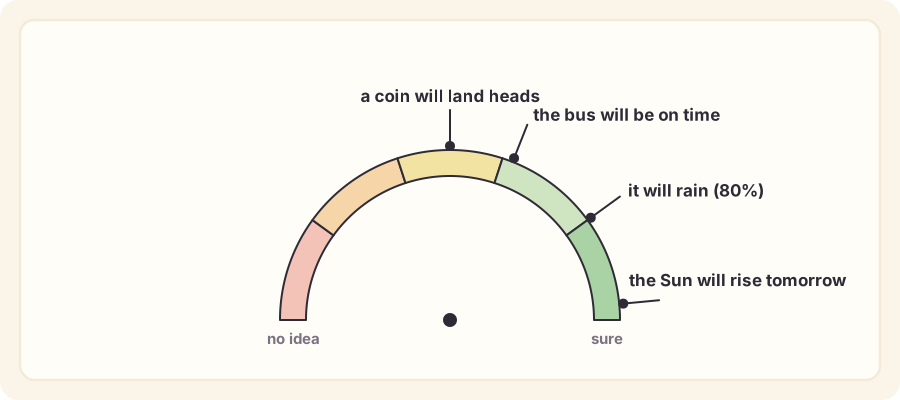
So far we have talked about believing a claim or not. But belief comes in degrees. You can be completely sure, fairly sure, unsure, or fairly sure it's false. How sure you are of a belief is called your confidence in it.
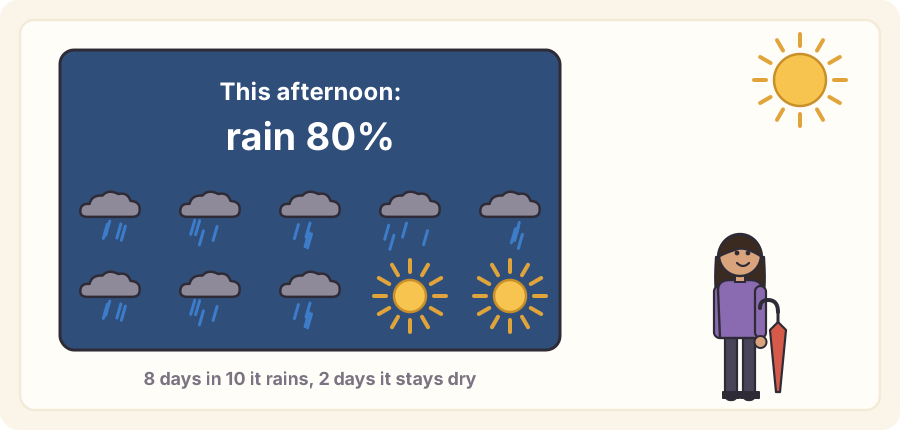
The forecast tells you how confident to be. 80% means: on days like this one, it rains on about 8 days out of 10. So rain is likely, and Elif was right to take the umbrella. But 80% also says that on 2 days out of 10 it stays dry - and today was one of them. The forecast wasn't wrong. A dry afternoon is exactly the kind of thing that 80% allows.
As sure as the evidence
Here is the rule a careful thinker follows: be as sure as the evidence allows - no more, and no less.
- With strong evidence, like the wet street and puddles in the Strong and Weak Evidence lesson, be very sure.
- With weak evidence, like wet grass alone, be only a little sure.
- With no evidence either way, have no opinion yet.
There are two ways to get this wrong. You can be too sure: deciding a new classmate is unfriendly because they didn't smile once. Or you can be not sure enough: refusing to believe the stove is hot after it has burned you three times. Both are mistakes about how much the evidence says.
Sure is not the same as right
Being 80% sure means that sometimes you will be wrong. That is not a failure. If you are 80% sure of a hundred things and about eighty turn out true, your confidence was just right. The mistake would be to be 100% sure of all of them.
Try it at home
- Write down five things you expect will happen this week.
- Next to each, write how sure you are, from 0% to 100%.
- At the end of the week, check. Were you too sure, not sure enough, or about right?
Words to know
- confidence - how sure you are of a belief
- in degrees - more or less, not just yes or no
Big idea
Belief comes in degrees, from "no idea" to "sure". A careful thinker is as sure as the evidence allows - very sure with strong evidence, a little sure with weak evidence. Being 80% sure means you will sometimes be wrong, and that's as it should be.