It's Fine Not to Know
Two teams are about to play the final. Your friends ask you who will win. One friend says, "The Blues, for sure." Another says, "The Reds, easily." Both teams have won six matches this season, and both have their best players. You say, "I don't know - it could go either way." Your friends laugh. Is "I don't know" a weak answer?
Three choices, not two
We often think there are two choices about a claim: believe it or don't. But there are really three:
- believe it - "the Blues will win";
- believe it is false - "the Blues won't win";
- hold off - "I don't know yet".
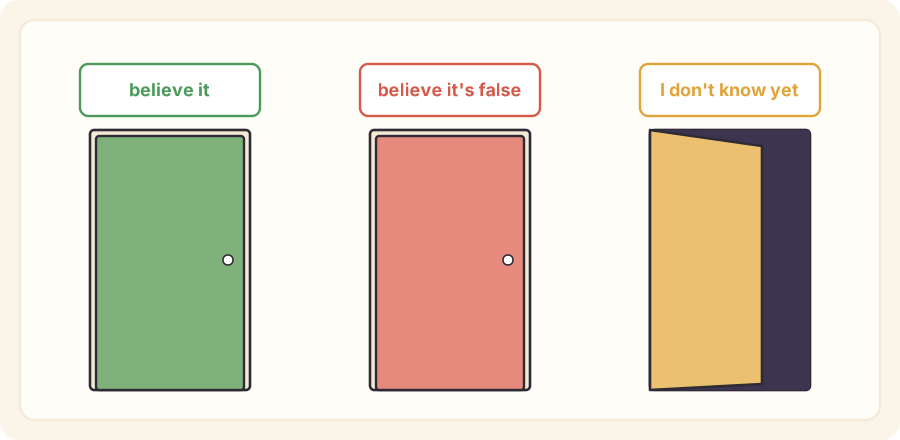
The third choice has a name: suspending judgement - leaving the question open, without deciding, until there is more evidence. To suspend something is to hang it up and leave it there for a while.
When to hold off
In the How Sure Should You Be? lesson we saw that you should be as sure as the evidence allows. Sometimes the evidence allows very little:
- the evidence points both ways, equally - like the two teams with six wins each;
- there is hardly any evidence - like whether it will rain on a day three months from now;
- nobody knows yet - like whether there is life on a planet around another star.
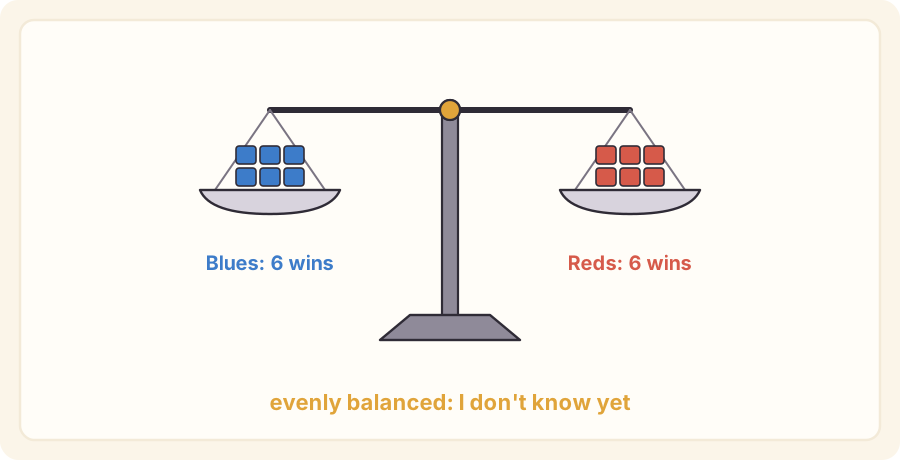
In each case, picking a side would mean being more sure than the evidence. The friend who said "the Blues, for sure" had no better evidence than you. They just didn't say so.
"Yet" is the important word
Suspending judgement isn't giving up. It is waiting for evidence. After the final, you will know who won. When scientists find a way to look at that faraway planet, they may find out. "I don't know yet" keeps the question open so you can come back to it.
Many people find "I don't know" hard to say. It can feel like losing. But a person who says "I don't know" when they don't know is a person you can trust when they say "I know". Their "yes" means something.
Try it at home
- Think of three questions you have an opinion on.
- For each, ask: is the evidence strong, weak, or balanced?
- Is there one where the honest answer is "I don't know yet"? What evidence would help you decide?
Words to know
- suspending judgement - leaving a question open, not believing it and not believing it false, until there is more evidence
Big idea
There are three choices about a claim: believe it, believe it is false, or hold off. When the evidence is weak or balanced, the honest answer is "I don't know yet". That isn't giving up - it is waiting for evidence, and it makes your "I know" worth more.