A Careful Knower
Think back to Sam at the start of this course, locked out of his house, sure his keys were in his pocket. What would Sam do differently now, after everything in these lessons? Not "never be sure of anything" - that would be no way to live. What does a careful knower actually do?
The questions of this course
A careful knower asks a few questions when something matters. Here are the ones this course has built, one by one:
- What exactly do I believe? (What Is a Belief?)
- How do I know it - which source? My senses, memory, someone who told me, or working it out? (Four Ways of Knowing)
- How strong is the evidence? What else could explain it? (Strong and Weak Evidence)
- How sure should I be? As sure as the evidence, no more. (How Sure Should You Be?)
- If someone told me, are they reliable - and independent? (Who Should You Believe?, Two Sources or One?)
- Could I be fooling myself? Am I seeing what I expect, believing what I want, or missing the ones I can't see? (Seeing What You Expect)
- What would change my mind? (Changing Your Mind)
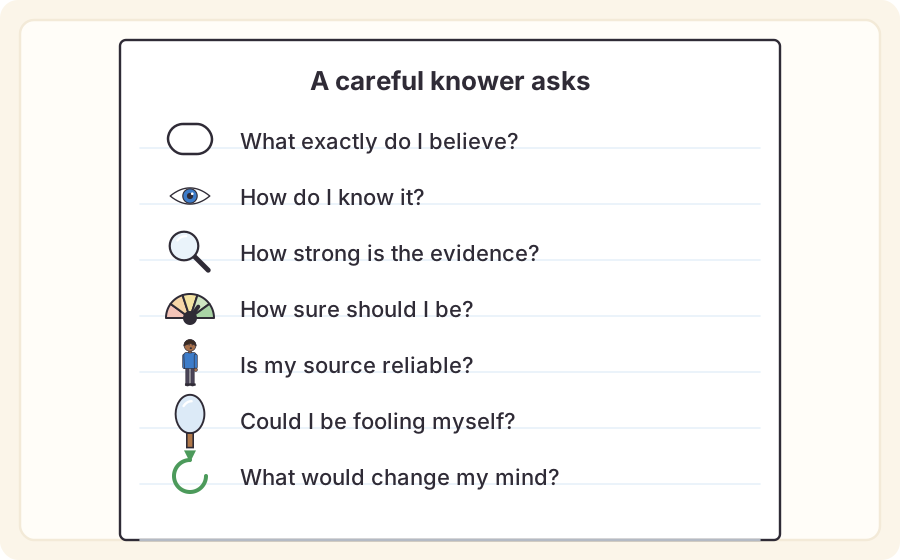
You don't need all seven every time. Nobody checks the evidence that their chair will hold them. But for the beliefs that matter - before you share a post, take a side or make a big choice - they help.
Being humble
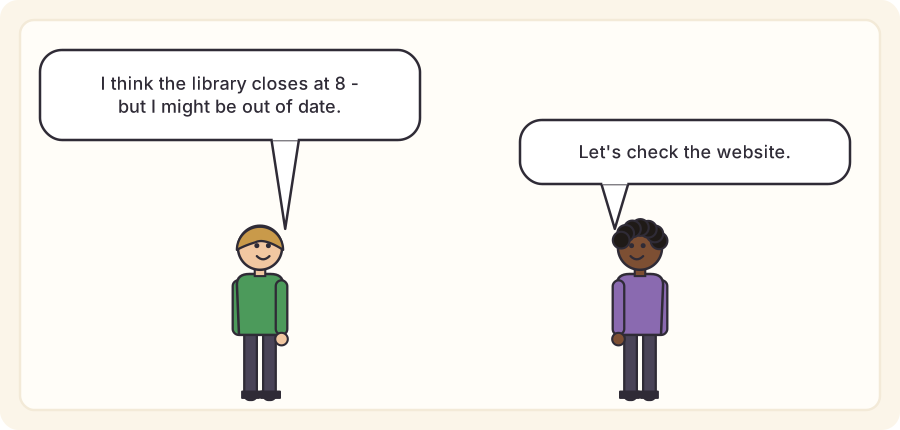
Behind all seven questions is one attitude. It is called intellectual humility: knowing that your knowledge has limits, and that you could be wrong. Intellectual means "about thinking and knowing"; humble means not thinking you are better than you are.
Intellectual humility doesn't mean thinking you know nothing - the Knowing Without Being Certain lesson showed that you know a great deal. It means holding each belief as firmly as the evidence allows, saying "I don't know" when you don't, and being glad, not upset, when someone shows you a mistake.
Back to Sam
So what would Sam do? He would still believe his keys were in his pocket - that is a perfectly reasonable belief, with good reasons. But before pulling the door shut, he might pat his pocket, because a locked door is a big thing to get wrong. That is all a careful knower is: someone who checks when it matters, believes as much as the evidence says, and stays ready to learn.
Try it at home
- Pick one belief that matters to you this week - about a plan, a person or a piece of news.
- Go through the seven questions. Which ones were hard to answer?
- Did any of your answers change how sure you are?
Words to know
- intellectual humility - knowing that your knowledge has limits and that you could be wrong, and being glad to learn when you are
Big idea
A careful knower asks how they know, how strong the evidence is, whether they could be fooling themselves and what would change their mind - and holds every belief as firmly as the evidence allows. That is intellectual humility: not knowing nothing, but knowing your limits.