Seeing What You Expect
Rosa plays in her school's football team, and she is sure her red socks are lucky. "Every time I wear them, we win," she says. She remembers the 3-0 win against the team from across town, and the last-minute goal in the final. Her friend Theo has been keeping the team's results in a notebook all season. He opens it. What will he find?
Remembering the hits
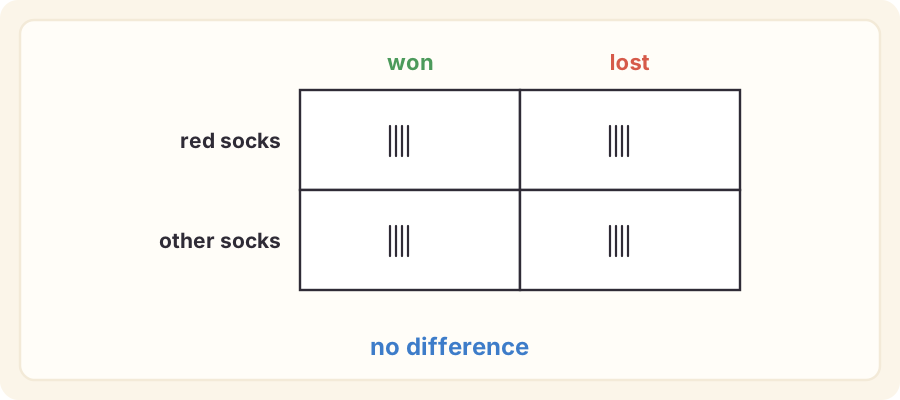
Theo's notebook shows this: in the red socks, Rosa's team won 4 matches and lost 4. In her other socks, they also won 4 and lost 4. The socks made no difference. So why is Rosa so sure?
Rosa isn't lying, and she isn't silly. She remembers the wins in the red socks because they fit what she believed. They felt like proof, so they stuck. The losses in the red socks didn't fit, so she didn't notice them as much - "we were just unlucky that day" - and they faded.
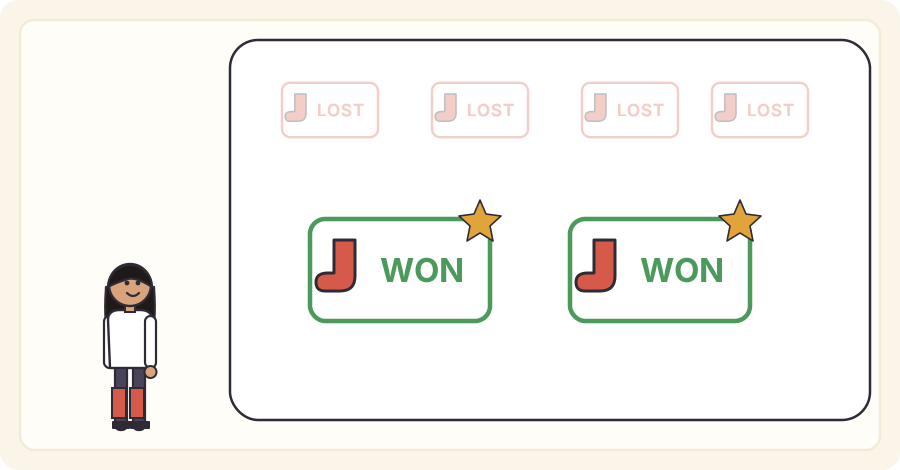
Noticing and remembering the evidence that fits what you already believe, and missing the evidence that doesn't, is called confirmation bias. To confirm a belief is to support it. A bias is a pull in one direction, always the same way, like a ball that always rolls to one side of a sloping table.
Everyone does it
Confirmation bias isn't a fault of a few people. Everyone's mind does it, all the time. It is part of how memory works, as the What You Remember lesson showed: memory keeps what seemed important, and what fits our beliefs seems important.
It shows up everywhere:
- "The phone always rings when I'm in the shower" - you don't remember the hundred showers when it didn't;
- "My bus is always late when I'm in a hurry" - you don't notice it when you're not in a hurry;
- "People from that town are so rude" - you remember the one rude person and forget the ten friendly ones.
Keep count
The cure is what Theo did: keep count of every case, not only the ones you remember. Write them down at the time, before your mind can choose. Then look at all four boxes: wins and losses, with the socks and without.
And when you believe something, try looking on purpose for evidence against it, as the What Counts as Evidence? lesson said. If you can't find any after really looking, your belief is stronger for it.
Try it at home
- Think of a belief you have about luck or about "always": "it always rains on my birthday", "this pen helps me in tests".
- For two weeks, write down every time, the hits and the misses.
- Look at all the boxes. Does the belief survive?
Words to know
- bias - a pull in one direction in how we think, always the same way
- confirmation bias - noticing and remembering the evidence that fits what we already believe, and missing the evidence that doesn't
Big idea
Our minds notice and remember the evidence that fits what we already believe, and let the rest fade - confirmation bias. Everyone does it. The cure is to keep count of every case, at the time, and to look on purpose for evidence against what you believe.