What Others Tell You
What is your birthday? You probably answered at once. Now ask yourself: how do you know? You don't remember the day you were born - nobody does. You didn't work it out. Someone told you. Is that really knowing?
Knowing from others
Your birthday is something you know because other people told you. Your family was there, and a doctor or a midwife wrote the date down. You learned it from them. When you know something because someone told you - by talking, writing, a book, a sign or a video - philosophers call it knowing by testimony: what other people tell you about what they know.
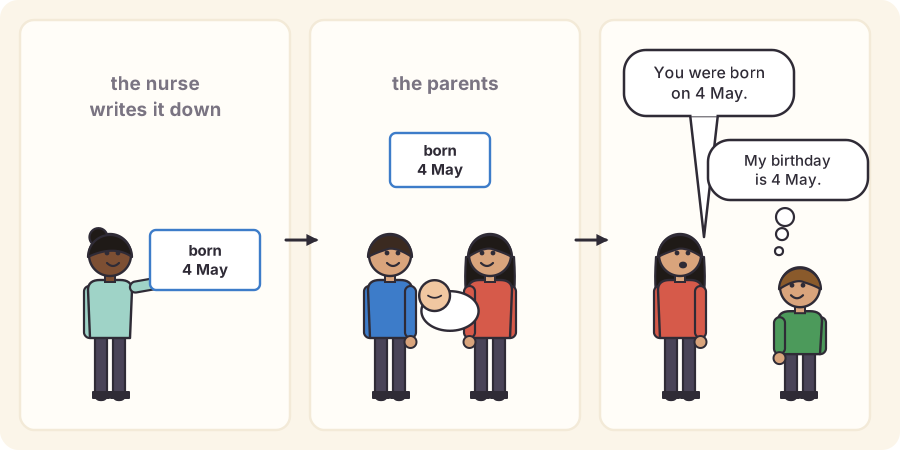
The date reached you along a chain: the nurse saw it and wrote it, your parents read it and remembered it, and they told you. Each link is a person passing on what they knew. If every link is good, the knowledge arrives at the end of the chain.
Almost everything
Testimony is the third place knowledge comes from, and it is by far the biggest. Think of what you know that you have never checked for yourself:
- the Earth is round and goes around the Sun;
- dinosaurs lived millions of years ago;
- there is a country called Japan, and its capital is Tokyo;
- the medicine in the cupboard is what the label says.
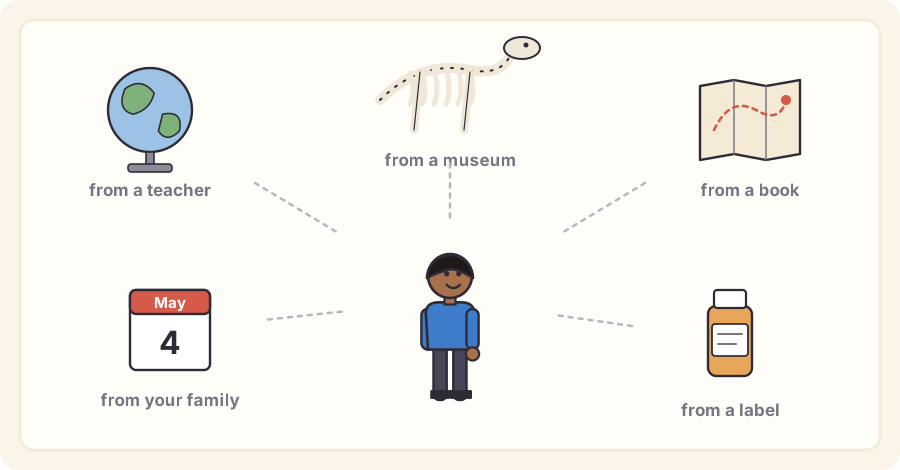
You couldn't check most of these yourself even if you tried. You would need a spaceship, a dig, a plane ticket and a laboratory. If you believed only what you had seen with your own eyes, you would know almost nothing about the world.
Not just anyone
So it is reasonable to believe what others tell you. But it isn't reasonable to believe everything that anyone tells you. A doctor who saw you being born is a good link in the chain. A stranger who guesses your birthday is not. Trusting others well means asking who is telling you, and how they know - the questions of the Who Should You Believe? lesson later in this course. Next, the Four Ways of Knowing lesson puts the sources together.
Try it at home
- Write down ten things you know.
- Next to each, write how you know it: did you see it yourself, or did someone tell you?
- For the ones someone told you, who was it, and how did they know?
Words to know
- testimony - what other people tell you, by speaking, writing or showing
- chain of testimony - the people a piece of knowledge passed through before it reached you
Big idea
Most of what you know, other people told you. Learning from others is a real source of knowledge - without it you would know very little. It works when each link in the chain knew what they passed on.