Could You Be Wrong About Everything?
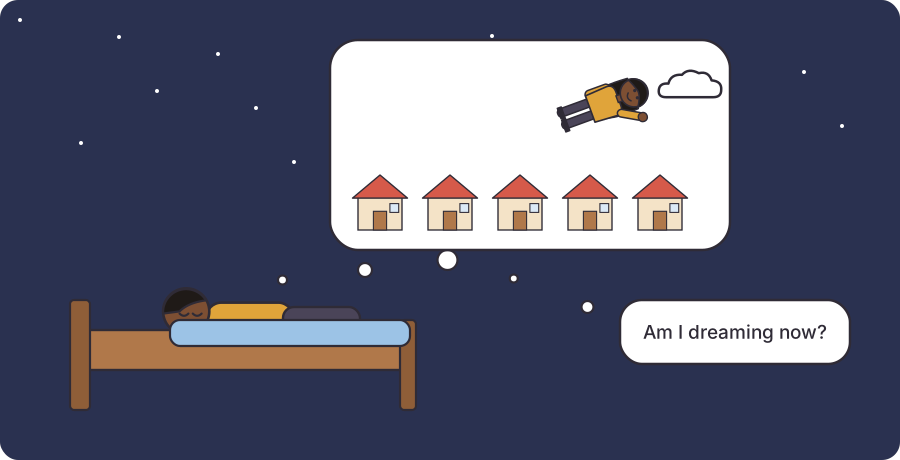
Last night you dreamed you were flying over your town. In the dream, you didn't think "this is a dream". You felt the wind, saw the roofs below you, and were completely sure it was real. Then you woke up. Here is a strange question: how do you know you aren't dreaming right now?
The butterfly
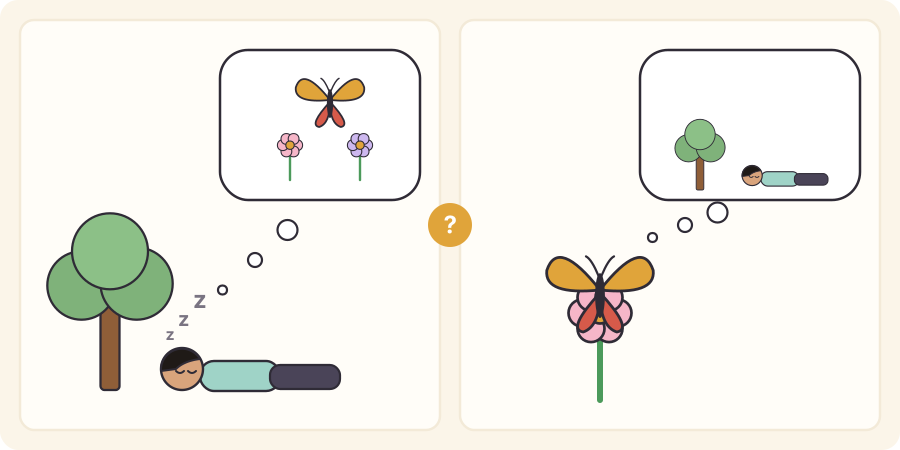
This question is very old. More than 2,000 years ago, a Chinese thinker called Zhuangzi wrote about a dream. He dreamed he was a butterfly, flying happily from flower to flower, not knowing he was Zhuangzi. Then he woke up, and he was Zhuangzi again. But he wondered: was he Zhuangzi, who had dreamed he was a butterfly? Or was he a butterfly, now dreaming that he was Zhuangzi?
In 1641, far away in Europe, the French thinker René Descartes asked the same kind of question. Everything I see, he said, could be a dream. Is there anything I can be completely sure of?
Doubting everything
Think about what the dream question does. In this course we have said that your senses are the first source of knowledge. But in a dream your "senses" show you things that aren't there, and they feel just as real. If you can't tell a dream from waking from the inside, then perhaps every belief that comes from your senses could be wrong.
Doubting whether we really know things - maybe whether we know anything at all - is called scepticism. A person who doubts like this is a sceptic.
Why ask such a strange question?
Nobody really believes they are dreaming all the time. Zhuangzi and Descartes didn't either. So why ask?
Because the question shows something important about knowledge: we can't be completely certain of almost anything. There is always some way, however unlikely, that we could be wrong. Scepticism pushes that idea as far as it will go.
There is a useful kind of scepticism and a useless kind. The useful kind is the habit this whole course has been building: asking "how do I know?", checking evidence, doubting a claim until there is a good reason to believe it. The useless kind doubts everything equally, and so can never decide anything - not even whether to step out of the way of a bus.
The next lesson asks: if we can't be certain, can we still know?
Try it at home
- Remember a dream that felt real. What made it feel real?
- Write down how you can tell, right now, that you are awake. Does anything on your list also happen in dreams?
- Pick one thing you are sure of. Is there any way, however strange, that you could be wrong?
Words to know
- scepticism - doubting whether we really know things
- sceptic - a person who doubts like this
- certain - so sure that there is no way at all you could be wrong
Big idea
In a dream we are sure it is real, so we can ask whether we know anything at all - that is scepticism. It shows that we can be certain of very little. The useful kind of doubt asks "how do I know?"; the useless kind doubts everything equally and can decide nothing.