Asking an Expert
Your bike makes a grinding noise every time you change gear. Your uncle, who is very clever and knows a lot about history, says it's the chain and you need a new one. The woman at the bike repair shop listens to it, looks for a minute, and says the gear cable just needs tightening. Whom should you believe?
Someone who knows a field
The woman at the shop is an expert: someone who knows a great deal about one area, called their field, from years of learning and practice. She has fixed thousands of bikes. She has heard that grinding noise before, and she knows what usually causes it. Her word about bikes is a very good reason to believe.
Your uncle may be an expert too - in history. Being an expert in one field doesn't make someone an expert in another. On the question of the bike, your uncle is just another person with a guess.
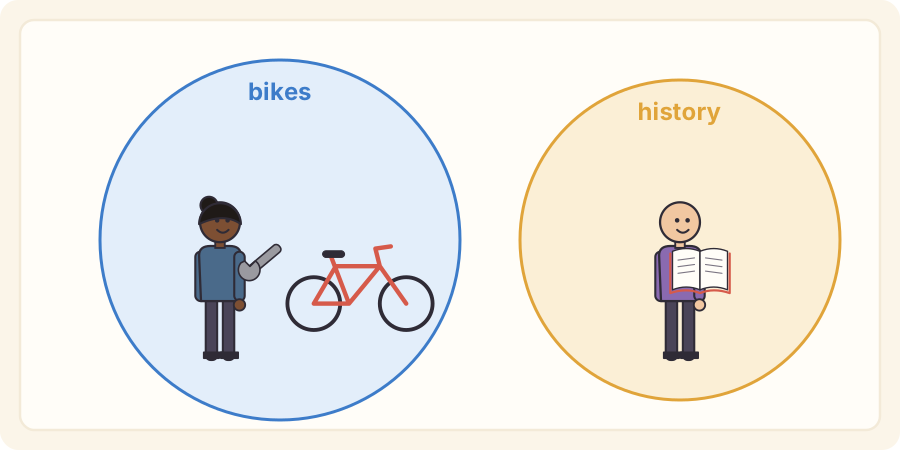
So when an expert tells you something, ask: is this inside their field? A famous footballer advertising a toothpaste is not an expert on teeth. A dentist is.
When experts agree
Experts can be wrong, like anyone. So what if two mechanics disagree? Then ask a few more. If you ask ten bike mechanics and nine say "the cable", that tells you a lot. Each of them is a reliable source, and they all checked for themselves - it would be strange for nine of them to make the same mistake.
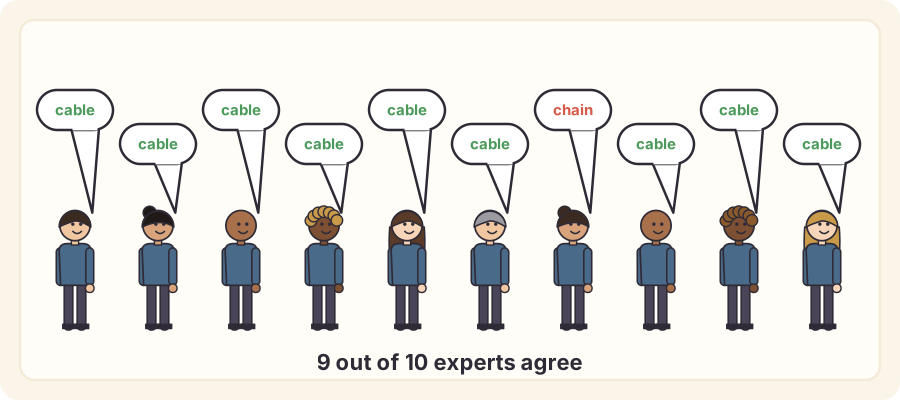
That is why, when most of the experts in a field agree, it is very reasonable to believe them, even if you can't check it yourself. And when one expert says something different from all the others, they might be the one who is right - it has happened - but it is more likely that they are the one who is wrong.
Why not check yourself?
Couldn't you just learn about bikes yourself? You could, and for a bike that's a good idea. But nobody can be an expert in everything: bikes, medicine, bridges, weather, stars and law. Trusting experts in their fields is how one person can know about all of them. It is testimony, from the What Others Tell You lesson, from the best-placed people.
Try it at home
- Think of three experts you trust: a teacher, a doctor, a mechanic, a cook.
- For each, write their field.
- Can you think of a time someone was trusted outside their field - an advert, a famous person giving advice?
Words to know
- expert - someone who knows a great deal about one field, from learning and practice
- field - an area of knowledge, like medicine, bikes or history
Big idea
An expert's word is a good reason to believe - inside their field, not outside it. When most of the experts in a field agree, that is strong evidence, because it would be strange for so many to make the same mistake.