Believing What You Want
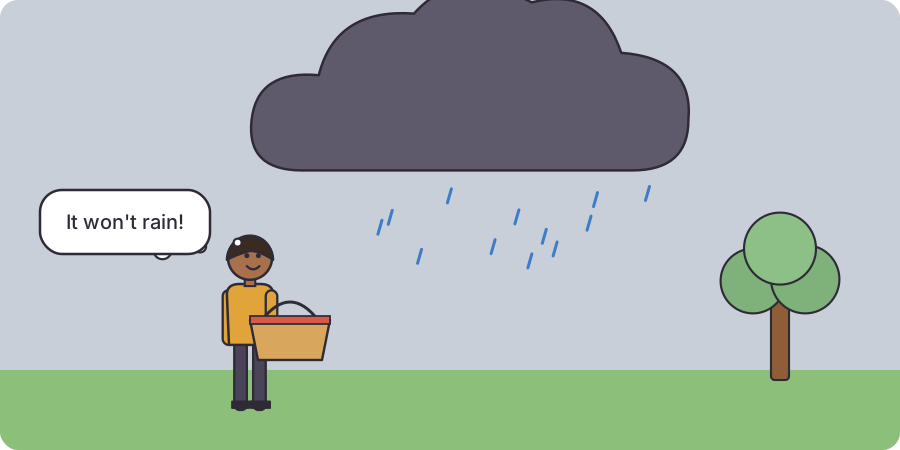
The class picnic is at noon. At eleven, the sky over the park is dark grey, the wind is cold, and the weather app says "heavy rain from 11:30". Ali has been looking forward to the picnic all week. "It won't rain," he says. "The clouds will blow away. I just know it." Does Ali know?
Wanting is not a reason
Ali wants it not to rain - very much. And that want is pulling his belief. Believing something because you want it to be true is called wishful thinking.
In the Good Reasons lesson, Ben believed the bakery was open because he was hungry and hoped it was. That was wishful thinking too. The test from that lesson catches it: if the belief were false, would the reason still be there? If it were going to rain, Ali would want it not to rain just as much. His wish is there either way, so it can't tell him anything about the weather.
A scale with nothing on it
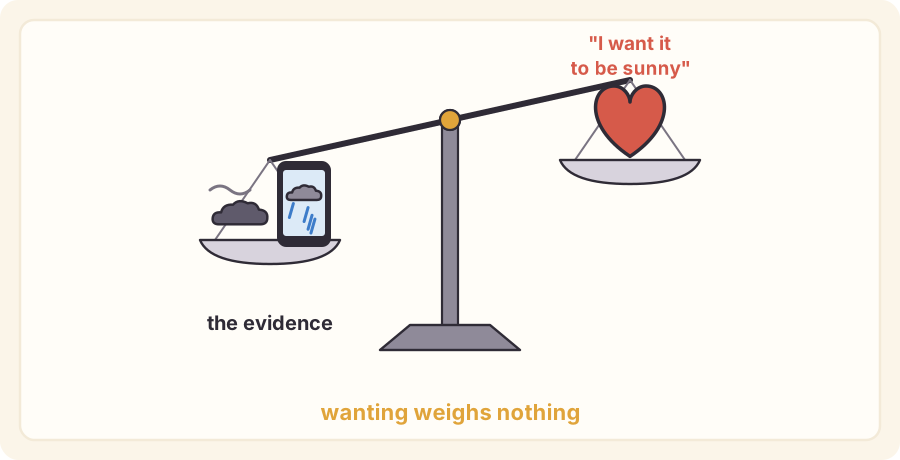
Think of a scale. On one side goes the evidence: dark clouds, a cold wind, a forecast of heavy rain. On the other side, Ali puts how much he wants a dry picnic. But wanting has no weight. However much he wants it, the scale doesn't move.
The other way, too
Fear works the same way. Someone afraid of flying may believe a plane is about to crash every time it shakes. Someone worried about a test may be sure they failed before seeing the marks. Wanting something not to be true pulls a belief just as hard as wanting it to be true.
The question to ask
Wishful thinking is hard to spot from the inside, because it feels like knowing. Ali said "I just know it". A good question to ask yourself:
Would I still believe this if I didn't care either way?
If a stranger with no picnic looked at the same clouds and the same forecast, what would they believe? That is usually what the evidence says. It is fine to hope for a dry picnic. Ali can hope, and still bring an umbrella.
Try it at home
- Think of something you want to be true - about a game, a test, a plan.
- Write down the evidence, as if you were a stranger who didn't care.
- Is your belief bigger than the evidence? Is it wanting that makes up the difference?
Words to know
- wishful thinking - believing something because you want it to be true
Big idea
Wanting something to be true - or fearing it - is not a reason to believe it, because the want would be there either way. Ask whether you would still believe it if you didn't care. Hope all you like, and believe what the evidence says.