Who Is to Say?
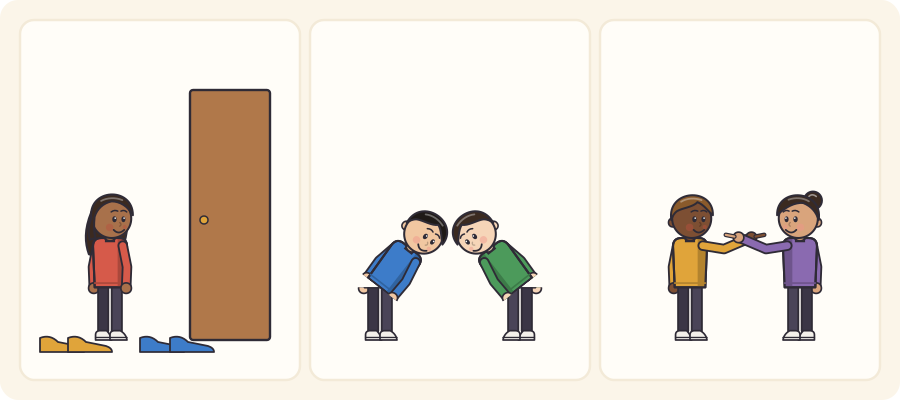
Mei's class has pupils whose families come from many countries. In a lesson about customs, they find that in some homes you take your shoes off at the door and in others you don't; some families greet with a handshake, some with a bow, some with kisses on the cheek. "So there's no right or wrong," says Leo. "It's all just what your culture says. Who is to say?"
Customs and morals
Leo has noticed something true. Many of the rules people live by are customs: ways of doing things that differ between places and are fine either way. Neither shoes on nor shoes off is wrong. It matters to follow your host's custom, out of respect - but the custom itself is a choice, like which side of the road to drive on.
Leo's conclusion goes further. He says all of right and wrong is like this. The view that right and wrong are only what each culture (or each person) believes, with nothing that makes one view better than another, is called relativism.
Reasons for relativism
People hold this view for good-hearted reasons:
- Humility. Many times, people were sure their own ways were the only right ones, and were wrong.
- Respect. Judging other cultures by your own customs has often led to contempt and cruelty.
- Disagreement. People really do disagree about moral questions, as the whole of this course has shown.
The puzzles
But relativism runs into puzzles, which even people who like it have to answer:
If right and wrong are only what a culture believes,
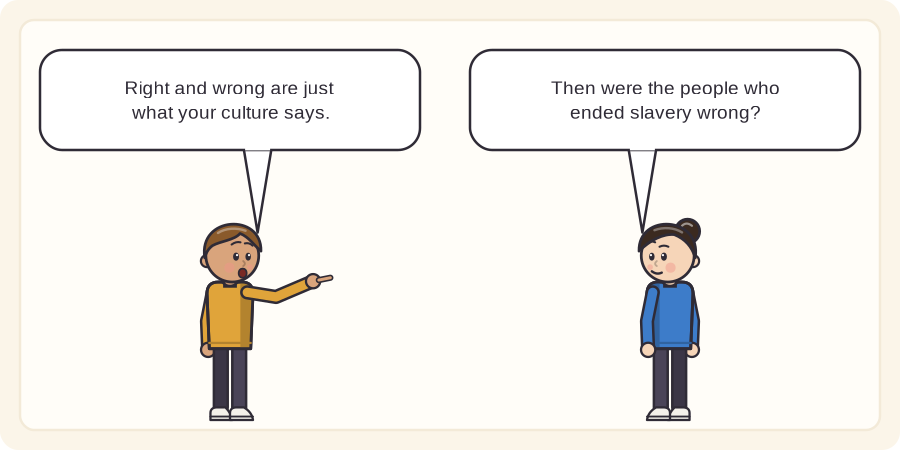
then a culture that allowed slavery was not wrong - by its own lights it was right.
So the people who fought to end slavery were the ones who were wrong.
Almost nobody accepts that conclusion. Reformers who said "my society is doing something wrong" would always have been mistaken, by definition. And if Leo says "it's wrong to judge other cultures", he is making exactly the kind of judgement for everyone that relativism says can't be made.
Disagreement doesn't show that there is no answer, either. People once disagreed about whether the Earth goes round the Sun.
Between the two
Many thinkers take a path between. Customs really do differ, and many differences deserve respect. But some reasons - harm, fairness, keeping your word, caring for children - turn up in nearly every culture, and people anywhere can give and weigh reasons together. This course hasn't told you what is right. But it has assumed that some answers have better reasons than others. Whether that is true is a question you can now argue about yourself.
Try it at home
- List three customs that differ between families or countries you know.
- For each, ask: is one way better than the other, or are both fine?
- Now think of something you believe is wrong everywhere. What is your reason?
Words to know
- custom - a way of doing things that differs between places and is fine either way
- relativism - the view that right and wrong are only what each culture or person believes
Big idea
Customs really differ, and many differences deserve respect. Relativism says all of right and wrong is like that - but then nobody could ever have been wrong, not even a society that allowed slavery.