The Middle Way
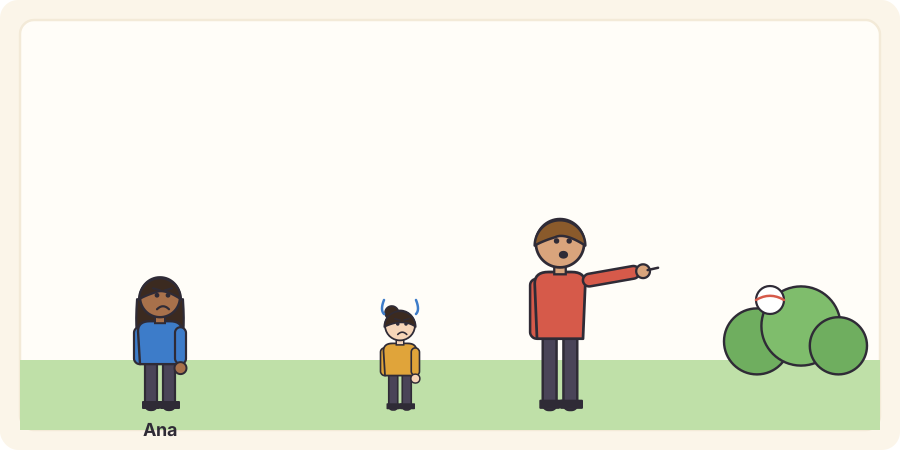
In the park, Ana sees an older boy take a ball from a small child and kick it into the bushes, laughing. The child starts to cry. Ana wants to do the brave thing. But what is the brave thing? Walk away and pretend she didn't see? Run over and push the older boy? Or something else?
Two ways to get it wrong
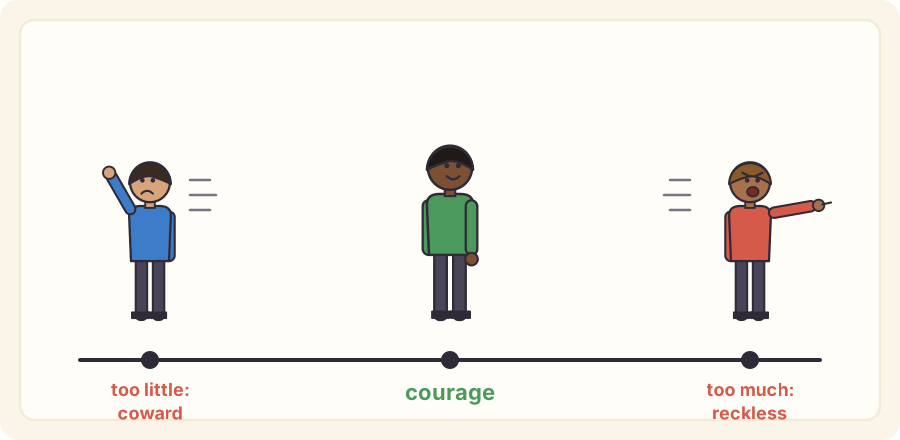
Aristotle noticed something about virtues: each one can go wrong in two directions, by too little and by too much. Courage is a good example.
- Too little: being a coward - running away from every danger, even when something important is at stake.
- Too much: being reckless - rushing into danger without thinking, even when it does no good.
Courage is between the two: facing danger or fear when it is worth it, in a sensible way. Aristotle called a virtue a mean - a middle point between two mistakes.
Other virtues have their extremes too
- Generosity sits between being mean with money and wasting it all.
- Honesty sits between hiding the truth and blurting out every unkind thought.
- Pride in yourself sits between thinking you are worth nothing and boasting.
So for Ana, walking away would be too little courage, and pushing the older boy would be too much: it could hurt someone, and make things worse. The middle might be to say clearly "Stop it - get the ball back", or to fetch an adult, or to help the child find the ball. That takes courage, without recklessness.
The middle isn't always halfway
The middle way doesn't mean always doing a medium amount. Aristotle said the right amount depends on the person and the situation: "at the right times, with reference to the right objects, towards the right people, with the right motive, and in the right way". If the older boy were about to hurt the child badly, much stronger action would be the middle; if he were only teasing, a few words might be. Finding it takes judgement, which is why Aristotle thought it comes with practice - the subject of the next lesson.
Try it at home
- Pick a virtue: patience, generosity, honesty or courage.
- Write what too little of it looks like, and what too much looks like.
- Think of a time you were near one end. What would the middle have been?
Words to know
- courage - facing danger or fear when it is worth it, in a sensible way
- the mean - Aristotle's word for the middle point between too little and too much, where a virtue sits
Big idea
Aristotle saw each virtue as a middle way between two mistakes - too little and too much. Courage lies between running away and rushing in, and finding the middle takes judgement about the situation.