What Ethics Asks
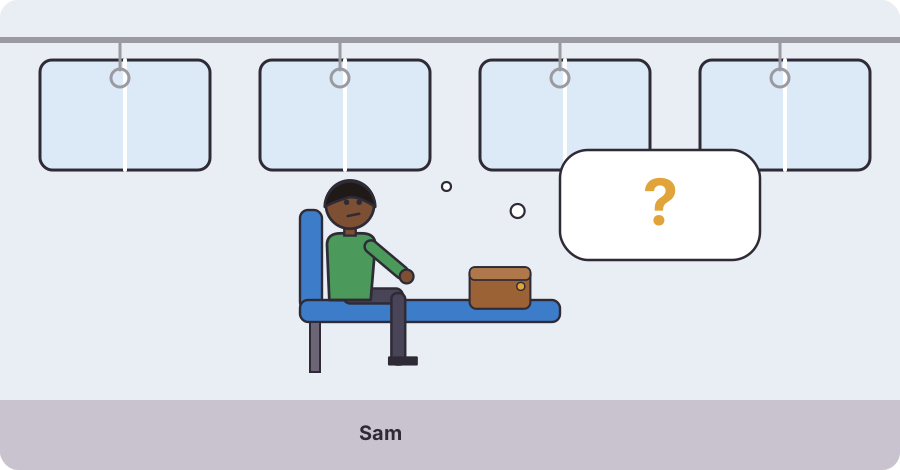
Sam is on the bus home from school. On the empty seat next to him is a brown wallet. Inside there is some money, a bus pass and a card with a name on it: Mrs R. Okafor. Nobody is looking. Sam has two questions in his head at once. They sound alike, but they are very different kinds of question.
Two kinds of question
The first question is: how much money is in it? Sam can answer that by counting. If he counts again, he gets the same answer. If his friend counts, she gets the same answer too. It is a question about how things are.
The second question is: what should I do with it? Counting won't answer that. Nor will looking more closely at the wallet. It is a question about what someone should do. Sam could keep it, hand it to the driver, or try to find Mrs Okafor himself.
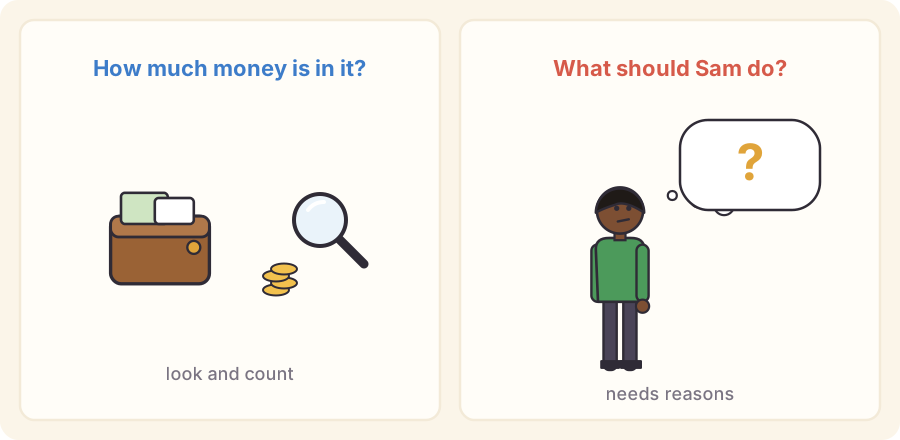
Questions about how things are can be checked by looking, counting and measuring. If you have read Science Level 1, you have seen how. Questions about what we should do need something more: reasons about what matters, and why.
The part of philosophy that asks "should"
Questions about right and wrong, about what we owe each other, and about how to live are called moral questions. The part of philosophy that thinks about them carefully is called ethics.
You don't need to be a philosopher to ask a moral question. Everyone asks them every day: whether to keep a secret, how to share a pizza, whether to tell a friend a hard truth. Ethics just slows down and asks them carefully, with reasons, the way Logic Level 1 slowed down and looked at arguments.
Facts still matter
A moral question isn't only about values. Facts change the answer. If the wallet were empty and torn, it might be rubbish. If there were a phone number on the card, Sam could call. So a good answer to a "should" question needs both: the facts of the case, and reasons about what matters.
In this course you won't be told what to think. You will meet the reasons people give, and the main ways thinkers have reasoned about right and wrong for more than two thousand years. Then the weighing is yours.
Try it at home
- Write down three questions you or someone near you asked today.
- For each one, decide: is it about how things are, or about what someone should do?
- For one "should" question, write one fact that would change your answer.
Words to know
- moral - about right and wrong, and how we should treat each other
- ethics - the part of philosophy that thinks carefully about moral questions
Big idea
Some questions ask how things are, and are answered by looking. Moral questions ask what we should do. They need the facts too, but also reasons about what matters - and ethics is the careful study of those reasons.