Treat Like Cases Alike
A week later Leo's bike light disappears from his bike outside the library. He is furious. "Whoever took it is a thief!" he tells Sam. Sam says nothing, but he remembers "finders keepers". What has Leo just shown about his own judgements?
Same case, same judgement
Leo thinks taking his light was wrong. But keeping the wallet, he said, was fine. Are the two cases different in any way that matters? In both, someone ends up with a thing that belongs to someone else, and the owner loses it. If one is wrong, it is hard to see why the other isn't.
When two cases are alike in every way that matters, they deserve the same judgement. Judging them the same is being consistent. Judging them differently with no real difference is being inconsistent.
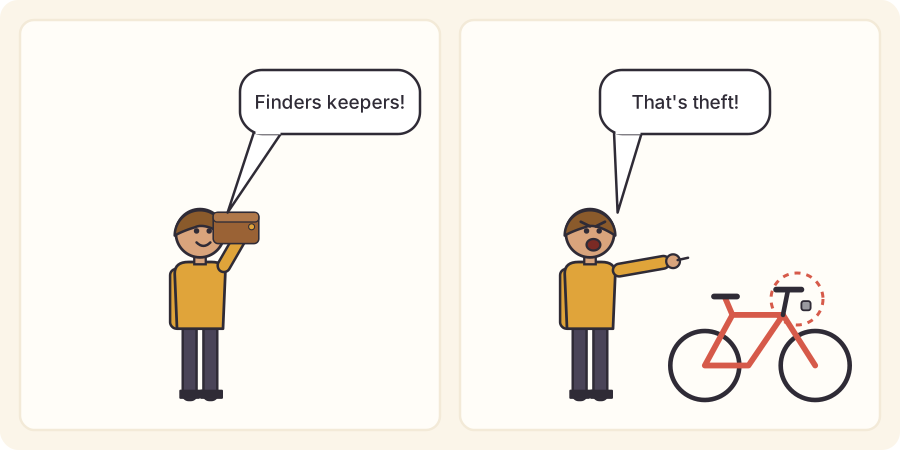
Ask: what is the difference?
Being consistent doesn't mean every case is the same. Sometimes there is a real difference. The test is a question: what is the difference between these two cases, and does it matter?
Imagine two pupils, Ana and Kofi, are both ten minutes late. The teacher keeps Kofi in at break but not Ana. Is that unfair? It depends on the difference:
- Ana had a note: her bus broke down. That is a real difference. It changes whether she is to blame.
- Ana is the teacher's neighbour. That is not a difference that matters. It says nothing about the lateness.
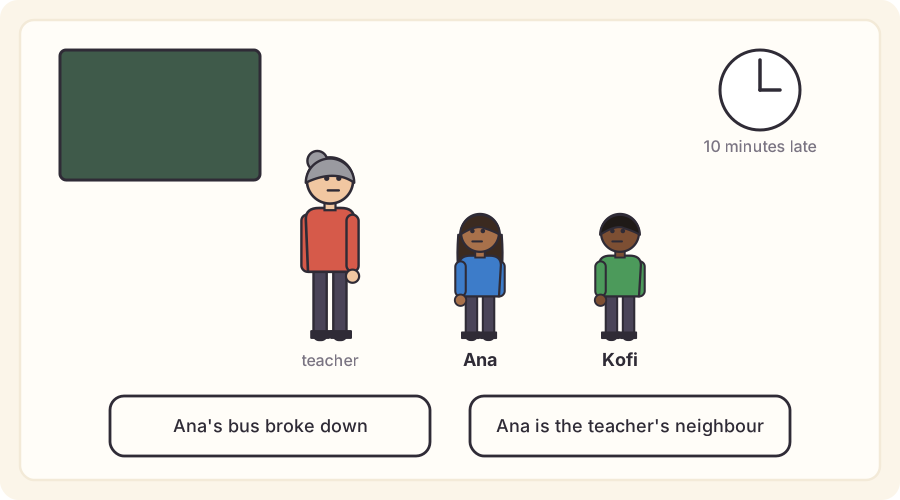
Differences like who your friend is, who is watching, or which side you are on usually don't matter. Differences in what happened, what people knew and what they could have done usually do.
Turning it on yourself
The hardest place to be consistent is where Leo failed: between what you allow yourself and what you allow others. It is easy to see someone else's lateness as laziness and your own as bad luck. Asking "what is the difference?" about your own case is a habit that the rest of this course will lean on again and again.
Try it at home
- Think of a rule at home or at school that someone once said was unfair.
- Find two cases where it was applied differently.
- Write down the difference between them. Does it matter, or not? Why?
Words to know
- consistent - giving the same judgement to cases that are alike in every way that matters
- inconsistent - judging alike cases differently, with no real difference between them
Big idea
If two cases are alike in every way that matters, they deserve the same judgement. Before judging two cases differently - above all your own and someone else's - ask what the difference is, and whether it matters.