Thinking It Through
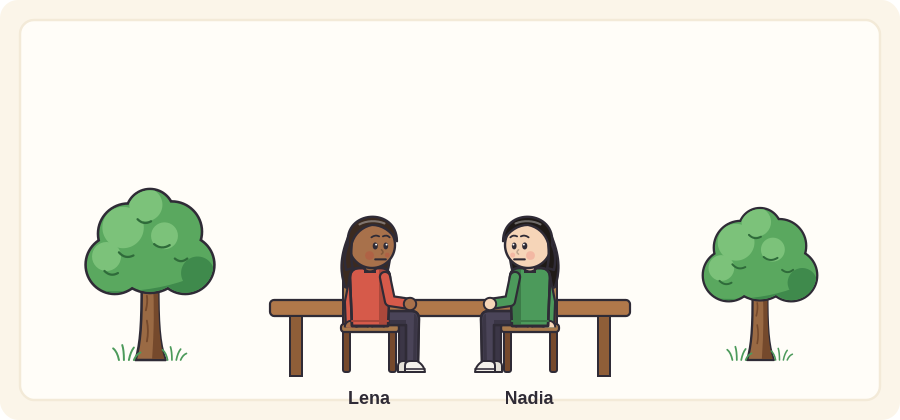
Lena sees her friend Nadia copy answers from the person next to her in a maths test. Nobody else noticed. Nadia gets a top mark, and Lena, who studied hard, gets an average one. Lena doesn't know whether to say anything, to Nadia or to the teacher. Everything in this course can help her - but how, all at once?
Four questions
The three big ways of reasoning, plus the golden rule, can be gathered into four questions to ask about any choice:
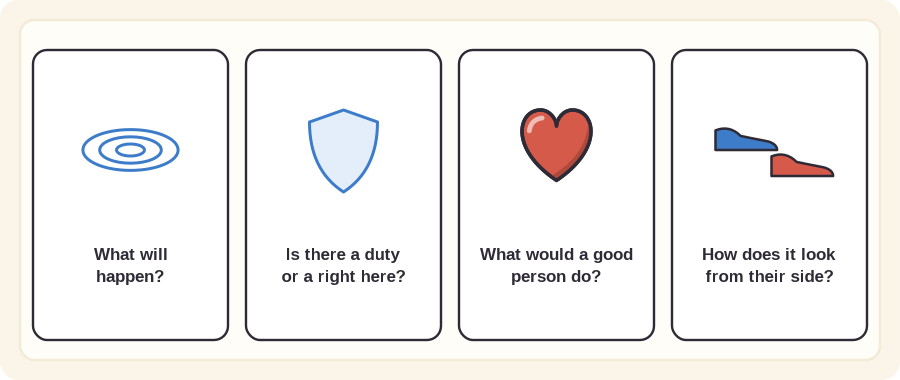
- What will happen? Looking at results, as in the What Happens Next? lesson. If Lena tells the teacher, Nadia may be punished and their friendship may end. If Lena says nothing, the marks stay unfair, and Nadia may keep copying.
- Is there a duty or a right here? As in the Some Things You Must Not Do lesson. Copying breaks a rule of fairness that everyone in the class agreed to by taking the test. What if everyone did it? Tests would mean nothing.
- What would a good person do? As in the What Kind of Person? lesson. Honesty, fairness and loyalty to a friend are all virtues here. The middle way might be honest and kind: talking to Nadia first.
- How does it look from their side? As in the In Their Shoes lesson. Why did Nadia copy? Is she struggling, or afraid of something at home? How would it feel to be the classmates whose marks look worse?
When the questions agree, and when they don't
Often the four questions point the same way. Then you can be fairly confident. When they point different ways, you have found the hard part of the case - and you know exactly what you are weighing.
For Lena, the questions mostly agree on one step: talk to Nadia first, honestly and kindly. What happens after that may depend on what Nadia says.
The habits that matter most
Beyond the four questions, the course has practised a few habits. Give reasons, not just feelings. Ask "what is the difference?" before judging two cases differently - above all your own and someone else's. Look for a third way. Listen to people who disagree, and set out their reasons at their strongest, as Logic Level 1 asked. And be ready to change your mind.
This course hasn't told you what to believe about hard cases. That was never its job. Its job was to give you better tools for deciding for yourself - and for talking with others who decide differently.
Try it at home
- Choose a real choice you or someone near you is facing.
- Write the four questions, and an answer to each.
- Do they agree? If not, which one do you think matters most here, and why?
Words to know
- the four questions - What will happen? Is there a duty or a right here? What would a good person do? How does it look from their side?
Big idea
Results, duties and rights, character, and the other person's side are four questions to ask together. When they agree, you can act with confidence; when they don't, you have found what you are really weighing.