Do No Harm
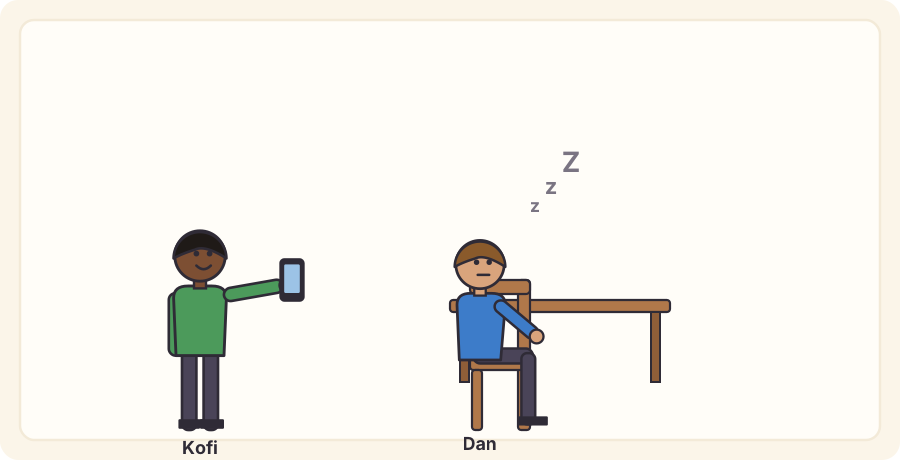
In class, Kofi's friend Dan falls asleep with his mouth open. Kofi takes a photo on his phone. It is very funny. Kofi wants to send it to the class group. "It's only a joke," he says. Is it?
What harm is
To harm someone is to make things worse for them: to hurt their body, their feelings, their things, or what others think of them. A broken arm is harm. So is being laughed at by thirty people, or being left out on purpose.
Of all the reasons in ethics, harm is one of the clearest. People who disagree about promises, white lies and fair shares nearly all agree that causing harm needs a strong reason. "Because it was funny" or "because I wanted to" is not one. That is why an easy case, like hurting someone for fun, hardly seems like a question at all.
So the question for Kofi is not "is the photo funny?" but "would it harm Dan?" Dan might be laughed at for weeks. A photo sent to a group can be copied and kept long after the joke is forgotten.
Asking first
Here is something interesting. The very same photo could be fine. Suppose Kofi wakes Dan, shows him the photo, and Dan laughs and says "Send it, it's hilarious!" Now nothing is done to Dan against his will.
Agreeing to something that affects you, freely and knowing what it is, is called consent. Consent changes a great deal. Two friends tackling each other in a game of football they both chose to play are doing something they both agreed to. One pupil pushing another over in the corridor is not - even though the push and the tackle look much the same.
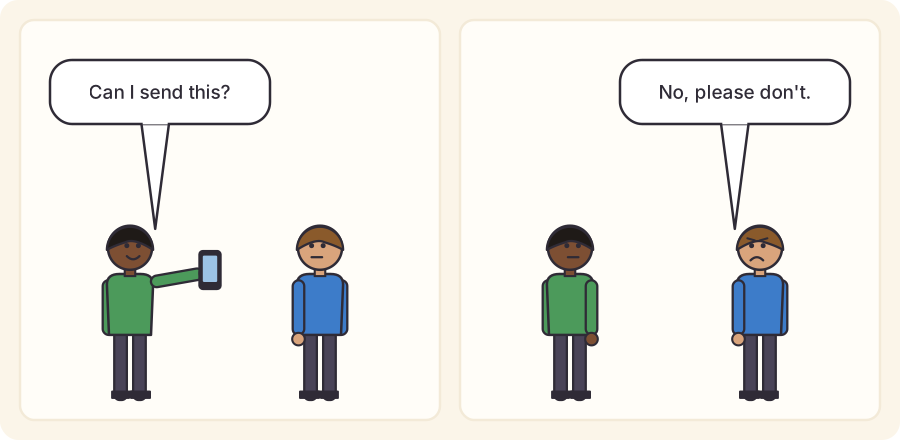
For consent to count, it has to be real. A "yes" given because everyone is watching, or without knowing what will happen, or from someone too young to understand, isn't the same as a free and knowing yes. And a "no" is an answer too: if Dan says no, the question is settled.
Harm you don't see
Harm is easier to cause when you can't see it. Kofi won't see Dan's face when thirty people open the photo. That is why the habit of asking - who could this hurt, and did they agree? - matters most when the person isn't in front of you.
Try it at home
- Think of a joke you saw that someone didn't find funny.
- Write down who it could harm, and how.
- Write how asking first might have changed it.
Words to know
- harm - making things worse for someone: their body, feelings, things or how others see them
- consent - agreeing to something that affects you, freely and knowing what it is
Big idea
Causing harm needs a strong reason, and "it was funny" isn't one. Consent - a free and knowing yes - can make the same act fine, and a no settles the question.