What Kind of Person?
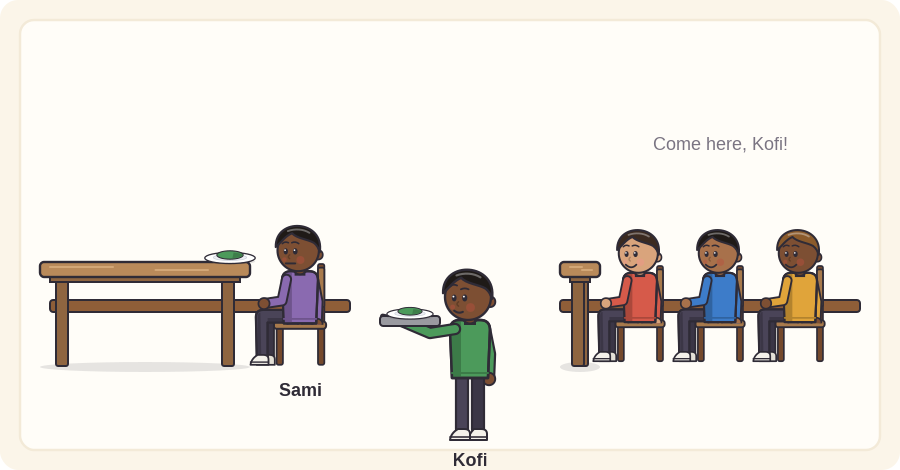
A new boy, Sami, has joined Kofi's class. At lunch he sits alone at the end of a table, looking at his food. Kofi's friends are waving him over to their usual table. No rule says Kofi must sit with Sami. Nothing terrible will happen if he doesn't. But Kofi stops for a moment. What should he think about?
A different question
The last two modules asked what should I do? - by looking at results, or at duties and rights. Here neither helps much. No duty is broken, and the results either way are small.
A third way of reasoning asks a different question: what kind of person do I want to be? Would a kind person walk past? Kofi thinks of people he admires - his grandmother, his football coach - and he knows what they would do.
This way of thinking is the oldest of the three. In ancient Greece, about 2,350 years ago, Aristotle taught that the aim of ethics is to become a good person and to live a good life. If you become the right kind of person, he thought, you will usually see what to do.
Character and virtues
The kind of person you are - shown not by one action, but by what you usually do - is your character. A good trait of character is called a virtue (say it "VUR-choo"). Some virtues found in nearly every culture are:
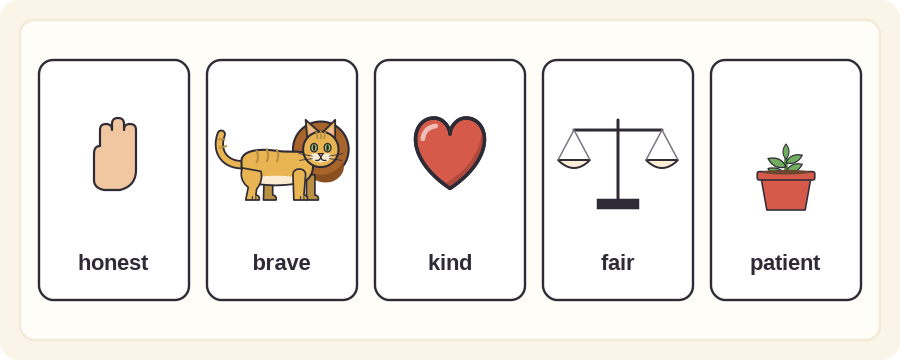
A virtue isn't just doing the right thing once. An honest person doesn't just avoid lying today: they care about the truth, notice when they are tempted to bend it, and are uncomfortable when they do. Virtues include what you do, what you notice and what you feel.
Kofi's question can be set out as an argument too:
A kind person notices someone who is left out, and does something about it.
I want to be a kind person.
So I should go and sit with Sami.
Its strength, and its puzzle
The strength of this way of reasoning is that it fits most of life. Most of our choices aren't big puzzles like the runaway trolley; they are small, everyday moments where nobody is checking, like Kofi's lunch. Character is what shows up in those moments.
The puzzle is that "do what a good person would do" doesn't always tell you what that is, when good people would disagree. And virtues can pull apart: honesty and kindness did, in the Kind Lie lesson. The next lesson gives Aristotle's best-known answer to how to find the right amount.
Try it at home
- Think of someone you admire - a person you know, not a famous one.
- Write three traits of their character that you admire.
- Write one small moment this week where you could act the way they would.
Words to know
- character - the kind of person you are, shown by what you usually do, notice and feel
- virtue - a good trait of character, such as honesty, courage or kindness
Big idea
A third way of reasoning asks not "what should I do?" but "what kind of person should I be?". Good traits of character are virtues, and they show most in small moments when nobody is checking.