Keeping a Promise
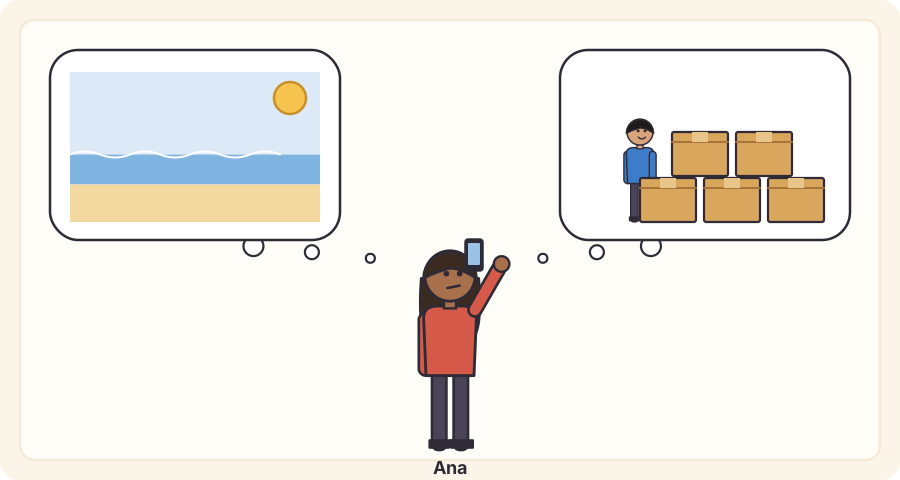
On Monday, Ana promised her friend Ben: "I'll help you carry your things to your new flat on Saturday." On Friday, her cousin calls. "We're going to the beach tomorrow. Come with us!" Ana would much rather go to the beach. Ben's boxes are heavy and the stairs are steep. Does the promise she made on Monday still matter on Saturday?
A reason you made yourself
Before Monday, Ana had no special reason to spend her Saturday carrying boxes. Ben is her friend, but friends don't have to help with everything. The promise changed that. By saying "I'll help you", Ana gave herself a reason to go that she didn't have before.
Something you owe to someone, because of what you did or who you are to them, is called an obligation. A promise is the clearest way of making one. Set out as an argument, Ana's case looks like this:
Ana promised to help Ben on Saturday.
Ben has planned his day around her help, and asked nobody else.
So Ana has a strong reason to go, even though the beach would be more fun.
Why promises matter so much
A promise is not just words. Ben did something because of it: he didn't ask anyone else. If Ana goes to the beach, Ben is left alone with the boxes and the stairs - worse off than if she had never promised at all.
There is a bigger reason too. Promises only work because people keep them. We plan our lives around each other's promises: a friend who will meet us, a shop that will deliver, a parent who will pick us up. If promises were broken whenever something nicer came along, nobody could count on anyone. Each kept promise builds trust; each broken one wears it away.
Can a promise ever be broken?
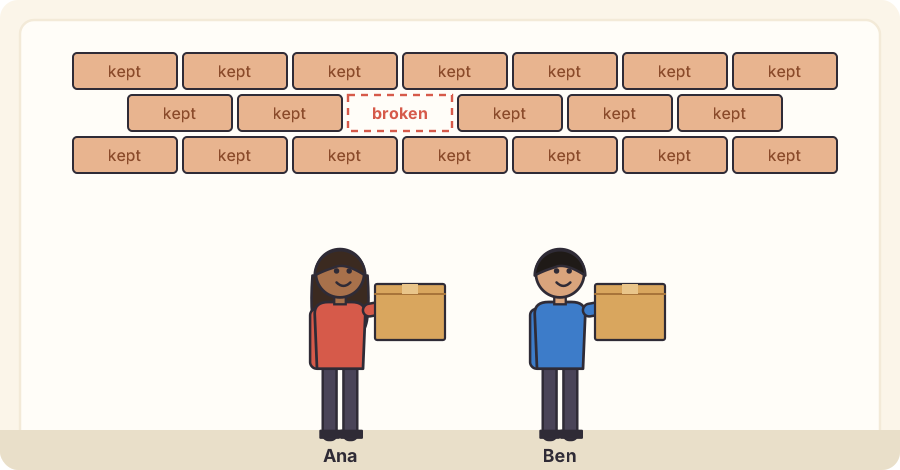
Most people think yes - sometimes. Imagine that on Saturday morning Ana's little brother falls and needs to go to the doctor, and only Ana can take him. Now there are reasons on both sides, and the reason to help her brother is much stronger than a promise about boxes.
But notice what is still true. Even when breaking a promise is the right choice, the promise doesn't just vanish. Ana still owes Ben something: to tell him as early as she can, to say sorry, and to help him another day. A beach trip is not that kind of reason. A sick brother is.
Try it at home
- Write down a promise someone made to you that you counted on.
- Write what you did, or didn't do, because of it.
- Think of something that would make it all right to break that promise. What would still be owed to you?
Words to know
- obligation - something you owe to someone, because of what you did or who you are to them
- trust - being able to count on someone to do what they said
Big idea
A promise gives you an obligation: a reason to act that you didn't have before, because someone now counts on you. A stronger reason can outweigh it, but even then something is still owed.