Reasons, Not Just Feelings
Sam hands the wallet to the bus driver. The next day he tells his friend Leo. "You should have kept it," says Leo. "Finders keepers." Sam feels at once that Leo is wrong. But when Leo asks "Why?", all Sam can say at first is: "It just feels wrong." Is that enough?
Feelings are an alarm
Feelings are not useless in ethics. A strong feeling that something is wrong works like an alarm: it tells you to stop and look. Many people who did something unkind later said that a feeling had warned them and they ignored it.
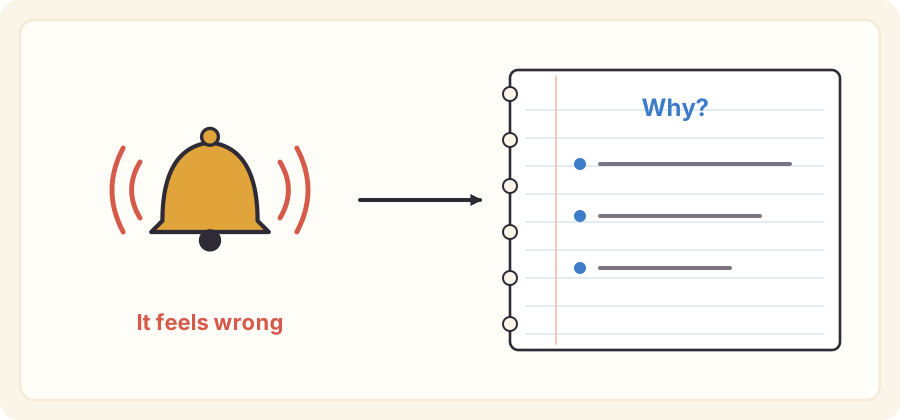
But an alarm can't tell you why it rang, and alarms sometimes ring for nothing. People have felt that eating with their hands was disgusting, or that the new child in class was "weird", and those feelings were no guide to what was right. And when two people feel differently, as Sam and Leo do, feelings alone leave them stuck: "It feels wrong." "Well, it feels fine to me."
Reasons can be shared
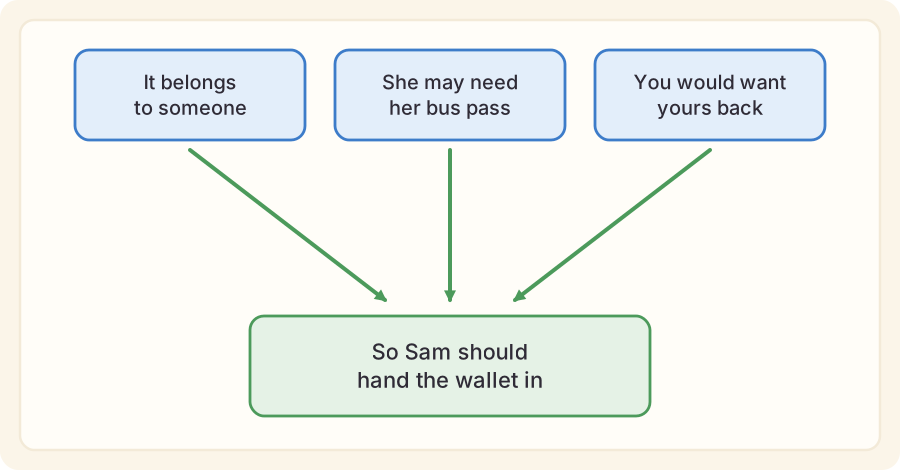
So Sam thinks about it. Then he gives Leo reasons, set out the way Logic Level 1 sets out an argument - the reasons first, and the conclusion last:
The wallet belongs to someone, and finding a thing doesn't make it yours.
Mrs Okafor may need her bus pass to get to work tomorrow.
If you lost your wallet, you would want it back.
So Sam should hand the wallet in.
A view about what is right or wrong in a case is called a moral judgement. "Sam should hand in the wallet" is one. A judgement with reasons is different from a feeling in three ways. Others can share it: Leo can look at the reasons himself. Others can check it: is it true that the pass is needed? And reasons can be weighed, one against another.
Leo has a reason too, of a kind: "finders keepers" is a saying. Reasons on both sides can be put side by side and weighed. But when Sam asks why finding a thing would make it yours, Leo has no answer. The saying was a feeling dressed up as a reason.
Reasons can change minds - even your own
Giving reasons has a cost: you might find that yours are weak. That is the point. As Logic Level 1 showed, a good argument gives reasons that really support its conclusion. In ethics, the same habit protects you from your own alarm bells when they ring for nothing.
Try it at home
- Think of something you feel strongly is wrong.
- Write down at least two reasons why, without using the word "feel".
- Ask someone who might disagree to read your reasons. Which one did they find hardest to answer?
Words to know
- moral judgement - a view about what is right or wrong in a case
- reason - something that counts for or against a judgement, which others can look at too
Big idea
A feeling that something is wrong is an alarm worth listening to, but a moral judgement needs reasons. Reasons can be shared, checked and weighed - and they can change minds, including your own.