A Kind Lie
Mei's grandmother has spent weeks knitting her a jumper. It is bright orange with green stripes, and it is not the kind of thing Mei would ever wear. Grandma holds it up, smiling. "Do you like it?" What should Mei say?
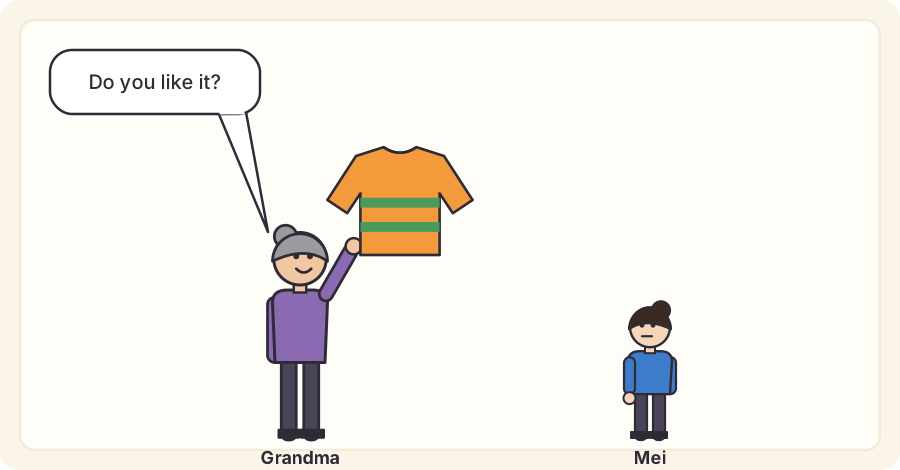
Two good things pulling apart
Most people would say: "I love it!" That isn't true. But it is kind, and it seems to hurt nobody. A small lie told to be kind, or to spare someone's feelings, is called a white lie.
White lies are interesting because two things we care about pull in different directions:
- Honesty - saying what you believe is true. We count on each other's words, just as we count on promises.
- Kindness - caring about how others feel, and not hurting them for no reason.
Usually honesty and kindness go together. Here they seem to split.
The reasons on each side
Some people argue like this:
Telling Grandma the truth would hurt her, and nobody would gain from it.
A small lie here harms nobody.
So the white lie is the kind thing to say.
Others argue the other way:
Every lie, even a small one, makes our words a little less trustworthy.
If Grandma believes Mei loves orange jumpers, she may knit three more.
So it is better not to lie, even kindly.
Both arguments have real reasons in them. Thinkers have disagreed about this for centuries. Some, like the German philosopher Immanuel Kant, held that lying is always wrong; you will meet his reasons in a later lesson. Many others think small kind lies are fine. This course won't decide it for you.
Often there is a third way
Before choosing between a lie and a hurtful truth, it is worth looking for a third answer that is both true and kind. Mei doesn't love the jumper. But she does love that her grandmother made it for her.
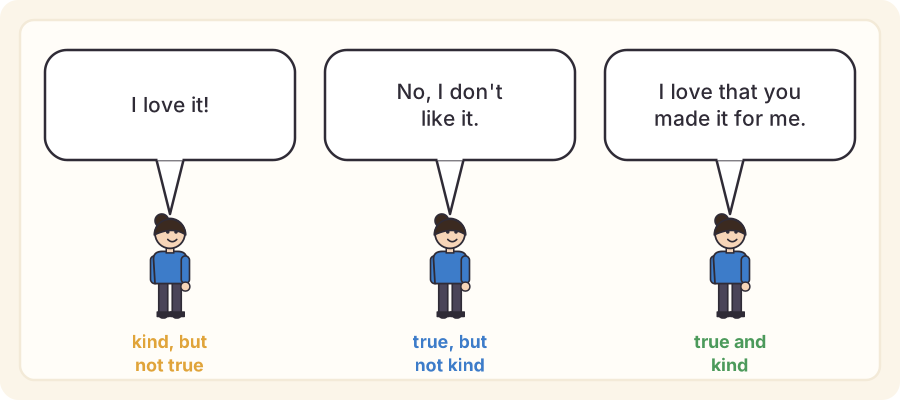
"I love that you made this for me - you remembered my favourite green!" is honest and kind. A third way isn't always there. But people who look for it find it more often than they expected.
Try it at home
- Think of a time someone asked your opinion and the true answer might hurt.
- Write the white lie you could have said, and the plain truth.
- Now try to write a third answer that is both true and kind.
Words to know
- white lie - a small lie told to be kind, or to spare someone's feelings
- honesty - saying what you believe to be true, and not trying to make others believe what is false
Big idea
A white lie is where honesty and kindness pull apart. There are good reasons on both sides, and people disagree. Before choosing, look for an answer that is both true and kind.