People Are Not Tools
Tom is the best at maths in Lena's class. Lena only talks to Tom on the days before a maths test. She is friendly and asks how he is - and then asks for help with the homework. After the test she walks past him without a word. Tom has started to notice. What is wrong here, if Lena never says anything unkind?
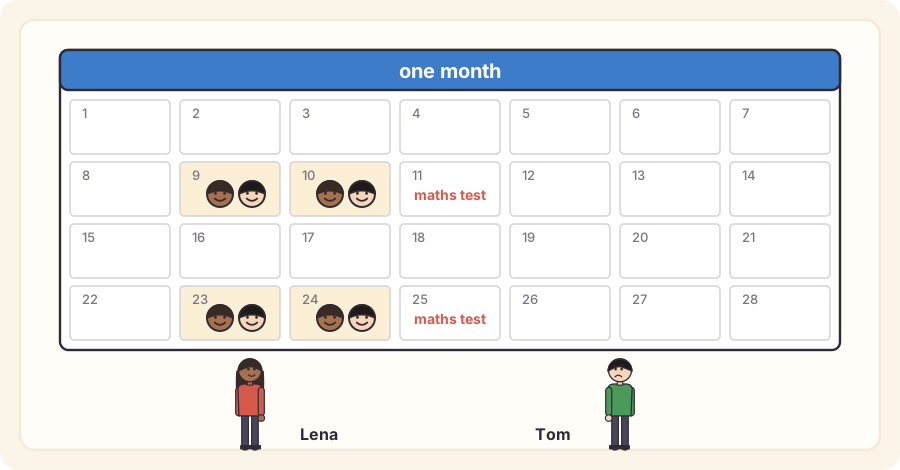
A tool or a person?
A hammer is a tool. You pick it up when you need it and put it away when you don't. Nobody asks the hammer what it wants. Lena is treating Tom as if he were a tool: something useful, picked up when needed and ignored the rest of the time.
Immanuel Kant put this into a second famous test. In his words, you should treat people "never merely as a means, but always at the same time as an end". In plain words: never treat a person only as a tool for your goals; always treat them also as someone with goals of their own.
"Only" is the key word
We all need each other's help all the time, and that is fine. When the bus driver takes you to school, you are using the driver's skill to reach your goal. But you aren't using the driver only as a tool: the driver chose the job, is paid, and you say thank you. The driver's own goals are respected.
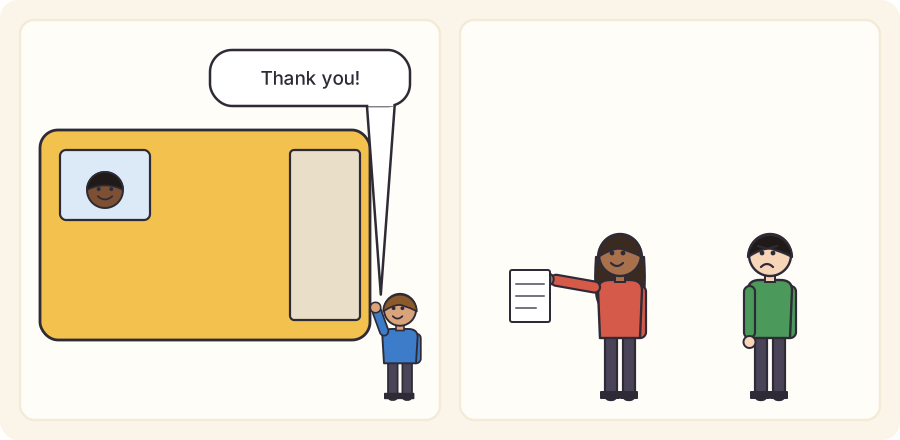
What is wrong is using someone in a way they haven't agreed to, or in a way that ignores what they want. The Do No Harm lesson showed how consent changes things; this is part of why. Tom hasn't agreed to be a homework machine. He thought Lena was his friend.
Why it matters so much
This test explains many things we feel are wrong. Lying to someone is treating their mind as a tool: making them believe what suits you. Pushing the stranger off the footbridge in the Runaway Trolley lesson is using his body as a tool to stop the tram, however many it saves.
It also explains why every person matters, whoever they are. A tool's value depends on how useful it is. A person's doesn't. Kant called this a person's dignity - a worth that isn't measured by usefulness and can't be traded for something else.
Try it at home
- Think of a time you felt used by someone.
- Write what made it feel that way. Was your agreement asked for? Were your own goals ignored?
- Write one way the same help could have been asked for with respect.
Words to know
- treating someone merely as a means - using a person only as a tool for your own goals, ignoring theirs
- dignity - the worth every person has, which isn't measured by how useful they are
Big idea
We all rely on each other, and that is fine. What is wrong is treating a person only as a tool - without their agreement, ignoring their own goals. Every person has a worth that isn't measured by usefulness.