Practice Makes Character
Mei is learning the piano. On the first day her fingers were slow and clumsy. After a year of practice she plays without thinking about each note. Mei has also noticed something else: last month she found it hard to say sorry first after an argument. She has done it three times since, and each time it was a little easier. Is being good something you can practise, like the piano?
Learning to be good
Aristotle thought so. In his book on ethics he wrote that we become fair by doing fair things, and brave by doing brave things - in the same way that we become builders by building, and musicians by playing music. Nobody is born brave or born honest. People become brave or honest, little by little, through what they do.
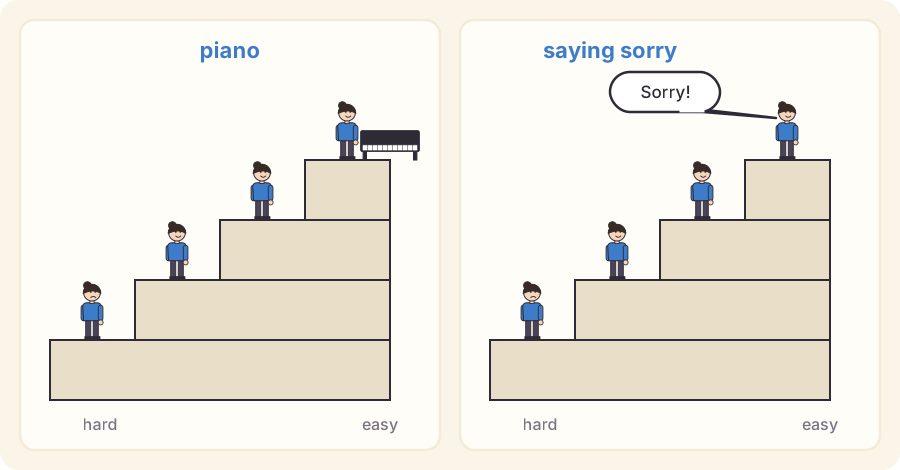
Something you do so often that it becomes easy, or even automatic, is a habit. Aristotle's idea is that virtues are good habits - not just of action, but of seeing and feeling. At first, telling the truth when it is awkward feels hard and you have to push yourself. With practice it becomes part of who you are, and the awkward feeling fades.
It works both ways
Bad habits grow the same way. Someone who tells one small lie to get out of trouble finds the second one easier, and the tenth easier still. That is one reason the Does the End Justify the Means? lesson worried about cheating "just once": every action is also practice for the next one.
We become what we do again and again.
Each kind act makes the next one easier.
So small, everyday choices shape our character.
Learning from others
Musicians learn by watching good musicians. Aristotle thought the same is true of character: we learn by watching good people. Someone whose way of living you admire and learn from is a role model. Kofi's grandmother, in the What Kind of Person? lesson, was one. Mei learned to say sorry first partly by watching her older brother do it.
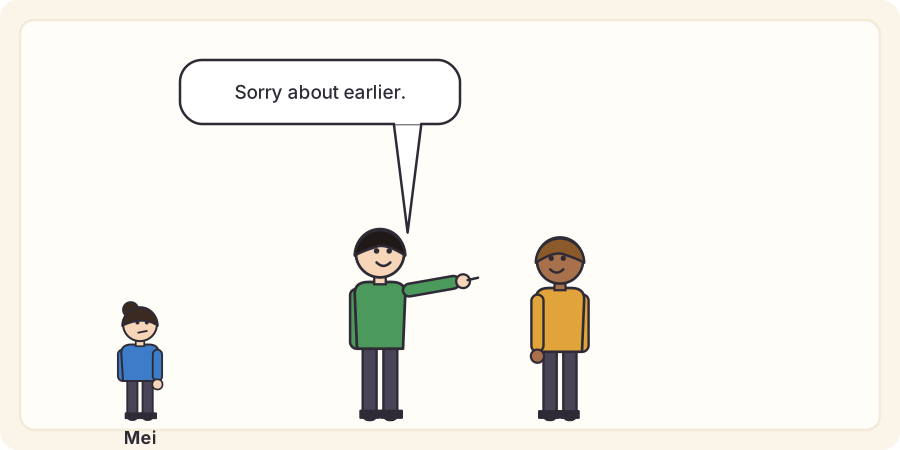
This means character isn't fixed. If you are not as patient or as brave as you would like to be, that is not the end of the story. It is the start of practice.
Try it at home
- Choose one small good thing that you find hard: saying sorry first, listening without interrupting, sharing something.
- Do it once a day for a week, and write down how hard it felt each time, from 1 (easy) to 5 (very hard).
- At the end of the week, look at your numbers. Did it get easier?
Words to know
- habit - something you do so often that it becomes easy or automatic
- role model - someone whose way of living you admire and learn from
Big idea
Aristotle thought we become good the way we learn a skill: by practising. Virtues are good habits of acting, seeing and feeling - and every small choice is practice for the next one.